


Tesla on the verge of mass production of medium-to-large cylindrical batteries
 Published2022.03.14 09:47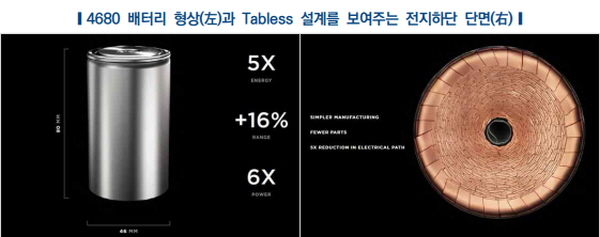
▲ Image source: Korea Automotive Research Institute
Panasonic cooperation, test mass production in progress
Design for Optimized Driving Range and Production Cost
The Korea Automotive Research Institute stated in Industry Trends Vol. 89, released on the 4th, that if Tesla succeeds in mass-producing cylindrical batteries, it could significantly improve the productivity and cost competitiveness of electric vehicle batteries.
The medium-to-large cylindrical battery (4680 battery) unveiled by Tesla at Battery Day 2020 is scheduled for mass production in 2022.
Tesla announced that it will begin mass production of the Model Y equipped with a 4,680 (46mm diameter, 80mm height) battery in 2022 and is conducting test production in cooperation with Panasonic.
The 4680 battery is designed with driving range and cost reduction in mind, and the increase in charging time that may occur as the battery size increases is offset by a reduction in electrical resistance through a Tabless design.
Tesla is the only automaker that uses cylindrical batteries.
Tesla strengthened its cost competitiveness by first equipping the Roadster model with 18650 cylindrical batteries in 2008 and then applying 21700 batteries to the Model 3 in 2017.
Cylindrical batteries have a stable production process, are easy to mass-produce, and offer cost competitiveness.It has the upper hand.
However, there is a disadvantage in that there is unusable space due to the cylindrical shape when packaged in pack units.
To address this drawback, Tesla plans to develop and introduce technologies that enhance space efficiency, such as Cell to Pack, a technology that omits modules and assembles cells directly into a pack.
The Korea Automotive Research Institute predicted that the mass production of medium-to-large cylindrical batteries would shake up the electric vehicle market.
Automakers may face difficulties in price competition with electric vehicles equipped with cylindrical batteries, which have an advantage in cost reduction.
In addition, battery companies manufacturing medium- and large-sized prismatic and pouch-type batteries may face a situation where they have to choose whether to develop cylindrical batteries or focus on high-speed processes.
Battery prices, which had been falling every year, are not expected to fall in 2022 compared to the previous year, as the rate of decline has slowed due to supply chain disruptions following COVID-19 and rising nickel prices caused by the war between Russia and Ukraine.
Comments
Related news
Six global automotive semiconductor companies achieved $70.8 billion in sales, up 29% year-over-year.
Global automotive semiconductor companies achieved record high growth in 2021 with unprecedented sales volumes and price increases, driven by worldwide automotive semiconductor shortages and surging demand.
2022.03.03by 성유창 기자
.jpg)
Global BEV sales in 2021 up 112% YoY
While overall vehicle sales in 2021 showed a modest recovery with a 4% increase compared to the previous year, electric vehicle sales demonstrated triple-digit growth rates, firmly establishing themselves in the automotive market.
2022.03.11by 성유창 기자
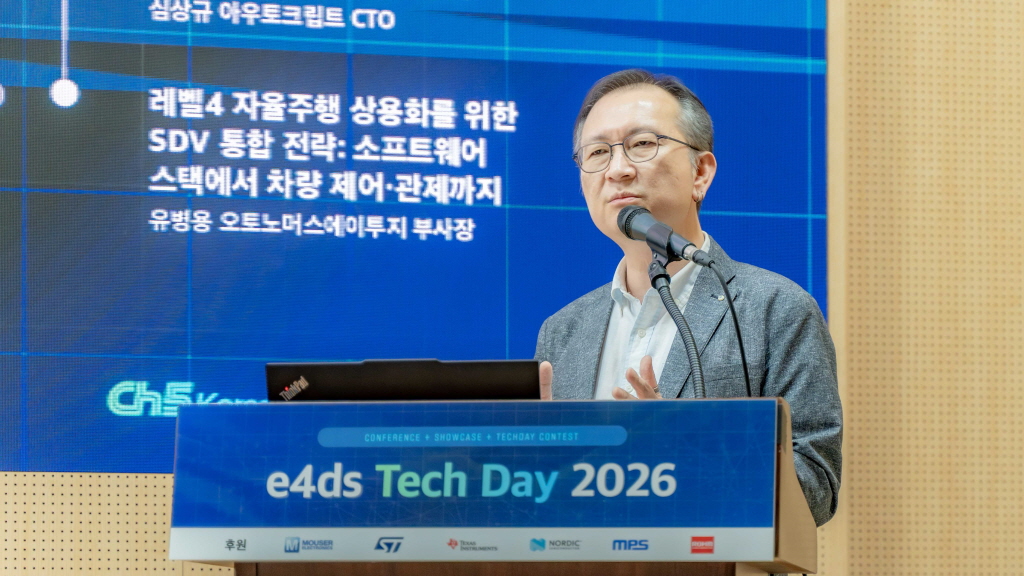
[e4ds Tech Day 2026 ⑨] Sim Sang-gyu, Autocrypt CTO: "In the Physical AI Era, Automotive Security Must Extend Beyond the Vehicle"
At e4ds Tech Day 2026, Sim Sang-gyu, CTO of Autocrypt, explained automotive cybersecurity strategies in the era of Physical AI and SDV (Software-Defined Vehicle). Automobiles are evolving as part of an ecosystem connected to AI, cloud, chargers, IoT, and robots, and he emphasized that the scope of security must expand beyond the vehicle interior to the entire connected environment. In particular, AI model tampering, adversarial attacks, OTA updates, and EV charger hacking were identified as major threats. He explained that response measures require zero trust, AI model integrity protection, intrusion detection, Security by Design and Default, and full lifecycle security management, and that proactive security system establishment beyond regulatory compliance is critical for securing future mobility competitiveness.
2026.10.12by 배종인 기자

Practical HIL Construction Strategy for Automotive and Off-Highway Controller Validation
As vehicle E/E architecture transitions to zonal structures and shifts to software-defined vehicles (SDV), the number of controllers (ECUs) requiring validation and software complexity are surging dramatically. Meanwhile, real vehicle testing cannot provide repeated verification under identical conditions and entails lead time and safety concerns. This white paper explains the principles of HIL (Hardware-in-the-Loop) validation and the structure of the NI platform composed of PXI, SLSC, and VeriStand, and through two actual implementation cases—Camera Record & Replay HIL for In-Cabin Monitoring Controller (ICMU) and Forklift Controller (VCU) HILS—describes how controller-level regression testing becomes possible. Additionally, it explicitly states application boundaries and limitations, such as lack of A2B support.
2026.10.12by 편집부
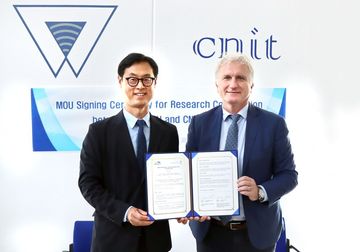
Korea Automotive Research Institute Signs MOU with Italy National Institute for Wireless Communications
The Korea Automotive Research Institute will sign an MOU with Italy's National Institute for Wireless Communications and launch joint research on next-generation mobility technologies based on 6G, V2X, and connected vehicles. The two organizations will conduct research to apply advanced wireless communication technologies to vehicles and discover international joint projects to advance next-generation connected vehicle technology development.
2026.10.12by 배종인 기자











