


KERI Establishes 'Redox Flow Battery Testing and Certification Center'
 Published2022.03.29 09:23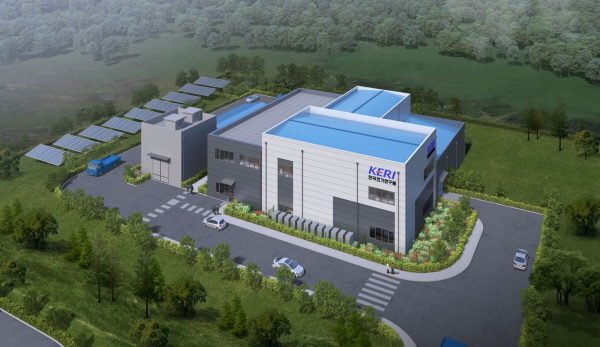
▲KERI Redox Flow Battery Testing and Certification Center
Testing and Certification Implementation Dramatically Shortens Commercialization Timeline
The Korea Electrotechnology Research Institute (KERI, Director Myung Sung-ho), an internationally accredited testing and certification organization for power equipment, is establishing a 'Redox Flow Battery Testing and Certification Center,' a hidden gem of carbon neutrality, and contributing to ESS fire prevention and resolution of renewable energy intermittency through large-capacity batteries and high safety realization.
KERI has constructed a mega-scale infrastructure capable of testing and certifying 'redox flow batteries,' referred to as hidden gems of carbon neutrality, at its Gwangju Regional Headquarters (Smart Grid Division), and held a completion ceremony on the 29th.
The completion ceremony was attended by KERI Director Myung Sung-ho, National Assemblyman Yoon Young-duk (Gwangju Southeastern District), Gwangju Mayor Lee Yong-seop, Gwangju Metropolitan Council Speaker Kim Yong-jip, and Korea Battery Industry Association Vice President Jung Soon-nam, among others.
The 'Large-Capacity Power Storage Redox Flow Battery Testing and Certification Center,' constructed by KERI with total project funding of 23.35 billion won with support from the Ministry of Industry and Gwangju Metropolitan City, spans 10,000㎡ (3,025 pyeong) of land with a total floor area of 2,250㎡ (680 pyeong), housing 44 equipment units across 19 test items evaluating battery performance and safety, including components and materials, stacks, modules, and systems.
Previously, due to the lack of specialized redox flow battery testing infrastructure domestically, companies had to go overseas, which resulted in economic burdens, product development delays, and leakage of core design technologies to foreign countries.
With the establishment of this center, domestic companies can now receive testing and certification quickly, significantly reducing the time required for product commercialization.
According to experts, early commercialization of redox flow batteries can reduce ESS system construction costs by approximately 30% annually and is expected to make significant contributions to carbon neutrality realization.
The center also plans to provide various technical support and information services to enhance the competitiveness of domestic companies and is committed to education for developing future energy workforce. Participating organizations include the Korea Battery Research Association, Korea Institute of Energy Research, Korea Electronics Technology Institute, and Chonnam National University.
KERI Director Myung Sung-ho stated, "Previously, the renewable energy market was so small that lithium-ion battery ESS alone posed no major issues, but in the carbon neutrality era, redox flow battery ESS capable of safely storing large quantities of electricity is essential." He added, "Through the center established for the first time in Gwangju, I will provide full support so that domestic companies can receive battery testing and certification in a stable environment and possess technological competitiveness that does not lag behind on the world stage."
Meanwhile, Redox Flow Battery is a term combining the words reduction, oxidation, and flow. Through chemical reactions of oxidation and reduction, electrons move from the negative electrode (-) to the positive electrode (+) with the help of electrolyte solution, generating electrical energy.
Conventional secondary batteries have electrolyte solution positioned between positive and negative electrodes that facilitates electron flow, and store generated electrical energy in electrodes containing active materials.
In contrast, redox flow batteries dissolve active materials directly in the electrolyte solution, store it in external tanks, and supply this electrolyte to electrodes using pumps.
Through this process, oxidation and reduction reactions occur on the electrode surface during charging and discharging, and the electrical energy generated is stored in the electrolyte.
The major difference between conventional secondary batteries and redox flow batteries is that the subject causing oxidation-reduction reactions is the electrolyte rather than the electrode.
Redox flow batteries are characterized by the ability to independently design output and capacity because they separate the area where chemical reactions occur from the area where electricity is stored, enabling large-capacity battery design.
Additionally, no exhaust gases such as carbon dioxide are produced, and the electrolyte after use can be recycled 100%, making it an ideal eco-friendly battery capable of achieving true carbon zero.
Above all, batteries can be used semi-permanently through periodic readjustment of the electrolyte, and the absence of fire hazard risk is a major strength.
Redox flow batteries with many such advantages are recognized as next-generation long-duration, large-capacity secondary batteries.
Particularly in the carbon neutrality era, they are garnering attention for ESS (Energy Storage System) applications needed for smart grid and distributed power network construction. To resolve the instability (intermittency) of power generation from renewable energy, large-capacity ESS with excellent safety and performance is required, and redox flow batteries are receiving the most significant attention in this regard.
According to market research firm Navigant Research, the global ESS market size is projected to grow from approximately 14 trillion won in 2020 to approximately 38 trillion won in 2024. In response to this trend of the times, South Korea also faced requirements for infrastructure construction to test and evaluate redox flow battery performance and support technological competitiveness acquisition.
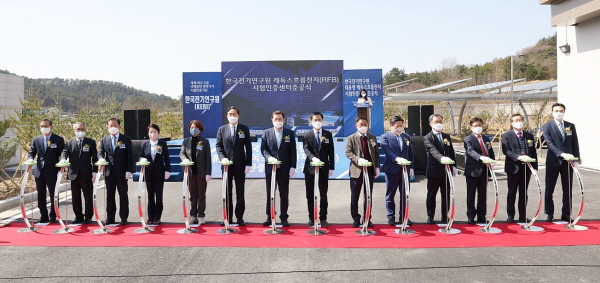
▲Attendees are conducting a commemorative ceremony at the completion ceremony.

Comments
Related news
Electric start-up company 'Medinetech' attracts 8 billion won in investment for 'soft endoscope'
MediIntech Co., Ltd., a startup company established based on the technology of the Korea Electrotechnology Research Institute (hereinafter KERI, President Myung Sung-ho), is launching a full-scale initiative to localize technology and capture the 5 trillion-won market in the flexible endoscope field for digestive systems, which is currently dominated by Japan, through sustained investment of 8 billion won.
2022.02.15by 배종인 기자
KERI and University of Waterloo Lead Busan's Manufacturing Innovation with AI
The Korea Electrotechnology Research Institute (KERI, Director Myung Sung-ho), a state-funded research institution, and the University of Waterloo in Canada, which possesses world-class AI technology, are advancing manufacturing innovation in the Busan region through artificial intelligence (AI).
2022.02.21by 배종인 기자
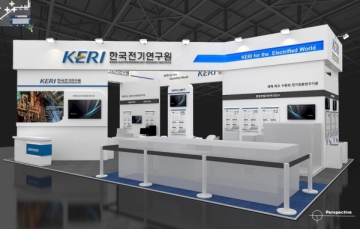
Korea Electric Power Corporation to Select Representative Technologies for Participation in 'Electric Industry Fair'
The Korea Electrotechnology Research Institute (KERI, Director Myung Sung-ho) will showcase representative technologies for carbon neutrality and the Fourth Industrial Revolution at the 'Korea Electrical Industry Expo'.
2022.03.14by 배종인 기자
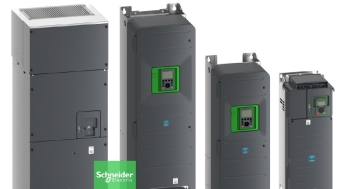
Schneider Aims for Building Energy Savings and Operational Stability with Next-Generation HVAC Drives
Schneider Electric has unveiled its next-generation HVAC drive product line 'Altivar HVAC'. The new product line's key features center on enhanced energy savings, system operational stability, and building management system integration. The products are divided into 'ATH200' for OEM and small equipment applications, and 'ATH600' for environments requiring continuous operation and advanced control. The company plans to expand the application scope from commercial buildings to facilities where HVAC system stability is critical, such as hospitals, airports, and data centers. The announcement includes over 30% energy savings, operation from -10°C to +60°C, Modbus and BACnet support, and compatibility with low global warming potential refrigerants.
2026.03.26by 명세환 기자
Ecolab Expands AI Data Center Cooling Business Through Acquisition of CoolIT
Ecolab has agreed to acquire CoolIT Systems, a liquid cooling company for AI data centers, for approximately $4.75 billion. The transaction is expected to close by Q3 2026, subject to regulatory approvals. CoolIT has been supplying direct-to-chip cooling-based coolant distribution units, cold plates, and manifolds, serving hyperscale data centers and colocation operators as customers. This acquisition is a measure to address the high-heat and high-density server environments created by AI proliferation. Ecolab plans to combine its water management and digital monitoring capabilities with CoolIT's hardware technology to expand its data center cooling business.
2026.03.26by 명세환 기자











