


[Tech Contribution] Mark Patrick Mouser – Accelerating IoT Adoption with Energy Harvesting
 Published2022.03.30 16:30
Sensors using LPWAN can report wirelessly to remote locations, expanding IoT diversity.
Semiconductor Supplier Provides Optimized DC/DC Converter IC for Energy Harvesting
 The potential use cases for the Internet of Things (IoT) are increasing every day. Thanks to the combined effect of various technological advancements such as ultra-low-power microcontrollers and edge-based machine learning, the diversity of IoT applications is expanding, and with the use of Low Power Wide Area Networks (LPWAN), sensors can report regularly from remote locations without power supply through wires.
All these technological advancements remove barriers placed before us, such as smart agriculture IoT use cases.
Deploying battery-operated soil moisture and pH sensors to remote farms via power lines and Wi-Fi connections is simple and inexpensive.
■ Wireless IoT
While the adoption of battery-powered IoT devices in smart cities and smart agriculture is rapidly gaining popularity, these are just two examples of many IoT use cases. Battery capacity determines how long a device can operate and depends entirely on the device's power consumption profile.
In particular, the cost of replacing the battery remotely becomes very high compared to the cost of the battery itself. Therefore, a battery life of, for example, less than 6 months is not feasible in this case.
Battery life can be extended by keeping the sensor's microcontroller and wireless transceiver in deep sleep mode for as long as possible.
In addition, the duty cycle of certain types of IoT sensors can be relatively low. For example, since soil moisture measurements at root depth are unlikely to change significantly over a 30-minute period, reading them every 30 minutes is a reasonable indicator.
In every cycle, the device's microcontroller wakes up, reads the moisture sensor, and wraps the data ready for transmission.
Next, the transceiver must activate the link to the LPWAN and transmit data packets. After acknowledgment, both the transceiver and the microcontroller can return to sleep mode. The device's power consumption during link establishment and data transmission is much higher than in sleep mode, reaching a maximum of 100 mA in a short time, with the maximum being in single-digit µA.
While prudent power management techniques can save battery capacity, the battery ultimately requires replacement or recharging.
■ Energy Harvesting Technology
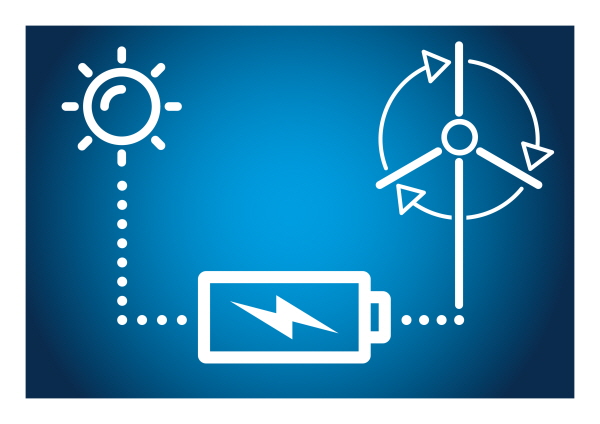
Using rechargeable batteries is a wise choice, but how do you maintain the charge? Solar panels have long been used to charge outdoor devices, but they are not the only way to collect energy from the environment.
The low-power characteristics of many IoT sensor devices mean that there is insufficient battery capacity and energy required to float charge the battery.
Furthermore, since battery capacity determines physical size, keeping it small offers other advantages. New energy harvesting techniques that produce milliwatt and microwatt energy can be a viable alternative.
○ Solar power
Solar energy is already widely used as an excellent energy source for many outdoor applications, and indoor ambient light can also be harvested. The energy harvested indoors varies significantly depending on the available light source, temperature, and location. Therefore, the amount of energy harvested is difficult to predict and is much less than that of outdoor solar panels.
○ Mechanical vibration
Many research papers report various types of energy harvested from mechanical motion. Motion can occur intermittently, such as when people walk along their legs, or regularly, such as the natural vibrations of a motor case. Energy sensors involve the use of piezoelectric elements that convert energy vibrations into electrical energy, as well as electromagnetic effects that occur when a coil passes through a magnetic field. Another method utilizes electrostatic methods based on capacitive induction. Piezoelectric and electromagnetic methods appear to be the most viable.
○ Wind and Water
This method uses kinetic energy to convert wind or water flow into electricity. In both cases, small turbines can generate electrical energy. Size is an important consideration in this harvesting method and for the safety of the wind turbine blades. However, despite practical limitations, the harvested energy is more than sufficient for small IoT sensors.
○ Thermoelectric
The electrical energy generated by this method utilizes the principle of the Seebeck effect. This principle generates electricity using the temperature difference between two insulating plates of semiconductor material. By combining thermoelectric modules, the temperature difference can be maximized within the spatial constraints of IoT devices. The greater the temperature difference, the more energy is generated. However, depending on the application, there may be practical difficulties in achieving this.
○ Radio frequency
Harvesting electromagnetic RF energy is a relatively recent concept. With wireless data and voice connectivity now ubiquitous and numerous terrestrial radio and television stations available, the opportunity to harvest energy across the broad radio spectrum appears highly attractive. While available power depends on location, frequency, and the presence of a suitable signal, specialized semiconductor suppliers are targeting this niche market by releasing usable ICs. Research on energy harvesting from ISM, Wi-Fi, and cellular frequencies is yielding promising results.
■ Harvesting surrounding energy
Since there are almost limitless opportunities for IoT-based applications, providing a reliable power source is of the utmost importance.
Supplying power to devices using rechargeable batteries by harvesting energy from ambient energy sources can be a practical solution.
For some applications, batteries can be supplemented or even replaced by supercapacitors. Supercapacitors combined with batteries can meet the peak energy demands that often occur during wireless data link configuration and exchange.
Several semiconductor suppliers are already providing DC/DC converter ICs optimized for harvesting energy from various sources, such as solar, piezoelectric, and thermocouples, along with high-efficiency power management product families.
More information about energy harvesting can be found at https://resources.mouser.com/energy-harvesting.

Comments
Related news
ON Semiconductor Launches RSL10 Multi-Sensor Platform Powered by Solar Cells
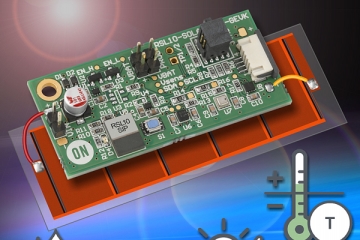
onsemi has launched the RSL10 multisensor platform powered solely by solar cells. The new solution collects and transmits data via Bluetooth LE without requiring batteries or other forms of non-renewable energy. This supports IoT sensor development using solar energy harvesting. The combination of ultra-low-power wireless communication, compact form factor solar cells, and low-duty-cycle sensing applications enables the development and deployment of maintenance-free IoT sensor nodes.
2019.04.13by 이수민 기자
KETI Develops Broadband-Ultra-Small Power Conversion Circuit for Piezoelectric Energy Harvesting: "Will Contribute to Revitalizing IoT Market"
The Electronics and Telecommunications Research Institute (ETRI) announced that through joint research with Université Paris-Sud in France, it has developed an ultra-compact, broadband power conversion circuit for piezoelectric energy harvesting that can accommodate various frequencies and amplitudes without requiring a separate algorithm. Piezoelectric energy harvesting technology is a technique for securing energy from ambient vibrations and pressure changes, and is a core technology essential for IoT sensors that require periodic battery replacement. The power conversion circuit developed this time does not require impedance matching because it extracts energy by utilizing the characteristics of a buck-boost type power conversion circuit in which impedance is maintained constant at the maximum power extraction point.
2019.05.22by 이수민 기자
Silicon Labs Unveils Wireless SoC for Zigbee Green Power
Zigbee Green Power technology was designed with a protocol in mind that enables IoT devices to operate either using battery power or through energy harvesting technology without batteries. Silicon Labs' EFR32MG22 SoC product family is well-suited for Zigbee device designs using coin cell batteries or energy harvesting power sources. The MG22 SoC integrates a high-performance, low-power 76.8MHz Arm Cortex-M33 core and TrustZone security technology.
2020.02.20by 이수민 기자
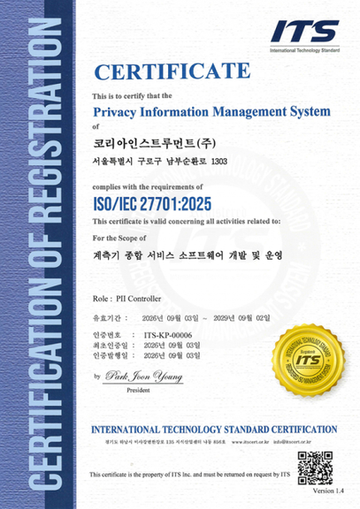
Korea Instrument, KOLAS Accredited Calibration Agency First to Simultaneously Acquire ISO/IEC 27,001·27,701
Korea Instrument has become the first among KOLAS accredited calibration agencies to simultaneously acquire ISO/IEC 27,001 and ISO/IEC 27,701 certifications. Through its proprietary platforms CWIZ Enterprise and CWIZ Partners, the company has embedded information security and personal data protection requirements across all business processes including customer information, equipment data, and calibration reports, with plans to continuously advance its management system through regular audits and security inspections.
2026.10.12by 배종인 기자

TeamViewer One, IT Incident Automation Workflow and Resolution Center Enhanced
TeamViewer has added IT incident automation capabilities and an advanced Resolution Center to its integrated digital workplace management platform 'TeamViewer ONE'. Recurrent service disruptions, configuration errors, and capacity shortages are automatically handled according to preset policies, and device status verification through script deployment can be managed in a unified interface, significantly reducing repetitive tasks for IT teams.
2026.10.12by 배종인 기자











