


Seeking Ways to Advance Autonomous Driving… V2X and Precision Maps in One Place
 Published2022.04.14 11:47
.jpg)
Jo Soon-ki, Director of ECIS, is presenting on the future direction of domestic V2X solutions. (Photo: Sung Yoo-chang)
V2X activation agent, terminal device
Commercialization of Autonomous Driving, Precision Maps Essential
The Ministry of Land, Infrastructure and Transport and the Council for the Development of the Autonomous and Cooperative Driving Industry held the '2022 Council for the Development of the Autonomous and Cooperative Driving Industry Technology Seminar' at Automotive World Korea, held at COEX on the 13th.
At the opening ceremony, Park Ji-hong, Director General of Automotive Policy at the Ministry of Land, Infrastructure and Transport, stated, “While nations and companies are engaged in fierce competition regarding autonomous driving, Korea is also devoting all its efforts to technology development and infrastructure expansion,” adding, “We will continue to contribute to the advancement of the autonomous driving industry.”
Jo Soon-ki, Director of ECIS, gave a presentation on the future direction of domestic V2X solutions, identifying terminals as a key player in the activation of V2X. He emphasized, “We must remain faithful to the original purpose of V2X, which is to support traffic safety and autonomous driving,” adding that “it is important to develop measures to distribute terminal devices to revitalize the service.”
He went on to mention the importance of service compatibility beyond standardization and the Before Market through joint preparation with automakers. Director Jo believes that installing the terminal during the vehicle production process is much more effective than installing it after production.
Director Jo also conveyed words of advice to officials from the Ministry of Land, Infrastructure and Transport and the Korea Expressway Corporation who attended the seminar. He noted that roads, transportation systems, automobiles, and communications all have different lifespans; while the lifespan of a car is around 10 years, a road, once designed, can last for 40 to 50 years. He emphasized that for the commercialization of autonomous driving, the condition of the roads is just as important as the technology installed in the vehicles, and conveyed the importance of road design and management to the officials.
Kim Jae-hee, Head of the Technology Research Institute at WayzOne, stated that high-precision road maps are essential for autonomous driving. High-precision maps play a crucial role in the decision-making of autonomous driving systems because they include distant situations that sensors cannot perceive, surrounding information transmitted from servers, and driving environment data that can be referenced during driving.
The construction of precision maps involves using MMS to acquire 3D information of road surfaces and surrounding facilities to create shapes, and inputting attribute information of objects and relationship information between objects. Since the cost of constructing precision maps amounts to 50 times that of general navigation systems, overseas companies are pursuing strategies to reduce costs through mergers and acquisitions and joint investments.
The BMW, Audi, and Daimler consortium acquired HERE, Nokia's map information services division, and built high-precision maps of the United States and Europe. In Japan, the private and public sectors jointly invested to establish the Dynamic Map Platform (DMP) and built high-precision road maps for Japanese expressways. In Korea, Hyundai AutoEver developed MAC (Map Auto Creation) technology that automates object extraction and recognition from data collected by MMS vehicles by 90%. Construction of 16,000 km of nationwide expressways has been completed.
Meanwhile, the Autonomous Cooperative Driving Industry Development Council, which hosted this seminar, was launched in 2018 to promote mutual growth and new businesses between large and small businesses, and is organized with the Ministry of Land, Infrastructure and Transport, Hyundai Motor Company, Samsung Electronics, SK Telecom, and ECIS serving as co-chairs from the public and private sectors. A total of 316 organizations, including companies such as Sonnet and Mars Auto, as well as research institutions and academia, are members.
Comments
Related news
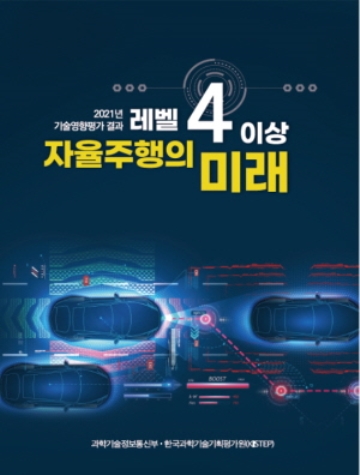
Ministry of Science and ICT Summary of Policy Recommendations for Level 4 Autonomous Driving
A publication has been released that compiles the results of discussions between experts and citizens regarding the impact that Level 4 or higher autonomous driving technology will have on the economy, society, and culture.
2022.04.06by 성유창 기자
US to eliminate steering wheel and pedals from cars
The U.S. National Highway Traffic Safety Administration (hereinafter NHTSA) has unveiled regulations permitting fully autonomous vehicles without steering wheels, accelerator pedals, and other manual driving controls to operate on public roads, accelerating the commercialization of fully autonomous vehicles.
2022.04.11by 성유창 기자
dSPACE Korea Accelerates Growth in Domestic HIL Market Share
dSPACE Korea, which established its Korean subsidiary last year, announced on the 11th that it will accelerate its market share expansion in the eco-friendly vehicle sector while maintaining the top position in the HIL market for autonomous driving and ADAS fields.
2022.04.12by 성유창 기자
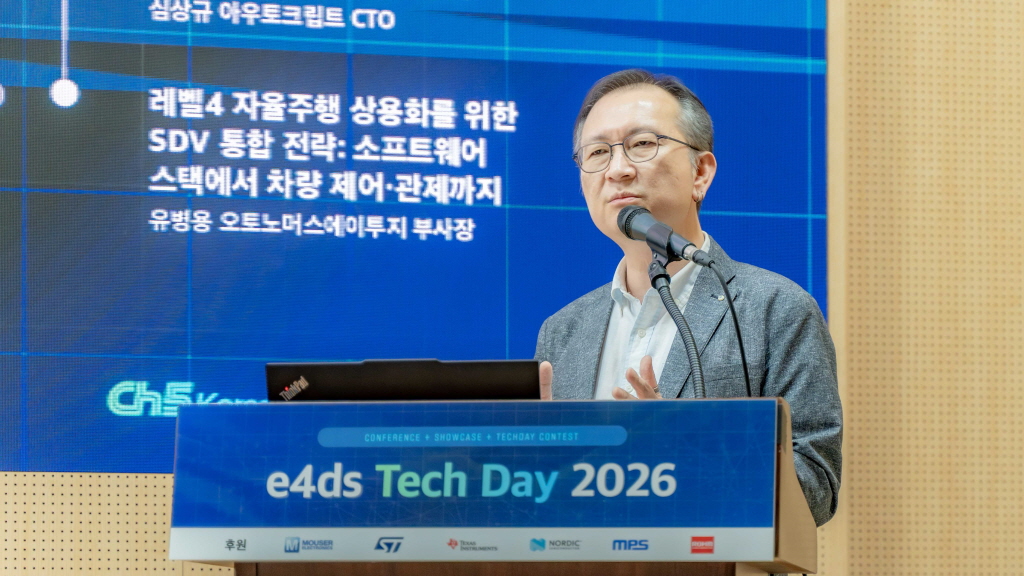
[e4ds Tech Day 2026 ⑨] Sim Sang-gyu, Autocrypt CTO: "In the Physical AI Era, Automotive Security Must Extend Beyond the Vehicle"
At e4ds Tech Day 2026, Sim Sang-gyu, CTO of Autocrypt, explained automotive cybersecurity strategies in the era of Physical AI and SDV (Software-Defined Vehicle). Automobiles are evolving as part of an ecosystem connected to AI, cloud, chargers, IoT, and robots, and he emphasized that the scope of security must expand beyond the vehicle interior to the entire connected environment. In particular, AI model tampering, adversarial attacks, OTA updates, and EV charger hacking were identified as major threats. He explained that response measures require zero trust, AI model integrity protection, intrusion detection, Security by Design and Default, and full lifecycle security management, and that proactive security system establishment beyond regulatory compliance is critical for securing future mobility competitiveness.
2026.10.12by 배종인 기자

Practical HIL Construction Strategy for Automotive and Off-Highway Controller Validation
As vehicle E/E architecture transitions to zonal structures and shifts to software-defined vehicles (SDV), the number of controllers (ECUs) requiring validation and software complexity are surging dramatically. Meanwhile, real vehicle testing cannot provide repeated verification under identical conditions and entails lead time and safety concerns. This white paper explains the principles of HIL (Hardware-in-the-Loop) validation and the structure of the NI platform composed of PXI, SLSC, and VeriStand, and through two actual implementation cases—Camera Record & Replay HIL for In-Cabin Monitoring Controller (ICMU) and Forklift Controller (VCU) HILS—describes how controller-level regression testing becomes possible. Additionally, it explicitly states application boundaries and limitations, such as lack of A2B support.
2026.10.12by 편집부











