


The Korea Agency for Technology and Standards (KATS) eases electric vehicle certification standards and manufacturing facility requirements.
 Published2022.04.19 14:06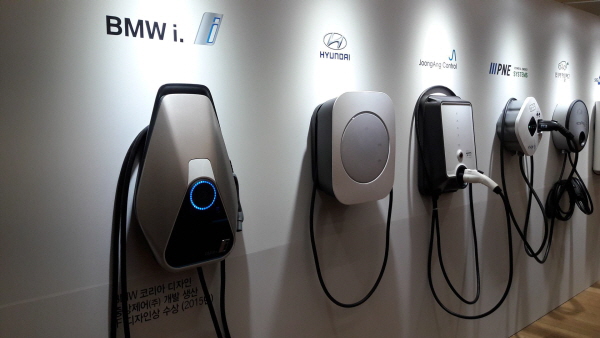
The photo is unrelated to the article (Photo source: Pixabay)
Simplify authentication when changing parts
Relaxed requirements for charger manufacturing
Improved charging rate accuracy
The Korea Agency for Technology and Standards held a public hearing on the revision of the “Electric Vehicle Charger Technical Standards” on the 19th to collect opinions from the industry and plans to complete the revision process within the year.
There are three main improvements.
First, certification for component changes will be simplified. When changing auxiliary electronic devices, such as displays, modems, and payment devices, whose specifications frequently change depending on the charger user, certification can be obtained with only a few tests. Minor changes, such as exterior or terminal block changes, will be exempt from approval.
In particular, in the case of cable length changes, which have been an inconvenience to the industry, if the minimum and maximum lengths are approved at the time of initial type approval, manufacturing can be freely changed within that length range without additional approval.
The second is the relaxation of manufacturing requirements. Registering as an electric vehicle charger meter manufacturer requires testing facilities with a maximum capacity of 300V/40A AC and 500V/120A DC, which has been a burden for new entrants. However, going forward, we will pursue revisions to related laws so that only facilities appropriate for the capacity of the products actually manufactured will be required.
Finally, the accuracy of charging rates has been improved. To provide consumers with more accurate charging rates, the unit of charge display has been changed from one decimal place to two decimal places (0.1 kWh → 0.01 kWh).
The Korea Agency for Technology and Standards plans to supplement the revised content by reflecting industry opinions and, after going through procedures such as administrative notice, revise and announce the 'Electric Vehicle Charger Technical Standards' as early as the third quarter of the year or at the latest within the year.
Lee Sang-hoon, head of the Korea Agency for Technology and Standards, said, “As of the end of last year, 230,000 electric vehicles and 107,000 chargers were distributed domestically, and this number is expected to continue to increase.” He added, “We will communicate closely with the industry to alleviate the certification burden so that the certification system does not become an obstacle to the distribution of electric vehicle chargers. At the same time, we will work to manage measurements and prevent illegal manipulation so that the public can trust and use electric vehicle chargers.”
Comments
Related news
Reusing Electric Vehicle Waste Batteries… Economic and Environmental Efficiency ↑
Policies and businesses are actively being pursued to enable batteries from end-of-life electric vehicles to be reused in various applications such as power wheelchairs and energy storage systems.
2022.04.12by 성유창 기자
Hyundai Motor Strengthens Electric Vehicle Maintenance Capabilities
Hyundai Motor announced on the 18th that it will accelerate the cultivation of specialized electric vehicle maintenance personnel through the launch of the new 'Hyundai Master Certification Program Electrified (HMCPe)'.
2022.04.18by 성유창 기자
Trend of unifying USB charging ports in vehicles to Type C
Moon Seung-il, director at Infineon, presented on the topic of "Automotive USB Type-C Charging Controller Solutions and Design Technology" at the e4ds webinar, stating that the company will provide solutions to simplify the design process and enable rapid transition to USB Type-C charging ports by leveraging design resources and specialized expertise.
2022.04.19by 성유창 기자

[e4ds Tech Day 2026 ⑨] Sim Sang-gyu, Autocrypt CTO: "In the Physical AI Era, Automotive Security Must Extend Beyond the Vehicle"
At e4ds Tech Day 2026, Sim Sang-gyu, CTO of Autocrypt, explained automotive cybersecurity strategies in the era of Physical AI and SDV (Software-Defined Vehicle). Automobiles are evolving as part of an ecosystem connected to AI, cloud, chargers, IoT, and robots, and he emphasized that the scope of security must expand beyond the vehicle interior to the entire connected environment. In particular, AI model tampering, adversarial attacks, OTA updates, and EV charger hacking were identified as major threats. He explained that response measures require zero trust, AI model integrity protection, intrusion detection, Security by Design and Default, and full lifecycle security management, and that proactive security system establishment beyond regulatory compliance is critical for securing future mobility competitiveness.
2026.10.12by 배종인 기자

Practical HIL Construction Strategy for Automotive and Off-Highway Controller Validation
As vehicle E/E architecture transitions to zonal structures and shifts to software-defined vehicles (SDV), the number of controllers (ECUs) requiring validation and software complexity are surging dramatically. Meanwhile, real vehicle testing cannot provide repeated verification under identical conditions and entails lead time and safety concerns. This white paper explains the principles of HIL (Hardware-in-the-Loop) validation and the structure of the NI platform composed of PXI, SLSC, and VeriStand, and through two actual implementation cases—Camera Record & Replay HIL for In-Cabin Monitoring Controller (ICMU) and Forklift Controller (VCU) HILS—describes how controller-level regression testing becomes possible. Additionally, it explicitly states application boundaries and limitations, such as lack of A2B support.
2026.10.12by 편집부











