



KERI Breaks Ground on e-Nanomaterial Chemical/Wet Process Platform
 Published2022.04.26 16:15
.jpg)
▲ Key attendees perform groundbreaking ceremony at the 'e-Nanomaterial Chemical/Wet Process Platform' groundbreaking ceremony.
A large-scale infrastructure is being established to promote research and development activities and realize technological independence in the field of advanced electrical new materials and components to accelerate the era of advanced E-mobility and future smart electronic devices.
The Korea Electrotechnology Research Institute (KERI, Director Myung Sung-ho) held a groundbreaking ceremony on the 26th at its Changwon headquarters for the 'e-Nanomaterial Chemical/Wet Process Platform' with a scale of 19 billion won for developing high-value-added smart electrical new materials and components.
The event was attended by approximately 100 people including Changwon Mayor Heo Sung-moo, Gyeongnam Province Planning and Coordination Director Ha Jong-mok, and officials from local governments, related organizations, and companies.
With the advent of the Fourth Industrial Revolution, 'electrification' is progressing in most of the products we use.
Particularly, this trend is accelerating in the fields of E-mobility such as electric and hydrogen vehicles, electric ships, flying cars/drones, and smart electronic devices such as wearable devices, and the development of electrical new materials and components to support these begins with the utilization of e(electrical functionality)-nanomaterials.
While semiconductors and displays are large enterprises-oriented fields based on large-scale dry-process nanoprocess equipment, the development of electrical new materials based on e-nanomaterials relies heavily on chemical/wet processes in the production method of multiple products in small quantities, centered on small and mid-sized companies. However, the lack of an infrastructure hub to support such chemical/wet processes in Korea has been one of the major factors hindering the improvement of technological competitiveness for companies.
The 'e-Nanomaterial Chemical/Wet Process Platform' being constructed by KERI this time is the nation's largest-scale infrastructure created to realize technological independence in the field of electrical new materials and components and foster strong small and mid-sized enterprises in related fields.
The total project cost is 19 billion won over three years (2021-2023), with a total floor area of 6,243㎡ (1,888 pyeong) and a site area of 2,800㎡ (847 pyeong). The building structure consists of 9 stories above ground and 1 story below ground. The location is in front of Building 3 Research Division of KERI's Changwon headquarters where research and development in the electrical materials field is conducted. Completion is scheduled for September 2023.
Inside the platform (building), various research laboratories will be established including chemical laboratories, large-scale equipment (pilot plant) rooms, constant temperature and humidity rooms, dry rooms, precision measurement rooms, battery charge/discharge test laboratories, conductive material laboratories, and data analysis rooms. In particular, wet processes often involve the use of hazardous and dangerous substances due to the nature of the work, and space is needed to safely store various chemical substances. Through this groundbreaking of an advanced platform, it is expected that researcher safety, convenience, and work efficiency can be significantly improved. In other words, a stable research environment that comprehensively supports the development of next-generation electrical new materials and components will be established.
Furthermore, the platform will also operate a 'Practical Solution Center' that supports technology transfer of technologies developed by the institute to companies and one-stop support for performance verification through commercialization. Rather than stopping at simple research and development and technology transfer, through continuous collaboration with companies, the plan is to dramatically shorten the timeframe for product commercialization.
Additionally, the high possibility of collaboration with key local institutions and companies is a major strength. The Gyeongnam region has many KERI partner companies, which are also technical core institutions of the Changwon Small and Medium Enterprise Special Zone, and along with the Milyang Nano Industrial Complex, there is also the Korea Institute of Materials Science and the Korea Institute of Ceramic Engineering and Technology, so the 'e-Nanomaterial Chemical/Wet Process Platform' is expected to grow into a hub cluster in the electrical materials field.
Through this, the goal is to increase the self-reliance of small and mid-sized companies in the chemical/wet process field, and ultimately enable Korea to stand as a global power in the field of smart electrical new materials and components.
KERI Director Myung Sung-ho stated, "The necessity for technological independence in Korea's materials, parts, and equipment sector has continued to grow since Japan's export restrictions, and recently there is a strong demand for high reliability and high performance of electrical new materials and components such as renewable energy and E-mobility," adding "Through this platform construction, we will make efforts to not only expand the foundation for research and development in related fields but also create a stepping stone for domestic companies to grow together, thereby greatly contributing to strengthening national industrial competitiveness."
Lee Geon-woong, head of KERI's Electrical Materials Research Division and project manager, stated, "This platform construction is a long-cherished project that has been pursued since 2011 to resolve the issue of insufficient chemical/wet process infrastructure," and added, "After more than 10 years of effort, the platform that is being constructed is expected to not only secure researcher safety but also accelerate support for commercialization of related companies."
Meanwhile, KERI is a government-funded research institute under the National Research Council of Science and Technology of the Ministry of Science and ICT, and has been recognized for its research capabilities and infrastructure close to world-class levels, and numerous patents, technology transfer, and industrial support achievements and experience, and has been designated as a 'National Research Laboratory (N-Lab, 2019/2020)' and 'National Research Consortium (N-Team, 2020)' respectively, and is making efforts to strengthen technological independence capabilities in the secondary battery and nano-electrical materials fields.

Comments
Related news
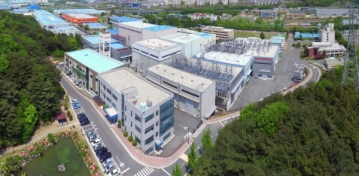
The Korea Electrotechnology Research Institute (KERI) is building an internationally accredited testing infrastructure for HVDC power equipment, worth 18.5 billion won.
The Korea Electrotechnology Research Institute (KERI, Acting Director Yoo Dong-wook), a government-funded research institution under the National Research Council of Science and Technology (NST) under the Ministry of Science and ICT, is establishing the nation's first large-scale infrastructure in the Changwon area of South Gyeongnam Province for testing and certification of power equipment in the field of Ultra-High Voltage Direct Current (HVDC) transmission, which is recognized as a next-generation power transmission technology, thereby contributing to strengthening the export competitiveness of domestic power equipment manufacturers through the provision of fast and highly reliable testing and certification services.
2021.07.27by 배종인 기자
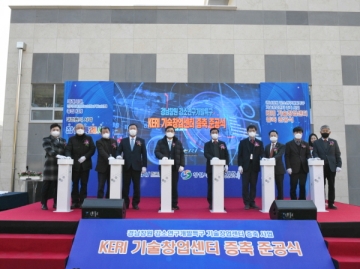
KERI, Technology Startup Center Expansion
The Korea Electrotechnology Research Institute (KERI, Director Myung Sung-ho) is launching a full-scale initiative to support early business establishment and corporate growth for companies residing in the Gangso Special Zone through the expansion of its Technology Startup Center.
2022.01.27by 배종인 기자
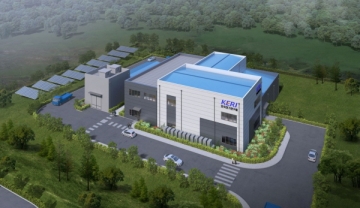
KERI Establishes 'Redox Flow Battery Testing and Certification Center'
The Korea Electrotechnology Research Institute (KERI, Director Myung Sung-ho), an internationally accredited testing and certification organization for power equipment, is establishing a 'Redox Flow Battery Testing and Certification Center,' a hidden gem of carbon neutrality, and contributing to ESS fire prevention and resolution of renewable energy intermittency through large-capacity batteries and high safety realization.
2022.03.29by 배종인 기자
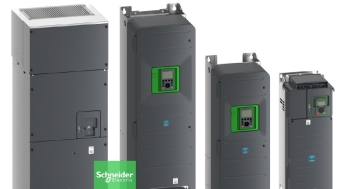
Schneider Aims for Building Energy Savings and Operational Stability with Next-Generation HVAC Drives
Schneider Electric has unveiled its next-generation HVAC drive product line 'Altivar HVAC'. The new product line's key features center on enhanced energy savings, system operational stability, and building management system integration. The products are divided into 'ATH200' for OEM and small equipment applications, and 'ATH600' for environments requiring continuous operation and advanced control. The company plans to expand the application scope from commercial buildings to facilities where HVAC system stability is critical, such as hospitals, airports, and data centers. The announcement includes over 30% energy savings, operation from -10°C to +60°C, Modbus and BACnet support, and compatibility with low global warming potential refrigerants.
2026.03.26by 명세환 기자
Ecolab Expands AI Data Center Cooling Business Through Acquisition of CoolIT
Ecolab has agreed to acquire CoolIT Systems, a liquid cooling company for AI data centers, for approximately $4.75 billion. The transaction is expected to close by Q3 2026, subject to regulatory approvals. CoolIT has been supplying direct-to-chip cooling-based coolant distribution units, cold plates, and manifolds, serving hyperscale data centers and colocation operators as customers. This acquisition is a measure to address the high-heat and high-density server environments created by AI proliferation. Ecolab plans to combine its water management and digital monitoring capabilities with CoolIT's hardware technology to expand its data center cooling business.
2026.03.26by 명세환 기자











