


KAMA·ACEA, “Adjusting the Speed of Transition to the EV Era Is Essential”
 Published2022.05.13 13:47
"Tightened EU environmental regulations not sufficiently effective"
The Korea Automobile Manufacturers Association (hereinafter KAMA) held a regular consultation with the European Automobile Manufacturers Association (ACEA) in Brussels, Belgium on the 10th (local time).
Comments
Related news
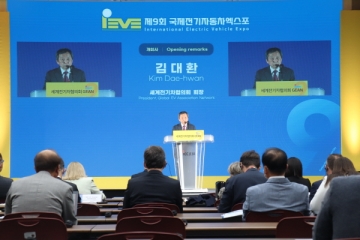
[International Electric Vehicle Expo] World Electric Vehicle Council General Assembly, “‘EVs’ Key to Low-Carbon Policy”
The Global Electric Vehicle Association (hereinafter GEAN), which was launched at the 3rd International Electric Vehicle Expo, held its 7th General Assembly at this expo and shared opinions on the future of electric vehicles.
2022.05.09by 성유창 기자
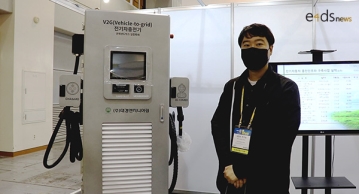
[International EV Expo] Daekyung Engineering: 'V2G Chargers Enable Electric Investment'
Daekyung Engineering exhibited a V2G bidirectional fast electric vehicle charger at the '9th International Electric Vehicle Expo (IEVE)' which was held from the 3rd to the 6th.
2022.05.10by 김예지 기자

TI's solid-state relay insulation technology boosts reliability and stability.
Environmental awareness has swept across the industry, and the electric vehicle market has grown ten-fold in just five years. As electric vehicle development and deployment proceed at a rapid pace, high-voltage systems are becoming commonplace, and EMI/EMC and insulation have begun to emerge as challenging design issues for system engineers.
2022.05.11by 명세환 기자
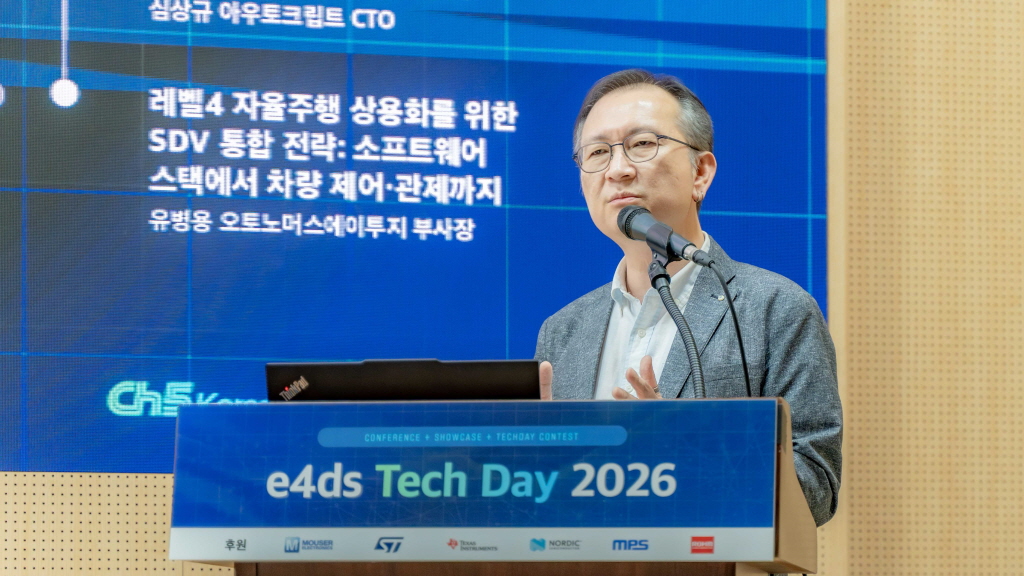
[e4ds Tech Day 2026 ⑨] Sim Sang-gyu, Autocrypt CTO: "In the Physical AI Era, Automotive Security Must Extend Beyond the Vehicle"
At e4ds Tech Day 2026, Sim Sang-gyu, CTO of Autocrypt, explained automotive cybersecurity strategies in the era of Physical AI and SDV (Software-Defined Vehicle). Automobiles are evolving as part of an ecosystem connected to AI, cloud, chargers, IoT, and robots, and he emphasized that the scope of security must expand beyond the vehicle interior to the entire connected environment. In particular, AI model tampering, adversarial attacks, OTA updates, and EV charger hacking were identified as major threats. He explained that response measures require zero trust, AI model integrity protection, intrusion detection, Security by Design and Default, and full lifecycle security management, and that proactive security system establishment beyond regulatory compliance is critical for securing future mobility competitiveness.
2026.10.12by 배종인 기자

Practical HIL Construction Strategy for Automotive and Off-Highway Controller Validation
As vehicle E/E architecture transitions to zonal structures and shifts to software-defined vehicles (SDV), the number of controllers (ECUs) requiring validation and software complexity are surging dramatically. Meanwhile, real vehicle testing cannot provide repeated verification under identical conditions and entails lead time and safety concerns. This white paper explains the principles of HIL (Hardware-in-the-Loop) validation and the structure of the NI platform composed of PXI, SLSC, and VeriStand, and through two actual implementation cases—Camera Record & Replay HIL for In-Cabin Monitoring Controller (ICMU) and Forklift Controller (VCU) HILS—describes how controller-level regression testing becomes possible. Additionally, it explicitly states application boundaries and limitations, such as lack of A2B support.
2026.10.12by 편집부











