


Smart Metal Detecting Screw Loosening Risk
 Published2022.05.30 16:25
.jpg)
▲Schematic diagram of intelligent metal manufacturing using L-PBF technique (A: Four constituent elements of intelligent metal manufacturing (primary L-PBF component, protective layer, strain gauge sensor, secondary L-PBF component), B: Intelligent metal manufacturing process consisting of 3 stages, C: Process diagram enlarged from the sensor embedding process using protective layer)
Smart metal components capable of distinguishing screw loosening risks and internal/external physical deformation factors have been developed, and are drawing expectations to lead digital transformation in manufacturing, automotive, aviation, and medical device industries in the future.
A research team led by Professor Jeong Im-du from the Department of Mechanical Engineering at UNIST (President Lee Yong-hun) announced on the 26th that it has successfully developed 'perceptive stainless steel metal components' using 3D printing additive manufacturing technology and artificial intelligence technology.
The team also announced that it has implemented a digital twin at the metal component level through the fusion of artificial intelligence technology and augmented reality technology.
This research was conducted as a joint collaboration with Georgia Institute of Technology in the United States, Nanyang Technological University in Singapore, Korea Institute of Materials Science, POSTECH, and Gyeongsang National University.
The technology developed by the research team embeds deformation sensors during stainless steel metal component manufacturing to obtain data reflecting physical conditions, and then uses artificial intelligence analysis to enable the metal component to self-detect its own condition.
This intelligent stainless steel metal component was able to self-detect the degree of loosening of surrounding fastening screws and the location of loosened screws with approximately 90% accuracy. It can even distinguish the type of object that struck it (hand, hammer, wrench, etc.).
Additionally, through the digital twin metal component, changes in internal and external stress distribution can now be confirmed in real-time in mixed reality.
In metal forming, which is primarily a high-temperature process exceeding 1,000 degrees Celsius, the technology of inserting sensors internally is extremely difficult; however, the team utilized its proprietary 'metal forming sensor insertion technology.'
L-PBF L-PBF (Laser powder bed fusion): One of the metal 3D printing methods that selectively fuses materials by irradiating high-temperature lasers on powder material. Precise printing is possible.
This is a technology that safely inserts heat-sensitive sensors into the design position through metal 3D printing processes. Additionally, to ensure that mechanical properties of the metal component do not deteriorate with sensor insertion, the insertion position was designed, and after sensor insertion, safety was verified through mechanical analysis and microstructural analysis.
Graduate student Seo Eun-hyuk, who participated as the first author, stated, "By extracting meaningful big data from within the metal and applying artificial intelligence, this is ultimately a technology that can contribute to safety and productivity improvement at industrial sites through digitalization of various metal machinery-based manufacturing industries."
Professor Jeong Im-du from UNIST, who oversaw the research as the corresponding author, remarked, "The results of this study can be applied not only to stainless steel metal components, but also to general mechanical components used in manufacturing such as general steel, aluminum, titanium alloys, and other materials, and will be able to help lead the digital transformation of existing manufacturing, automotive, aerospace, nuclear power, and medical device industries."
The research results were published on May 5th in 'Virtual and Physical Prototyping,' an international academic journal ranked within the top 7% of JCR rankings in the manufacturing field. The research was conducted with support from the 'Individual Basic Research Project' promoted by the National Research Foundation of Korea (NRF).

Comments
Related news
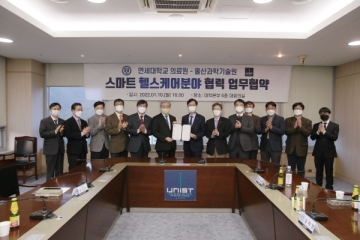
UNIST and Yonsei Medical Center Join Hands for Smart Healthcare
UNIST (President Yong-Hoon Lee) and Yonsei University Health System (Director Dong-Seop Yoon) will strengthen research capabilities and contribute to advances in medical technology through the joint promotion of research in the smart healthcare field.
2022.01.10by 배종인 기자
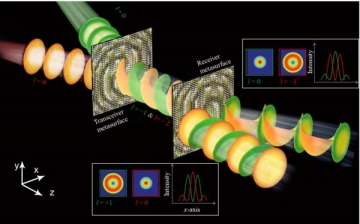
UNIST on the verge of commercializing 6G devices
A UNIST research team has proposed communication device technology capable of rapidly identifying OAM signals by utilizing self-designed metasurfaces, and is drawing expectations that this will accelerate the commercialization of 6G communications.
2022.03.22by 배종인 기자
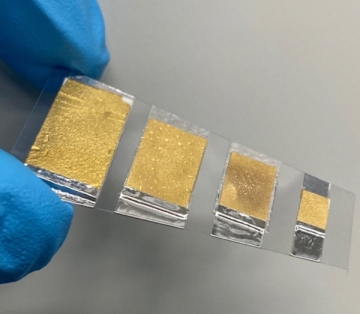
UNIST develops artificial skin that can hear sound
An interface technology for controlling robots using artificial skin capable of hearing sound has been developed, and it is expected to be applied to avatar robots and other virtual reality, augmented reality, and Internet of Things applications in the future.
2022.03.28by 배종인 기자
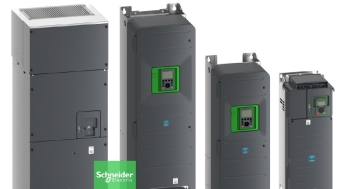
Schneider Aims for Building Energy Savings and Operational Stability with Next-Generation HVAC Drives
Schneider Electric has unveiled its next-generation HVAC drive product line 'Altivar HVAC'. The new product line's key features center on enhanced energy savings, system operational stability, and building management system integration. The products are divided into 'ATH200' for OEM and small equipment applications, and 'ATH600' for environments requiring continuous operation and advanced control. The company plans to expand the application scope from commercial buildings to facilities where HVAC system stability is critical, such as hospitals, airports, and data centers. The announcement includes over 30% energy savings, operation from -10°C to +60°C, Modbus and BACnet support, and compatibility with low global warming potential refrigerants.
2026.03.26by 명세환 기자

Ecolab Expands AI Data Center Cooling Business Through Acquisition of CoolIT
Ecolab has agreed to acquire CoolIT Systems, a liquid cooling company for AI data centers, for approximately $4.75 billion. The transaction is expected to close by Q3 2026, subject to regulatory approvals. CoolIT has been supplying direct-to-chip cooling-based coolant distribution units, cold plates, and manifolds, serving hyperscale data centers and colocation operators as customers. This acquisition is a measure to address the high-heat and high-density server environments created by AI proliferation. Ecolab plans to combine its water management and digital monitoring capabilities with CoolIT's hardware technology to expand its data center cooling business.
2026.03.26by 명세환 기자











