


Hyundai Motor Group and UNIST Partner to Develop High-Efficiency Solar Cell Devices
 Published2022.06.13 09:38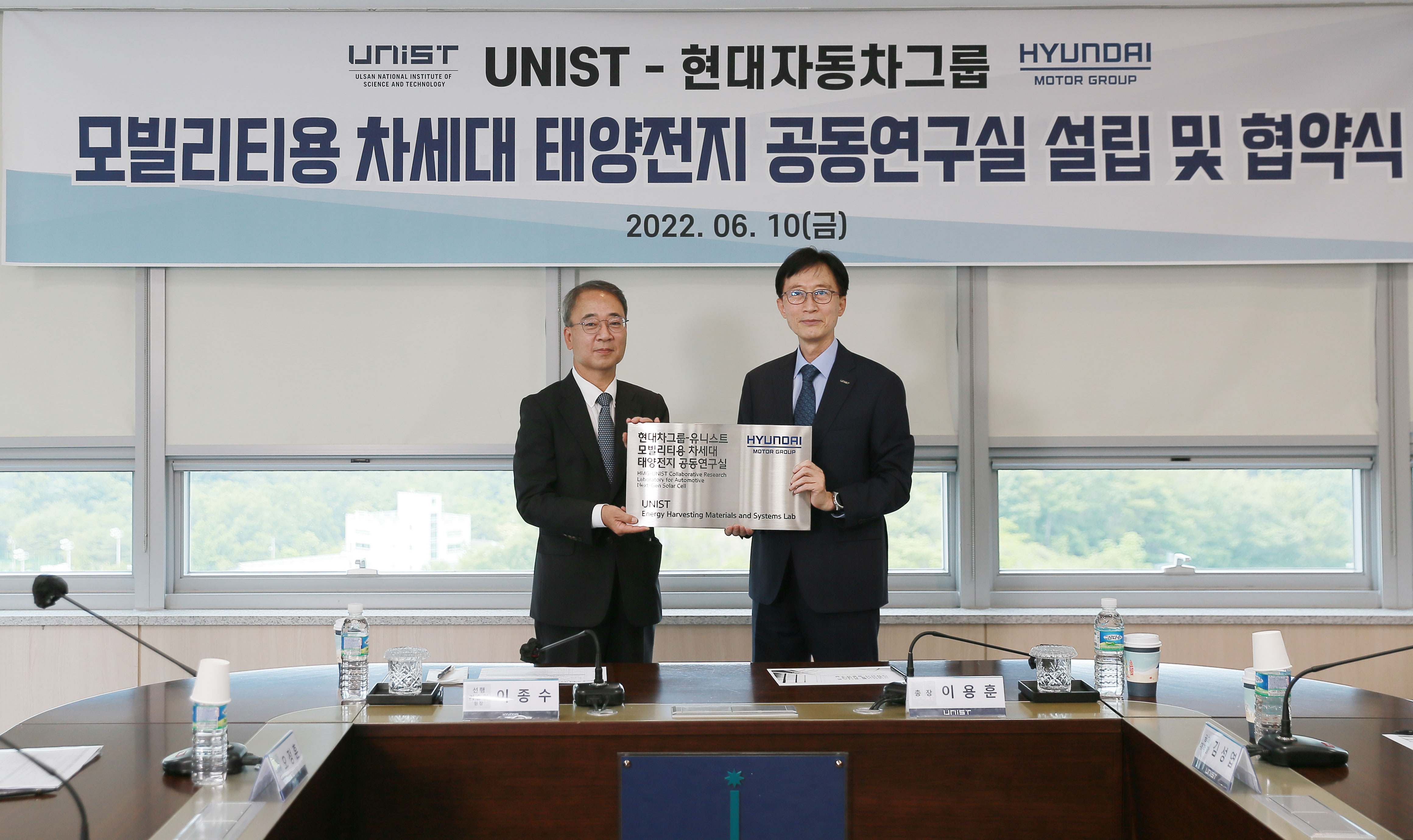
▲(왼쪽부터)이종수 현대자동차 선행기술원장과 이용훈 UNIST 총장 (사진 제공: UNIST)
‘현대차그룹-유니스트 공동연구실’ 협약과 현판식 진행
2025년까지 공동연구 추진, 태양전지 세계 석학 참여
UNIST와 현대차그룹은 10일 ‘현대차그룹-유니스트 모빌리티용 차세대 태양전지 공동연구실(이하 공동연구실)’ 협약 및 현판 전달식을 진행하고 공동연구의 시작을 알렸다.
현대차그룹은 자동차 루프를 이용해 태양광 발전을 하고 충전하는 ‘솔라 루프(solar roof)’를 일부 차량에 적용하고 있다.
솔라 루프의 태양전지 패널로 태양 아래 차량을 놔두면 배터리를 충전할 수 있고 주행 중에도 충전이 가능하며, 이산화탄소도 배출하지 않아 친환경 자동차 기술로 주목받는다.
전문가들은 솔라 루프의 보편화를 위해서는 무게와 효율 면에서 개선이 필요하다는 의견을 내놓았다.
현재 가장 보편적으로 사용되는 실리콘 태양전지는 안전성이 높고 저렴한 반면 무겁고 최고효율 26%라는 기술적 한계에 직면했다.
이에 공동연구실은 차량용 태양전지에 적합한 ‘고효율 대면적 페로브스카이트-실리콘 탠덤 소자’를 만드는 핵심기술에 도전한다.

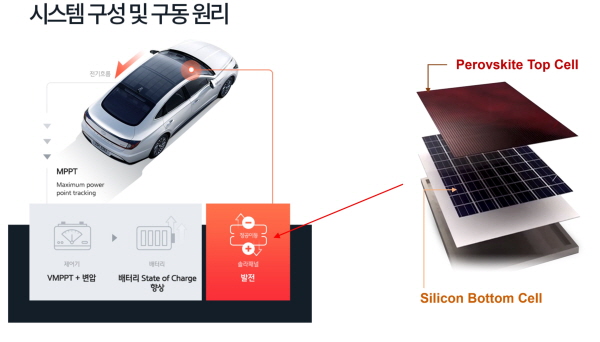
▲페로브스카이트-실리콘 텐덤 태양전지를 이용한 자동차용 발전 시스템 (그림 제공: UNIST)
자동차 지붕에 태양전지를 설치하는 솔라 루프 시스템에 고효율 대면적 페로브스카이트-실리콘 탠덤 태양전지를 적용하는 것이 연구진의 최종 목표다.
탠덤 태양전지는 두 가지 태양전지 소자를 쌓아 올려서, 서로 다른 파장대역의 에너지를 모두 활용하는 것이 장점이다.
석상일 UNIST 에너지화학공학과 특훈교수는 “모빌리티용 태양전지는 가볍고 단위면적당 높은 효율이 매우 중요하다”며 “태양광을 흡수하는 파장 대역이 서로 다른 페로브스카이트와 실리콘을 쌓은 ‘페로브스카이트-실리콘 탠덤 소자’를 제작해 세계 최고효율에 도전할 것”이라고 말했다.
공동연구실은 연구 목표 달성을 위해 △페로브스카이트 밴드갭 제어 △대면적 코팅법 개발 △전하전달 소재 개발 등 각각의 요소 기술의 극대화와 최적화를 수행할 계획이다.
이종수 현대자동차 선행기술원장은 “2050년 탄소배출 제로를 목표로 하면, 자동차가 배출하는 온실가스도 2030년까지 지금보다 24%를 줄여야 하는 상황”이라며 “UNIST의 앞선 기술력을 활용해 ‘솔라 루프’ 기술을 고도화해 자동차 분야에서도 탄소중립에 기여할 것”이라고 밝혔다.
이용훈 UNIST 총장은 “UNIST는 페로브스카이트 단일소자 태양전지의 세계 최고효율(25.7%)를 보유 중이며, 석상일 특훈교수와 최경진 교수, 양창덕 교수를 주축으로 효율 35%에 도전하는 알키미스트 과제(연구책임자: 최경진)를 현재 진행 중”이라며 “현대차그룹과의 공동연구실 사업을 통해 모빌리티용 태양전지에서도 좋은 성과를 올려 자동차뿐 아니라 선박, 건물 등 폭넓은 분야에 적용될 태양전지 기술을 개발하길 바란다”고 전했다.
Comments
Related news
UNIST develops artificial skin that can hear sound
An interface technology for controlling robots using artificial skin capable of hearing sound has been developed, and it is expected to be applied to avatar robots and other virtual reality, augmented reality, and Internet of Things applications in the future.
2022.03.28by 배종인 기자
UNIST Develops Next-Generation Semiconductor Materials to Overcome Moore's Law Limits
UNIST has developed next-generation semiconductor materials capable of overcoming the physical limitations of Moore's Law, and expectations are mounting that this will drive innovation not only in two-dimensional semiconductors but also in encapsulation layers, membranes, next-generation secondary battery electrode materials, and quantum light sources.
2022.06.03by 배종인 기자
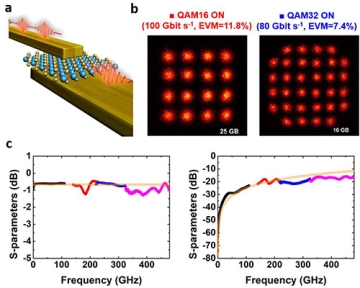
UNIST Develops Low-Power, Ultra-High-Speed 6G Semiconductor Devices
Professor Myung-su Kim from the Department of Electrical and Electronic Engineering at UNIST has jointly developed a low-power, ultra-high-speed analog switch with research teams from the United States, France, and Israel.
2022.06.07by 김예지 기자
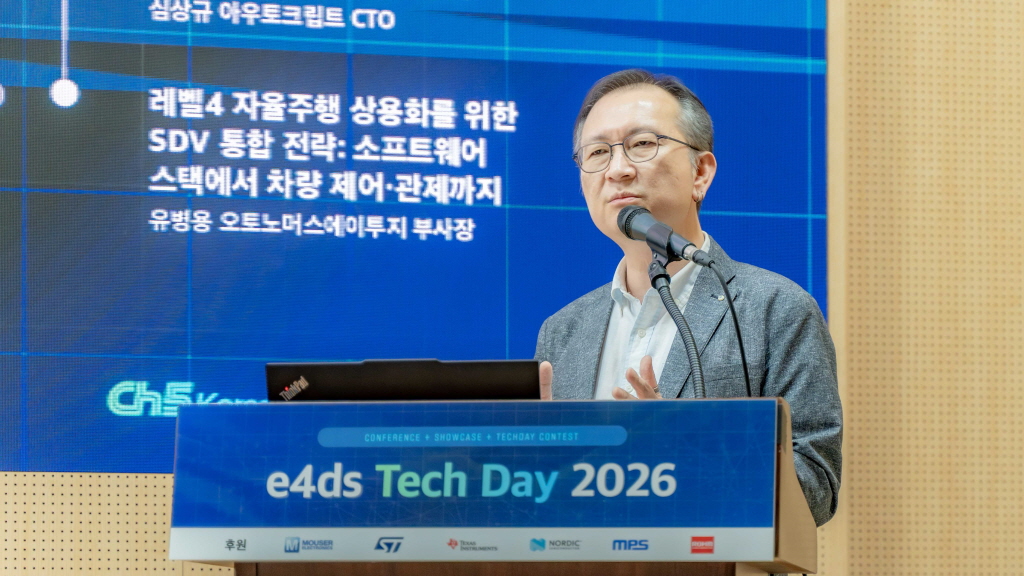
[e4ds Tech Day 2026 ⑨] Sim Sang-gyu, Autocrypt CTO: "In the Physical AI Era, Automotive Security Must Extend Beyond the Vehicle"
At e4ds Tech Day 2026, Sim Sang-gyu, CTO of Autocrypt, explained automotive cybersecurity strategies in the era of Physical AI and SDV (Software-Defined Vehicle). Automobiles are evolving as part of an ecosystem connected to AI, cloud, chargers, IoT, and robots, and he emphasized that the scope of security must expand beyond the vehicle interior to the entire connected environment. In particular, AI model tampering, adversarial attacks, OTA updates, and EV charger hacking were identified as major threats. He explained that response measures require zero trust, AI model integrity protection, intrusion detection, Security by Design and Default, and full lifecycle security management, and that proactive security system establishment beyond regulatory compliance is critical for securing future mobility competitiveness.
2026.10.12by 배종인 기자

Practical HIL Construction Strategy for Automotive and Off-Highway Controller Validation
As vehicle E/E architecture transitions to zonal structures and shifts to software-defined vehicles (SDV), the number of controllers (ECUs) requiring validation and software complexity are surging dramatically. Meanwhile, real vehicle testing cannot provide repeated verification under identical conditions and entails lead time and safety concerns. This white paper explains the principles of HIL (Hardware-in-the-Loop) validation and the structure of the NI platform composed of PXI, SLSC, and VeriStand, and through two actual implementation cases—Camera Record & Replay HIL for In-Cabin Monitoring Controller (ICMU) and Forklift Controller (VCU) HILS—describes how controller-level regression testing becomes possible. Additionally, it explicitly states application boundaries and limitations, such as lack of A2B support.
2026.10.12by 편집부











