


Cars, Stagflation Concerns
 Published2022.06.14 17:01
.jpg)
▲Professor Lee Seong-su of Soongsil University is giving a keynote speech. (Photo: Seong Yu-chang)
Reliance on China must be reduced… Domestic supply chains must be strengthened.
The automotive semiconductor crisis is expected to last at least 2-3 years.
The Korea Automobile Industry Association (KAIA) held the '27th Automotive Industry Development Forum' at the Automobile Hall on the 14th and discussed 'Resolving difficulties and countermeasures for the automotive industry due to changes in the economic environment.'
In his opening remarks, KAIA Chairman Jeong Man-ki said, “It is expected to be a difficult time for our country’s industrial environment, which is highly dependent on overseas exports, including for automobile manufacturers,” and emphasized the government’s role, saying, “There is also a need for regulatory easing, such as the two-for-one rule, which abolishes two existing regulations for each new regulation introduced.”
The keynote address focused on the growing dependence on China in the global supply chain and the severity of the automotive semiconductor crisis.
Cho Chul, a researcher at the Korea Institute for Industrial Economics and Trade, said in a keynote speech, "Despite the impact of the US-China conflict and COVID-19, the global supply chain's dependence on China has increased significantly." He added, "The dependence on China for secondary battery materials and raw materials, which are key components of electric vehicles, is very high." "It's high," he said.
The dependence of domestic automobile production on overseas supply chains is around 12%, which is not high compared to other industries, but the electrical and electronics sector related to future automobiles is relatively high at 24%.
In particular, automotive semiconductors relied on imports for 88.2% of their production in 2019, raising supply chain issues.
What concerns Research Fellow Cho is the significant increase in the global supply chain's dependence on China.
As of January-April 2022, China accounted for 36.2% of total auto parts imports. Imports from China, which stood at $1.16 billion in 2011, increased to $2.18 billion in 2021.
While the share of Japan and Germany in auto parts imports has decreased to around 10%, that of China is increasing, raising concerns about the imbalance in imports from different countries.
The reliance on China for secondary batteries, a key component of electric vehicles, stood at 52.8% in 2015, but exceeded 90% between January and April 2022, with imports also increasing significantly. The reliance on China for battery materials and raw materials is also significant. Many raw materials are imported from China, including 100% of graphite, 93% of manganese, and 59% of lithium.
Furthermore, China's strengthening of its own supply chain due to the US-China conflict poses a threat to our companies' own supply in the medium to long term.
There is an outlook that China's strengthening of its domestic brands and technology development could have an impact on our companies.
Cho Cheol, a research fellow at the Korea Institute for Industrial Economics and Trade, explained, “We need to strengthen the domestic supply ecosystem by improving manufacturing efficiency, focusing on domestic demand and key sectors.”
Kim Joo-hong, head of the policy research center at the Korea Automobile Manufacturers Association (KAMA), expressed concern in his keynote speech, saying, “The quantitative recovery of the industry is being delayed due to the semiconductor shortage, and the burden of global supply chain disruptions, raw material shortages, and rising prices is increasing.” He added, “The difficulties are not limited to one or two, as logistics costs are rapidly rising due to congestion at ports in the U.S. and China.”
Due to the global semiconductor shortage and the delay in the recovery of global finished vehicle production, the domestic finished vehicle and parts industries are facing difficulties in securing profitability through increased production.
In particular, as automakers focus on profitability due to shortages in parts supply, parts manufacturers that generate profits through high volumes despite low margins are taking a big hit, said Director Kim.
Kim Policy Research Institute Director argued that as a response to the global crisis, the following measures should be taken: △ Strengthening corporate financial support by expanding the scale of existing financial support programs and easing standards; △ Maintaining the role of internal combustion engine vehicles to create conditions for expanding corporate investment in future vehicles; and △ Legislating the Two-for-One Rule, in line with Chairman Jeong Man-ki's opinion, to promote new industries and manufacturing innovation.
Professor Lee Seong-su of the Department of Electronic and Information Engineering at Soongsil University, who then gave a keynote speech, said that the shortage of automotive semiconductors will continue for at least two to three years.
There is a severe regional concentration of semiconductor factories and special gases, and if there is a problem in any one of them, the entire process can be halted.
The professor expressed great concern, describing the current situation as "sleeping with a bomb in your arms."
The automotive semiconductor market is experiencing a severe supply shortage. In January 2022, domestic automobile production decreased by 13.7% compared to the same period last year, and vehicle delivery wait times have become so long that even negative options have been implemented.
He also said that there is a possibility that the semiconductor crisis will be prolonged.
Because it requires advanced technology, there are few new companies that can enter the market, and the emergence of electric and autonomous vehicles has also led to a surge in new demand.
Additionally, it was reported that the automotive semiconductor industry is difficult to enter and has low profitability, making it difficult for companies to enter the market.
The argument is that even after passing rigorous reliability tests, it is not easy to install it in actual vehicles, and it is reluctant because it requires a dedicated semiconductor factory and is not profitable.
The professor said, "We need to strategically cultivate automotive semiconductor personnel and establish a design and production infrastructure in Korea so that we can provide automotive semiconductors to domestic automakers." He added, "We need support in the form of policies, funds, and personnel to foster domestic automotive semiconductor specialists."
Comments
Related news

May Vehicle Exports ↓·Export Value ↑
In May, vehicle export volume decreased 2.5% year-on-year, but vehicle export value increased 18.9%.
2022.06.03by 성유창 기자
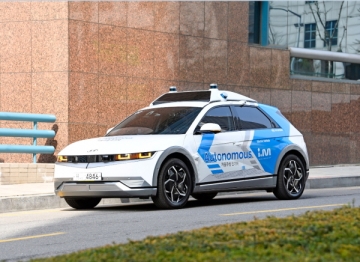
Autonomous driving begins in earnest in Gangnam, the most complex area.
Seoul announced on the 9th that it will begin pilot services in the most congested urban areas in the country with the Ministry of Land, Infrastructure and Transport and Hyundai Motor Group to advance autonomous driving technology.
2022.06.09by 성유창 기자

[e4ds Tech Day 2026 ⑨] Sim Sang-gyu, Autocrypt CTO: "In the Physical AI Era, Automotive Security Must Extend Beyond the Vehicle"
At e4ds Tech Day 2026, Sim Sang-gyu, CTO of Autocrypt, explained automotive cybersecurity strategies in the era of Physical AI and SDV (Software-Defined Vehicle). Automobiles are evolving as part of an ecosystem connected to AI, cloud, chargers, IoT, and robots, and he emphasized that the scope of security must expand beyond the vehicle interior to the entire connected environment. In particular, AI model tampering, adversarial attacks, OTA updates, and EV charger hacking were identified as major threats. He explained that response measures require zero trust, AI model integrity protection, intrusion detection, Security by Design and Default, and full lifecycle security management, and that proactive security system establishment beyond regulatory compliance is critical for securing future mobility competitiveness.
2026.10.12by 배종인 기자

Practical HIL Construction Strategy for Automotive and Off-Highway Controller Validation
As vehicle E/E architecture transitions to zonal structures and shifts to software-defined vehicles (SDV), the number of controllers (ECUs) requiring validation and software complexity are surging dramatically. Meanwhile, real vehicle testing cannot provide repeated verification under identical conditions and entails lead time and safety concerns. This white paper explains the principles of HIL (Hardware-in-the-Loop) validation and the structure of the NI platform composed of PXI, SLSC, and VeriStand, and through two actual implementation cases—Camera Record & Replay HIL for In-Cabin Monitoring Controller (ICMU) and Forklift Controller (VCU) HILS—describes how controller-level regression testing becomes possible. Additionally, it explicitly states application boundaries and limitations, such as lack of A2B support.
2026.10.12by 편집부
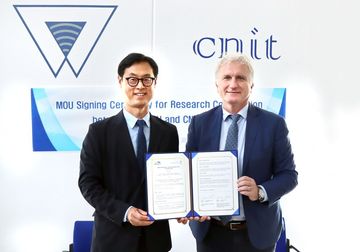
Korea Automotive Research Institute Signs MOU with Italy National Institute for Wireless Communications
The Korea Automotive Research Institute will sign an MOU with Italy's National Institute for Wireless Communications and launch joint research on next-generation mobility technologies based on 6G, V2X, and connected vehicles. The two organizations will conduct research to apply advanced wireless communication technologies to vehicles and discover international joint projects to advance next-generation connected vehicle technology development.
2026.10.12by 배종인 기자











