


[Metaverse Expo] AR and VR: Driving the Metaverse, a New Digital Continent
 Published2022.06.16 16:22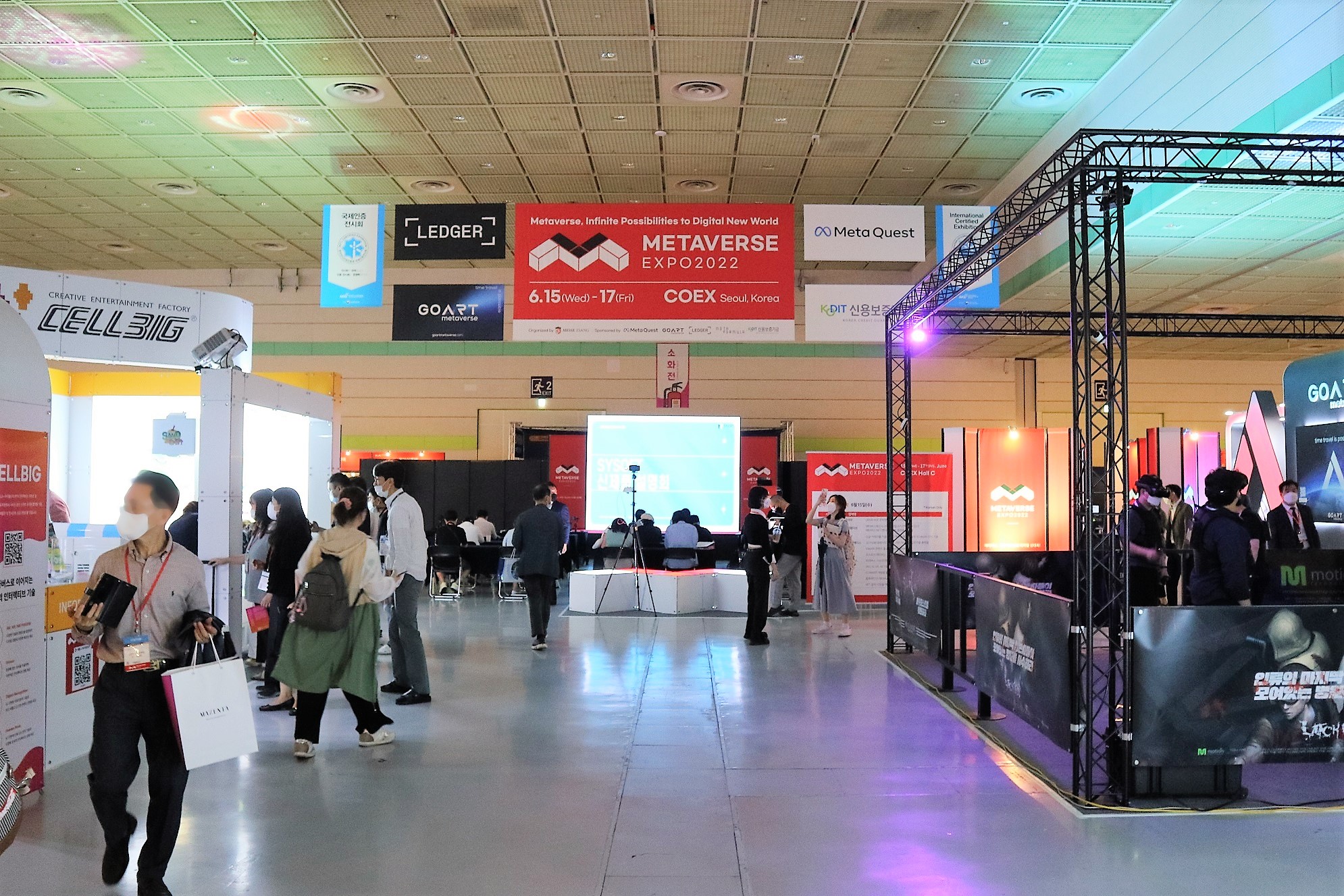
▲2022 메타버스 엑스포
메타버스 엑스포 방문 관람객, VR·AR체험으로 이어지는 발걸음

“메타버스 시장은 2030년이 되면 최대 5조달러(한화로 약 6,400조원)까지 성장할 잠재력을 지녔다”
글로벌 컨설팅기업 맥킨지는 16일 발표한 신규 보고서 ‘메타버스의 가치 창출’을 통해 이같이 언급했다. 보고서는 전자상거래 2조6,000억달러가 가상학습 2,700억달러, 광고 2,060억달러, 게임 1,250억달러 넘어 세계 경제를 구성하는 가장 거대한 분야라고 평가했다.
소비자들은 이미 메타버스 참여도를 높여가고 있다. 10명 중 6명(59%)의 소비자들이 실제 현실과 비교해 선호하는 메타버스 경험이 1개 이상은 존재한 것으로 맥킨지 조사에서 나타났다. 70% 이상의 소비자들이 쇼핑, 가상 소셜 이벤트 참여, 소셜 게임, 가상현실 이용한 운동 등 몰입형 세계를 선호한다고 응답했다.
메타버스 산업은 점차 커지며 15일 개최된 2022 메타버스 엑스포에는 메타버스 관련 디바이스 제조업체서부터 블록체인, NFT, 메타버스 플랫폼 등 국내외 240여개 기업들이 참여해 메타버스 산업 성장세를 엿볼 수 있었다. 이번 행사에는 ‘메타버스, 무한 가능성의 디지털 신대륙’이란 주제로 메타버스·블록체인·NFT 관련 전시회와 컨퍼런스가 17일까지 진행될 예정이다.
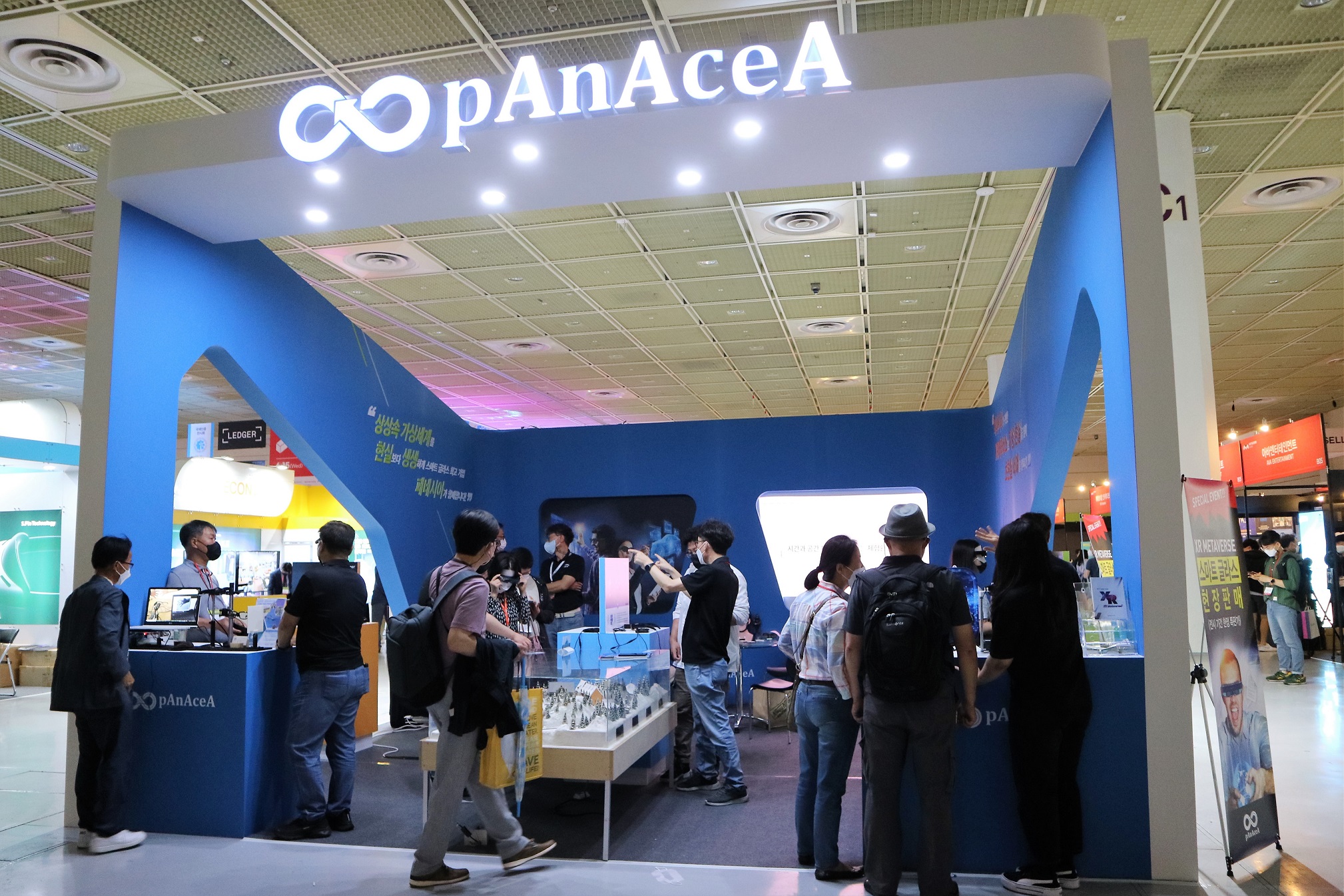
▲페네시아 부스에서 AR글래스를 체험하는 관람객들
메타버스의 근간에는 당연 VR·AR기기를 빼놓을 수 없다. 초경량 AR 스마트글래스를 생산하는 국내업체 페네시아는 자체 기술로 개발한 AR글래스 지티엠 시리즈를 선보였다. 스마트폰 및 PC 등의 확장형 헤드 마운트 모니터로써 FHD 영상 지원과 전방을 직관할 수 있는 See-through 광학 구성으로 혼합현실에 적합하도록 고안된 안경형 모니터이다.
이러한 증강현실 구현을 위해서는 스마트글래스를 구성하는 다양한 센서의 역할이 중요하다. AR글래스에는 머리의 움직임에 따라 어디를 보고 있는지 공간 및 위치 인식을 위해 DoF(자유도) IMU 센서 모듈이 필요하다. 정밀한 센싱을 위해선 3축 가속도, 3축 자이로, 3축 지자계를 하나의 칩에 구현한 9-DoF 센서가 탑재돼야 하며 여기에 라이다까지 더해진다.
송혁규 페네시아 CTO는 “향후 차세대 제품에 라이다 센서를 탑재할 예정이며 디텍션과 스캔 기능을 구현할 수 있다”며 “라이다의 맵핑 기술에 더해 듀얼 카메라를 통한 비주얼 포니셔닝 시스템이 더해져 일상생활에서 증강현실 네비게이션 활용 등이 가능하다”고 설명했다. 스마트글래스의 맵핑은 산업 현장에도 적용이 가능해 작업자 안전과 업무 효율성 향상 등에 기여할 것으로 전망되고 있다.
.jpg)
▲프로토 홀로그램
관람객들로 붐비는 부스에는 △게임 △교육 △도서 △스포츠 등 메타버스 플랫폼의 여러 분야들을 한 자리에서 만나볼 수 있었다. 메타버스 전시회답게 VR·AR기기 등을 활용한 체험행사가 주를 이뤘다.
나인커뮤니케이션에서는 완전자립형 양방향 플러그 앤 플레이 방식으로 실시간 홀로그램 전송이 가능한 프로토 홀로그램을 선보였다. 프로토 홀로그램은 전세계 처음 개발에 성공한 홀로그램 통신 플랫폼으로 미국 CES2022와 SXSW2022 등 글로벌 IT전시회에서 입상하며 주목받고 있다.
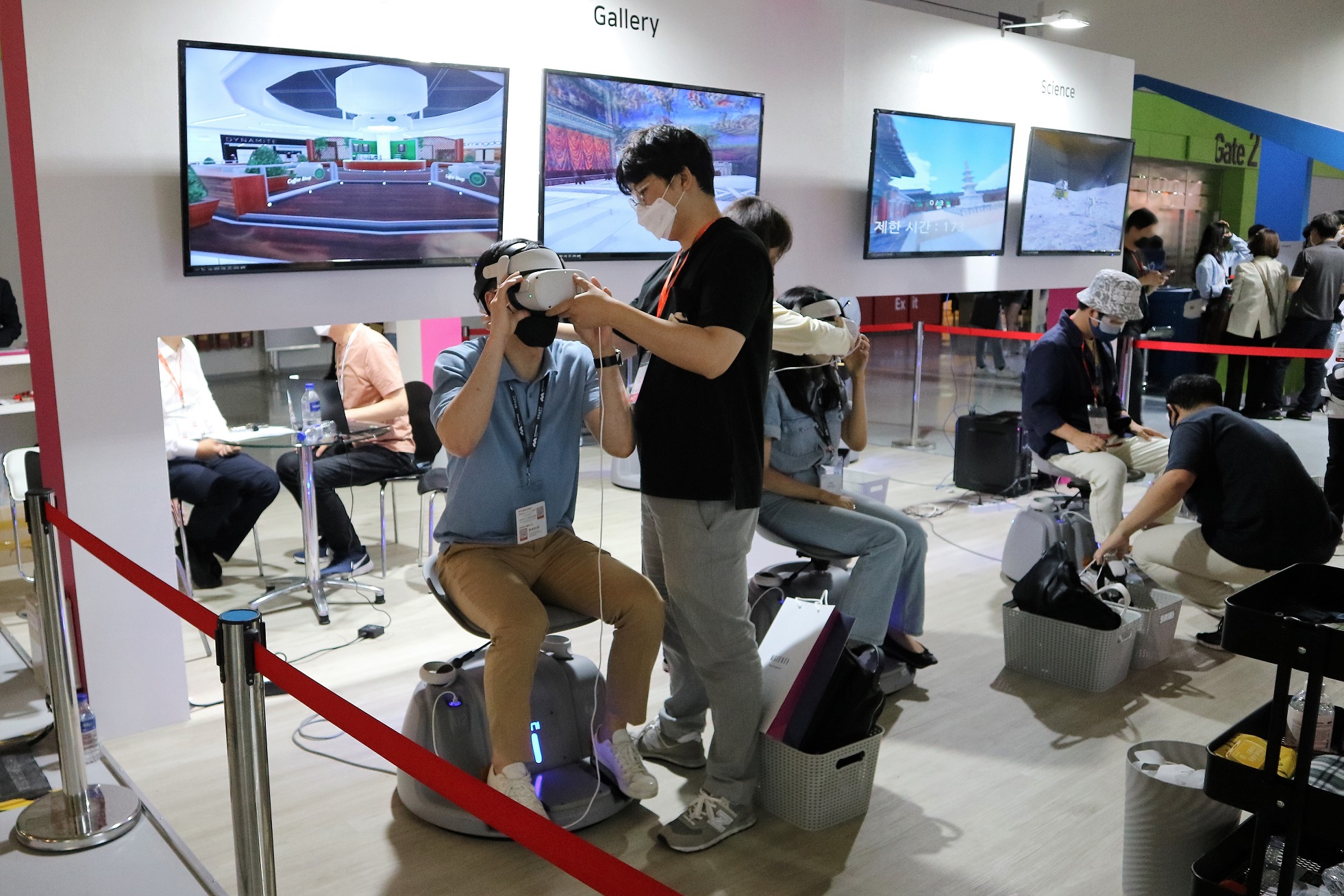
▲PNI컴퍼니 발레그(Valeg)
VR·AR기기를 보조해 편의성을 높여주는 제품도 찾아볼 수 있었다. PNI컴퍼니의 발레그(Valeg)는 가상공간용 이동디바이스로 VR·AR기기를 착용한 뒤 착석해 사람이 직접 뛰고 걷고 이동하는 동작을 최소화 시켜준다. 가상현실 속 탐방과 게임 속 이동 등에 활용할 수 있다.
비즈니스 리더들은 메타버스의 잠재력이 회사 영향력 확대 및 이익 신장을 촉진할 것으로 보고 있다. 맥킨지 조사에서 업계 관계자들 가운데 95%는 메타버스가 5~10년 이내 소속 산업에 긍정적인 영향르 미칠 것으로 예상했으며 31% 메타버스가 산업의 운영방식을 근본적으로 바꿀 것으로 내다봤다.

Comments
Related news
EventX Unveils Metaverse-Based Event Platform
EventX held an online briefing session on the 31st to announce "industry-first virtual land acquisition within sandbox and metaverse-based event business."
2022.05.31by 김예지 기자
[Smart Tech Korea] AI, Metaverse, and Robotics: Cutting-Edge Technology Trends at a Glance
The 11th Smart Tech Korea will be held at COEX from the 8th (Wednesday) to the 10th (Friday).
2022.06.09by 김예지 기자
SKT Hosts Metaverse Music Festival 'Teen Teen Audition'
SKT is hosting a metaverse music competition "Teen Teen Audition" with Dong-Ah Broadcasting and Entertainment University on the metaverse platform ifland.
2022.06.13by 김예지 기자
ESP32 Development Environment Selection and GPS Application Implementation
The ESP32 is a microcontroller that integrates Wi-Fi, Bluetooth, 12-bit ADC, capacitive touch, PWM, DAC, and UART in a single SoC. However, the abundance of features does not by itself solve the designer's problems. The real challenges lie in selecting the appropriate development environment, determining which pins can be used and which must be avoided, and converting raw data from modules into usable information. This document addresses ESP32 peripheral constraints (ADC2 and Wi-Fi coexistence limitation, UART1 occupancy, ADC non-linear regions), the trade-offs between Arduino IDE and ESP-IDF, and the process from connecting NEO-6M/NEO-M8N GPS modules to UART2, parsing NMEA sentences, and visualizing routes in Google Earth, all organized based on documented references.
2026.10.12by 편집부
MIPI CSI-2, DSI-2, C-PHY, D-PHY Test Solution Technical White Paper
The MIPI interface adopts a burst mode that transitions between low-power (LP) and high-speed (HS) states for low-power consumption, and in return, strict timing rules are imposed on state transitions. Additionally, the high-speed section operates as a packet-based protocol with headers, ECC, and CRC, so verification engineers must handle waveforms and protocols simultaneously. Traditional configurations combining general-purpose oscilloscopes and AWGs reveal limitations in setup complexity, measurement uncertainty, and lack of reproducibility when faced with these requirements. This white paper, based on webinar materials, organizes the structure of this problem and describes how the SV5C-DPTXCPTX generator for receiver testing and SV5C-DPRXCPRX analyzer for transmitter testing integrate state transition testing, stressed eye testing, and protocol analysis into a single bench, along with their application boundaries.
2026.10.12by 편집부











