



Korea Electric Power Corporation (KEPCO) Selected as an Outstanding National Research Laboratory for Small and Medium Businesses
 Published2022.07.07 11:54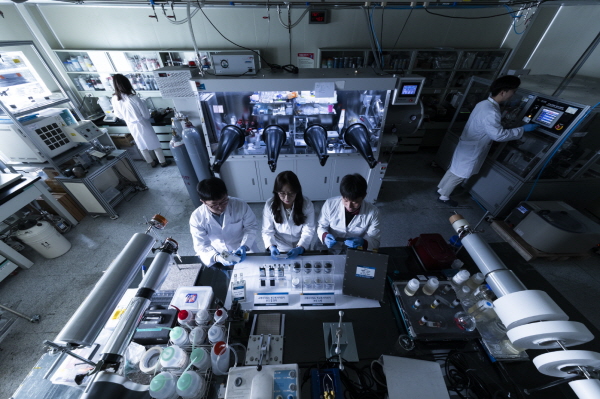
▲Korea Electrotechnology Research Institute's secondary battery research and development site
The Korea Electrotechnology Research Institute (KERI, Acting President Nam-Kyun Kim) was recognized for its contributions to resolving industry issues through the development of core secondary battery material technology.
The Korea Electrotechnology Research Institute (KERI) announced on the 7th that the 'Secondary Battery Functional Materials Research Lab' of the Next Generation Battery Research Center (Director Seung-wook Eom) was selected as an excellent national research lab (N-Lab) for its outstanding research performance and received the Minister of Science and ICT Award.
KERI's Secondary Battery Functional Materials Research Lab was designated as a national research lab in September 2020 in recognition of its world-class research capabilities and infrastructure, as well as numerous patents, technology transfers, and industrial support achievements and experience.
It boasts unparalleled secondary battery infrastructure in Korea (172㎡ dry room, 330㎡ performance and safety evaluation facility, 200㎡ fire safety evaluation facility, 2,298㎡ redox flow battery evaluation and certification center, etc.) and has a total of 44 research personnel.
The researcher was able to receive an honorary award in recognition of his remarkable achievements in the fields of all-solid-state batteries, lithium-sulfur batteries, and lithium secondary batteries for underwater ships, and his contributions to solving pressing issues in the secondary battery industry.
Key achievements include: △Low-cost mass production of solid electrolyte for all-solid-state batteries;These include the development of core technologies for the mountain, the development of performance and stability evaluation standards for lithium battery modules for underwater ships, and the development of electrode structure manufacturing technology for high-energy-density flexible lithium-sulfur batteries. The significance of these technologies is even greater in that they have been transferred to companies, laying the foundation for commercialization. The total technology transfer amount alone amounts to KRW 1.84 billion.
In addition, KERI has exerted great influence by publishing a total of 54 research and development papers related to secondary batteries in renowned domestic and international academic journals, including 15 excellent papers with an impact factor of 10 or higher over the past three years.
KERI Next Generation Battery Research Center Director Seung-Wook Eom said, “Our research center is the birthplace of lithium secondary battery development, having conducted research for a full 30 years since 1993,” and expressed his ambition, saying, “We will not rest on our laurels with this award, but will work even harder to grow into a leading research center that achieves technological independence in the battery field in Korea.”
Going forward, KERI aims to secure competitiveness in superlattice battery technology in the 'future e-mobility' field, where secondary batteries are most widely used, and faithfully fulfill its role in supporting the K-battery industry.
Meanwhile, KERI is a government-funded research institute under the National Research Council of Science and Technology (NRST) of the Ministry of Science and ICT. To strengthen self-reliance in the materials, components, and equipment sectors, the government-designated national research infrastructure consists of: △National Research Laboratories (N-Labs), which conduct rapid research and development of core materials; △National Research Facilities (N-Facility), which serve as testbeds for testing the performance and effectiveness of technologies; and △National Research Councils (N-Teams), which collaborate with industry, academia, and research institutions to provide on-site technical support and suggest directions for technological development.

Comments
Related news
Korea Electrotechnology Research Institute transfers battery cathode material technology worth 1.1 billion won.
The Korea Electrotechnology Research Institute (KERI), a government-funded research institute under the National Research Council of Science and Technology within the Ministry of Science and ICT, has achieved a major milestone by developing mass production technology for a battery anode material that compensates for silicon's limitations with graphene, and successfully transferring the technology for 1.1 billion won.
2021.08.30by 배종인 기자
KERI Develops Fire Prediction Technology Based on Lithium-ion Battery Thermal Management
A research team from the Korea Electrotechnology Research Institute and Daegu Gyeongbuk Institute of Science and Technology has developed technology capable of predicting battery fires by analyzing approximately 1.7 million time-series data points obtained from over 1,000 experiments conducted under various charge and discharge conditions.
2022.05.09by 성유창 기자
The Korea Electric Power Corporation recognizes Vice President Kim Nam-gyun for his contributions to the development of SiC.
Kim Nam-kyun, Vice President of Research at the Korea Electrotechnology Research Institute (KERI), was recognized for his contributions to advancing the Korea Institute of Electrical and Electronic Material Engineers through the promotion of SiC power semiconductor technology.
2022.06.24by 배종인 기자
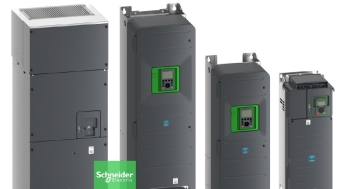
Schneider Aims for Building Energy Savings and Operational Stability with Next-Generation HVAC Drives
Schneider Electric has unveiled its next-generation HVAC drive product line 'Altivar HVAC'. The new product line's key features center on enhanced energy savings, system operational stability, and building management system integration. The products are divided into 'ATH200' for OEM and small equipment applications, and 'ATH600' for environments requiring continuous operation and advanced control. The company plans to expand the application scope from commercial buildings to facilities where HVAC system stability is critical, such as hospitals, airports, and data centers. The announcement includes over 30% energy savings, operation from -10°C to +60°C, Modbus and BACnet support, and compatibility with low global warming potential refrigerants.
2026.03.26by 명세환 기자
Ecolab Expands AI Data Center Cooling Business Through Acquisition of CoolIT
Ecolab has agreed to acquire CoolIT Systems, a liquid cooling company for AI data centers, for approximately $4.75 billion. The transaction is expected to close by Q3 2026, subject to regulatory approvals. CoolIT has been supplying direct-to-chip cooling-based coolant distribution units, cold plates, and manifolds, serving hyperscale data centers and colocation operators as customers. This acquisition is a measure to address the high-heat and high-density server environments created by AI proliferation. Ecolab plans to combine its water management and digital monitoring capabilities with CoolIT's hardware technology to expand its data center cooling business.
2026.03.26by 명세환 기자











