



The prestigious Future Insight Prize, Professor Tobias Erff
 Published2022.07.18 16:41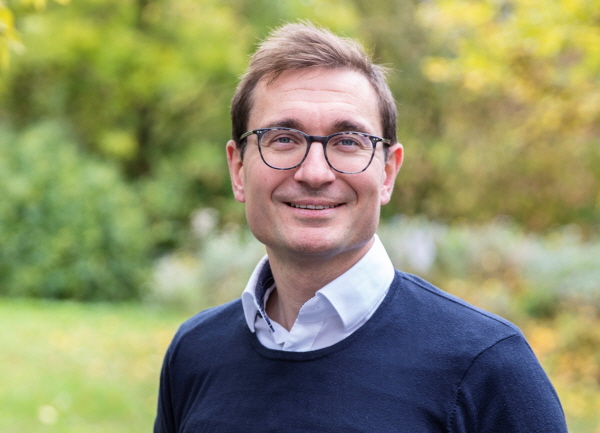
▲ Professor Tobias Erp, Winner of the 2022 Future Insight Prize in the Energy Category
Merck Encourages Outstanding Scientists Contributing to the Future
Professor Tobias Erp of Germany has been selected as the winner of the prestigious Future Insight Prize in recognition of his research achievements in CO2 fixation and conversion.
Merck, a leading science and technology company, announced the winner of the 2022 Future Insight Prize in the energy sector on the 13th.
The winner of the 1 million euro prize is Professor Tobias Erb (Director of the Max Planck Institute for Terrestrial Microbiology, Marburg, Germany).
The awards ceremony took place at the science conference 'Curious 2022, Future Insight' held in Darmstadt, Germany.
Professor Tobias's research team used synthetic biology to discover and combine a biocatalyst capable of fixing CO2 more efficiently.
This is a completely new type of solution that converts CO2 into useful chemical products to be used as fuel feedstock.
Belen Garijo, Chair and CEO of Merck, said, “Science and technology are “It is the key to strengthening our society’s ability to make humanity and the Earth healthier. Professor Tobias has redesigned photosynthesis to enable humanity to efficiently capture CO2 and convert it into useful products. Professor Tobias is the perfect fit for the intended purpose of the Future Insight Prize, and I hope that this award will accelerate the commercialization and application of his discoveries across various fields,” he said.
In his acceptance speech, Professor Tobias stated, “Our research approach, which has fundamentally taken a long-term perspective, is beginning to bear fruit. Currently, our team’s goal is to apply our technology under various conditions to enable synthetic CO2 fixation to realize its maximum potential. Our lab conducts research by integrating biology and chemistry, focusing on the discovery, function, and manipulation of new CO2 conversion enzymes, as well as their application in GMO and artificial photosynthesis. Through this, our goal is to provide new solutions that enable more efficient carbon capture in fields such as biotechnology, agriculture, and synthetic chemistry.”
Professor Tobias's CO2 fixation project and the new solutions he developed have already served as the foundation for several achievements. Professor Tobias's research team discovered a new group of CO2 fixation enzymes called ECRs (enoyl-CoA carboxylases/reductases), which are known to be the most efficient biocatalysts for CO2 conversion to date. The team also demonstrated that CO2 can be directly converted into pentadecane (a major component of diesel fuel) and polyketides (which act as precursors for antibiotics). Furthermore, using a 'metabolic retrosynthesis' approach, they succeeded in designing and realizing an artificial CO2 fixation pathway that is more efficient than natural photosynthesis. Implementing this pathway within living cells is the research team's current priority, while simultaneously making progress in constructing an artificial system that captures CO2 using light, which is more efficient than natural evolutionary systems.
Meanwhile, the jury selecting the winners of the Future Insight Prize consists of about 80 prominent scientists representing various research fields, many of whom are Nobel laureates.
Merck established the Future Insight Prize in 2018 to honor the achievements of outstanding scientists who are making meaningful contributions in important fields for the future of humanity.
The first recipients of the 2019 award were Professor Pardis Sabeti of Harvard University and the Broad Institute (Cambridge, Massachusetts) and Professor James Crowe of Vanderbilt University Medical Center (Nashville, Tennessee), who were recognized for their research achievements in the field of pandemic prevention.
In 2020, Professor Stephan Sieber of the Technical University of Munich, Germany, was selected as a winner in recognition of his project on multidrug resistance breakers.
In 2021, Professor Ting Lu of UIUC (University of Illinois Urbana-Champaign) and Professor Stephen Techtmann of Michigan Technological University were awarded for their joint research on turning plastic waste into food.

Comments
Related news
Merck Shows Off Integrated Semiconductor Materials Solutions
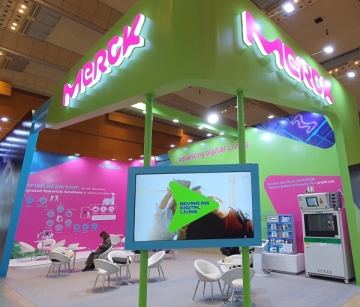
Merck Korea showcased its semiconductor and semiconductor materials solutions as an integrated materials solution provider at Semicon Korea 2022.
2022.02.11by 배종인 기자
[Interview] Woo-Kyu Kim, CEO of Merck Korea: "Stable Supply of Solutions for All Semiconductor Processes"
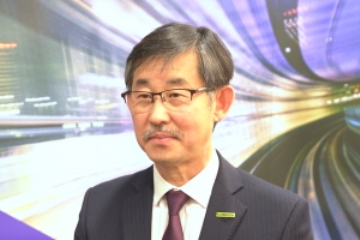
We interviewed Kim Woo-gyou, CEO of Merck, a leading science and technology company that supplies all materials and services to seven critical semiconductor processes, to learn about advanced materials and process technologies.
2022.02.15by 배종인 기자
Merck Strengthens OLED Material Supply Capacity by Building Sublimation Purification Facility
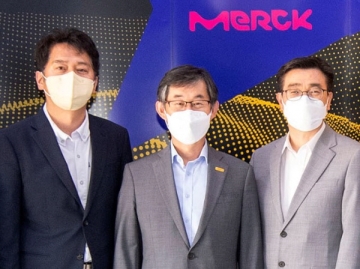
Merck Korea, the Korean subsidiary of leading science and technology company Merck (CEO Dr. Kim Woo-kyou), has established an OLED sublimation purification facility, reducing the OLED material supply distance from the existing 8,000 km to just 60 km, and strengthened OLED material supply capabilities.
2022.06.09by 배종인 기자
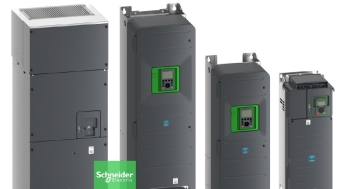
Schneider Aims for Building Energy Savings and Operational Stability with Next-Generation HVAC Drives
Schneider Electric has unveiled its next-generation HVAC drive product line 'Altivar HVAC'. The new product line's key features center on enhanced energy savings, system operational stability, and building management system integration. The products are divided into 'ATH200' for OEM and small equipment applications, and 'ATH600' for environments requiring continuous operation and advanced control. The company plans to expand the application scope from commercial buildings to facilities where HVAC system stability is critical, such as hospitals, airports, and data centers. The announcement includes over 30% energy savings, operation from -10°C to +60°C, Modbus and BACnet support, and compatibility with low global warming potential refrigerants.
2026.03.26by 명세환 기자
Ecolab Expands AI Data Center Cooling Business Through Acquisition of CoolIT
Ecolab has agreed to acquire CoolIT Systems, a liquid cooling company for AI data centers, for approximately $4.75 billion. The transaction is expected to close by Q3 2026, subject to regulatory approvals. CoolIT has been supplying direct-to-chip cooling-based coolant distribution units, cold plates, and manifolds, serving hyperscale data centers and colocation operators as customers. This acquisition is a measure to address the high-heat and high-density server environments created by AI proliferation. Ecolab plans to combine its water management and digital monitoring capabilities with CoolIT's hardware technology to expand its data center cooling business.
2026.03.26by 명세환 기자











