



South Korea's First Lunar Orbiter Danuri Begins Journey to the Moon
 Published2022.08.05 16:00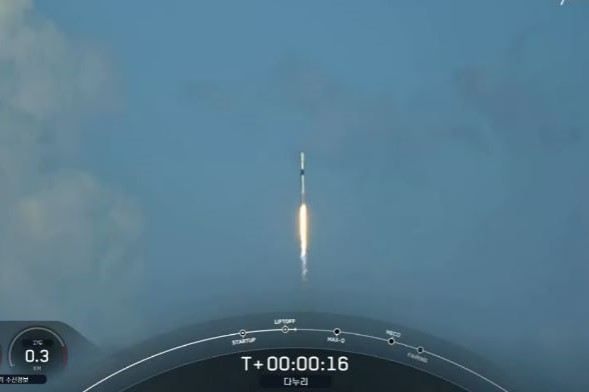
▲ Danuri being launched toward space aboard SpaceX's Falcon 9 launch vehicle (Captured from SpaceX YouTube)
The era of space exploration has arrived in Korea. Not long after launching 'Nuriho' equipped with its own technology, the company developed and manufactured 'Danuri,' Korea's first lunar exploration spacecraft, and successfully sent it into its target orbit aboard SpaceX's Falcon 9 launch vehicle.
The Ministry of Science and ICT (hereinafter 'MSIT') announced that the lunar orbiter 'Danuri' was launched from the Space Force base in Cape Canaveral, Florida, at around 8:08 a.m. on the 5th, and confirmed that it successfully entered a lunar transfer orbit after 2 p.m.
Danuri separated from SpaceX's Falcon 9 launch vehicle at an altitude of about 703 km at around 8:48, and successfully made its first contact with the ground station at around 9:40, about 92 minutes after launch.
The Korea Aerospace Research Institute (hereinafter 'KARI') analyzed launch vehicle separation information, such as separation speed and direction, received from SpaceX at the Danuri control center located within KARI, and confirmed that Danuri successfully separated from the launch vehicle and entered its target orbit.
In addition, analysis of the received satellite data revealed that Danuri's solar panels have deployed and begun power generation, and that communication between devices, including the onboard computer, is proceeding smoothly while the temperatures of each device remain within the standard range, indicating that Danuri is operating normally.
In the future, Danuri will move toward a point where the Sun and Earth's gravity are balanced to minimize fuel consumption, and then activate its thrusters around September 2nd to adjust its direction.
It is expected to arrive at the Moon in mid-December 2022 after a journey of approximately 4.5 months. Subsequently, it will enter a lunar mission orbit by the end of December. Starting in January 2023, it will orbit the Moon at an altitude of 100 km and perform its full-scale mission for about a year. It plans to carry out missions such as searching for lunar landing sites, lunar scientific research (analysis of surface minerals, observation of magnetic fields and radiation, etc.), and verification of space internet technology.
Danuri is Korea's first lunar orbiter, developed since 2016 in accordance with the National Space Development Mid-to-Long-Term Plan. Through the development of Danuri, it is expected that Korea will be able to secure the orbital operation capability of the Ballistic Lunar Transfer (BLT) system necessary for deep space navigation. In addition, the high-capacity thrust propulsion system has been localized, and a large 35-meter diameter deep space communication antenna, essential for deep space communication, has been constructed, thereby establishing the foundation necessary for full-scale future space exploration.
This Danuri is equipped with six payloads, and excluding the NASA payload (ShadowCam), the five scientific payloads were directly developed by domestic research institutions and academia, including the Korea Aerospace Research Institute, the Korea Astronomy and Space Science Institute, the Electronics and Telecommunications Research Institute, the Korea Institute of Geoscience and Mineral Resources, and Kyung Hee University.
Oh Tae-seok, First Vice Minister of Science and ICT, stated, “Danuri is the first lunar orbiter manufactured by Korea, and along with the development of Nuriho, it will elevate our country’s international standing in the space sector and provide an opportunity to leap forward as a space power.” He added, “The technology secured through the development of Danuri and the scientific data obtained through its mission operations are expected to significantly contribute to Korea’s future lunar science research as well as raise public interest in space development.”

Comments
Related news
Nuriho Launch Countdown, High-Reliability Semiconductors Are Essential for the Space Age
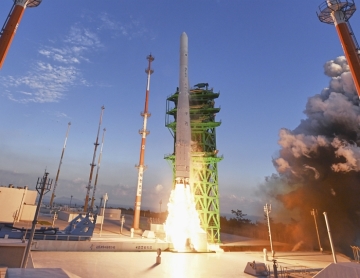
South Korea's Nuri rocket, a symbol that will usher in the space and aerospace era, is preparing for a re-launch attempt. As the scheduled launch date on the 21st approaches, high-reliability semiconductor devices with precision and durability are essential for equipment to function properly in the harsh space environment.
2022.06.20by 명세환 기자
.jpg)
Hanwha Aerospace Supplies Engines for 'Nuri Launch'... Aims to Lead UAM Powertrain Business
Given the economic ripple effect is estimated at approximately 3 trillion won, there is considerable hope for success. According to industry sources, the Nuri rocket, scheduled for its second launch, involved approximately 300 domestic companies participating in the development process of over 30,000 components.
2022.06.21by 김예지 기자
Successful Communication with Nuri Rocket Performance Verification Satellite
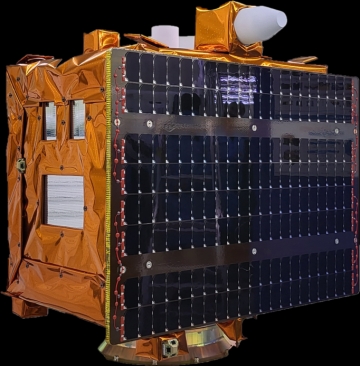
The Ministry of Science and ICT (MSIT) and the Korea Aerospace Research Institute (KARI) announced that the Nuri rocket, launched at 16:00 on the 21st, successfully separated the performance verification satellite in the target orbit and established two-way communication with the ground station of the Korea Aerospace Research Institute in Daejeon at approximately 03:02 on the 22nd.
2022.06.23by 김예지 기자
European Patent Applications Surpass 200,000 for the First Time… South Korea Maintains 5th Place, Led by Batteries and Telecommunications
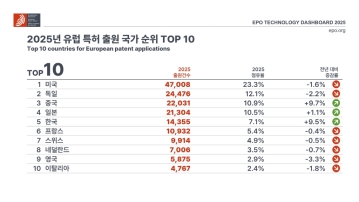
According to the European Patent Office (EPO)'s 'Technology Dashboard 2025', European patent applications last year reached 201,974, surpassing 200,000 for the first time. Korean companies and inventors filed 14,355 applications, representing a 9.5% increase from the previous year and maintaining 5th place by country. Battery, digital communication, and semiconductor technologies led the growth, with Samsung ranking as the top EPO applicant for the second consecutive year and LG reaching 3rd place. The presence of major domestic cities such as Seoul, Suwon, and Yongin was also confirmed. It was also revealed that Korea's European patent strategy is expanding beyond individual technologies to span the entire industry.
2026.03.24by 명세환 기자

SK Telecom First Applies AI-Based Network Operations at Gwanghwamun K-Pop Concert
SK Telecom announced that it applied an AI-based network operation system for the first time at a large-scale K-pop concert held in the Gwanghwamun area of Seoul on March 21st, managing communication quality throughout the event. Mobile data usage during the three hours before and after the concert reached 12.15TB, approximately doubling compared to the same time slot the previous weekend. SK Telecom monitored traffic using the AI system 'A-One' in five-minute and 50-meter units to respond to potential overload situations, while also operating temporary communication facilities and on-site personnel in parallel. This case is interpreted as confirmation of the practical applicability of AI-based autonomous network operation in an environment where demand from dense events and foreign users increases simultaneously.
2026.03.23by 명세환 기자











