



KIMM, “Green Ammonia Promising for the Future”
 Published2022.08.18 14:38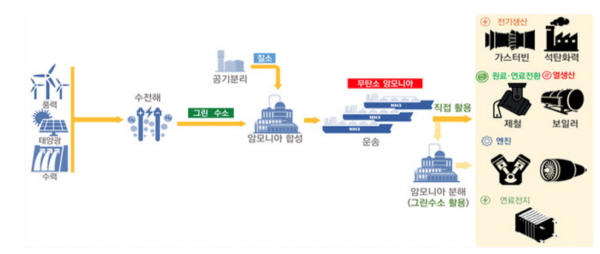
▲ Production and utilization of carbon-free ammonia
The Korea Institute of Machinery and Materials (KIMM, President Park Sang-jin), under the Ministry of Science and ICT, analyzed green ammonia-related technologies as promising future items for various new energy industries, such as hydrogen energy transport.
The Korea Institute of Machinery and Materials recently published the 108th issue of its Machinery Technology Policy, titled "The Rise of Ammonia Technology as a Carbon-Free Energy Source and Its Implications," which covers the value chain of ammonia production, hydrogen extraction, and hydrogen storage and utilization technologies, and predicted that investment would be necessary to secure a national ammonia value chain.
According to global market research firm Markets and Markets, the global ammonia market is projected to grow rapidly from $11 million in 2020 to $852 million in 2030. The average annual growth rate of the ammonia market is 54.9%, and the importance of ammonia value chain technology is being emphasized.
With issues such as carbon neutrality and the expansion of the hydrogen economy converging, major countries around the world, including Korea, Japan, and the EU, are paying attention to ammonia technology and concentrating their capabilities on policies to foster ammonia utilization industries and secure ammonia technology linked to green hydrogen.
Japan is also conducting a demonstration project to produce hydrogen by utilizing Australia's abundant solar and underground resources, and to store and transport it as liquid ammonia. Germany is demonstrating the technological development of liquid ammonia and is intensively promoting ammonia power generation policies.
Korea is also making various efforts, such as promoting the development of liquid ammonia technology, one of the hydrogen storage methods, and launching the 'Hydrogen-Ammonia Power Generation Demonstration Task Force.' The 'Hydrogen-Ammonia Power Generation Demonstration Task Force,' involving the Ministry of Trade, Industry and Energy, public power companies, and private firms, aims to commercialize the co-firing and full-firing of hydrogen and ammonia fuels to secure the hydrogen-ammonia value chain. In particular, liquid ammonia technology for the storage and transportation of imported green hydrogen has been selected as a key technology and is being fostered.
In addition, technological developments aimed at saving energy during ammonia production are noteworthy. Development of ammonia synthesis catalysts is underway to reduce the process energy of the existing Haber-Bosch process, and ammonia synthesis processes utilizing plasma are also attracting attention.
The report suggested that the most important aspect of ammonia technology is securing a value chain of ammonia production, hydrogen storage, and utilization linked to green hydrogen. It was predicted that converting green hydrogen produced in representative Sun-Belt regions such as the Middle East, Africa, and Australia into liquid ammonia is important, as ammonia, as a hydrogen carrier, is advantageous in terms of efficiency due to its higher energy density per unit volume compared to liquid hydrogen.
In the ammonia production and extraction sector, R&D investment is required to secure source technologies capable of producing ammonia with less energy than conventional methods. In particular, innovative catalyst technologies and plasma production processes are receiving attention, and high-efficiency heat exchanger mechanical technology is also one of the necessary technologies to reduce energy consumption in existing processes.
It was emphasized that in the ammonia utilization sector, the development of technologies such as ammonia fuel cells and ammonia gas turbines capable of replacing fossil fuels is necessary, along with active R&D investment focused on demonstration projects to support this. In particular, for gas turbines that can utilize existing infrastructure, research is required to understand the fuel characteristics of ammonia, which differ from those of LNG and coal.
Gil Hyung-bae, a senior researcher at the Mechanical Technology Policy Center of the Korea Institute of Machinery and Materials (KIMM), stated, “To rise to a leading position in the carbon-free energy market, investment is required to secure a technological advantage in eco-friendly technologies such as green ammonia and ammonia power generation, and in the power generation sector, government laws and regulations related to ammonia need to be modernized.”
Meanwhile, the Korea Institute of Machinery and Materials (KIMM) has developed an innovative plasma-based ammonia production process and is developing core technologies for ammonia fuel cells, specifically Solid Oxide Fuel Cells (SOFCs) and Anion Exchange Membrane Fuel Cells (AEMFCs).
The Korea Institute of Machinery and Materials (KIMM) publishes the specialized journal "Machine Technology Policy" at least four times a year, which analyzes trends in the machinery industry and proposes policies, and fulfills the role of a think tank as a national research institute in the field of machinery. You can subscribe to and download "Machine Technology Policy" from the KIMM website.

Comments
Related news
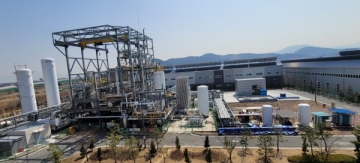
KIMM Lays Foundation for Localization of LNG and Cryogenic Equipment
The Korea Institute of Machinery and Materials (KIMM, Director Park Sang-jin) under the Ministry of Science and ICT has established Korea's first comprehensive research foundation for the localization of LNG and cryogenic equipment. A green light has been turned on for the localization of LNG and cryogenic-related equipment.
2022.03.28by 배종인 기자
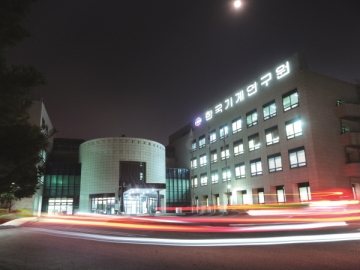
Korea Institute of Machinery and Materials (KIMM) establishes AI Robot Research Center.
The Korea Institute of Machinery and Materials (KIMM; Director Park Sang-jin) under the Ministry of Science and ICT will foster specialized research organizations to achieve carbon neutrality and strengthen R&D capabilities to secure nationally essential strategic technologies.
2022.03.29by 배종인 기자
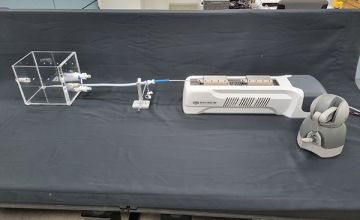
KIMM Develops Korea's First Robotic Catheter for Cardiac Intervention
The Korea Institute of Machinery and Materials has developed a robotic catheter system for use in interventional procedures targeting the heart, lungs, and bladder.
2022.04.19by 김예지 기자
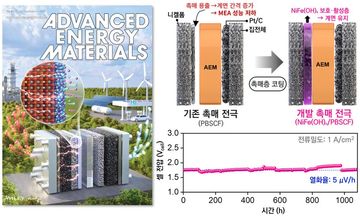
Materials Research Institute Develops Ultra-thin Coating Water Electrolysis Catalyst Technology
The Korea Institute of Materials Science has simultaneously resolved the performance and durability trade-off problem in water electrolysis catalysts by applying ultra-thin surface coating technology. Achieving 1.9 times higher performance compared to conventional catalysts while demonstrating 1,000-hour long-term stability, the institute has developed technology scalable to industrial water electrolysis systems through a simple process.
2026.10.07by 배종인 기자
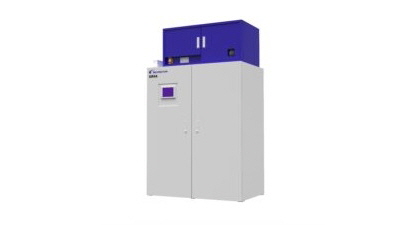
Gigaphoton Develops Neon Gas Recycling System for ArF Excimer Lasers...Achieves 50% Recycling Rate
Gigaphoton announced that it has developed a gas recycling system for ArF excimer lasers and achieved a 50% neon gas recycling rate.
2026.10.02by 배종인 기자











