


KERI Takes 'One Step' Toward Commercialization of Large-Capacity Lithium Metal Batteries
 Published2022.08.29 13:36
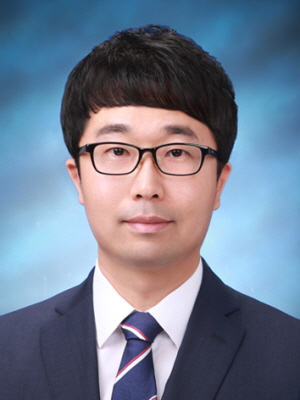 A team led by Dr. Kim Byung-gon at the Korea Electrotechnology Research Institute (KERI, Acting President Kim Nam-kyun) has improved the output and stability of high-capacity lithium metal batteries, opening up the possibility for commercialization.
The Korea Electrotechnology Research Institute announced on the 29th that the research results regarding lithium metal batteries by Dr. Kim Byung-gon's team at the Next-Generation Battery Research Center were recognized for their high quality and were published as a cover article in the August issue of 'ACS Nano,' a top-tier SCI journal in the field of materials science published by the American Chemical Society. The 'Impact Factor', which evaluates the level of the paper, is 18.027, placing it in the top 5.8% of the field.
While conventional lithium-ion batteries generate energy by inserting and removing lithium ions from a graphite anode, lithium-metal batteries do not use bulky and heavy graphite but instead use lithium metal itself as the anode.
Lithium metal anodes have a theoretical storage capacity more than 10 times higher (3,860 mAh/g) than graphite anodes (372 mAh/g), so they are receiving great interest in fields requiring large-capacity batteries, such as electric vehicles and energy storage systems (ESS).
On the other hand, despite these advantages, if lithium metal is not effectively stored during charging and discharging, so-called 'dendrites'—where lithium grows in a tree-branch shape—are formed, causing the battery to gradually expand in volume. This can lead to reduced battery lifespan and fire or explosion accidents resulting from internal short circuits.
To address this, the technology developed by KERI is a 'carbon nanofiber with a hollow core porous shell structure.' First, a small amount of gold nanoparticles, a lithium-affinity material, was added to the 'hollow core' portion. Gold preferentially reacts with lithium to control its growth direction, thereby helping to store lithium inside the core.
In the 'shell' portion, 'pores,' which are a type of hole, were created to allow lithium ions to move freely. A major problem with existing hollow core-shell structures was that lithium ions would electrodeposit onto the surface of the carbon-based shell when they encountered it under high-speed charging and discharging conditions. However, the research team introduced pores into the shell, which significantly increased coulombic efficiency without lithium dendrite growth even during high-speed charging and discharging.
Dr. Kim Byung-gon's team also theoretically verified the effectiveness of the technology through collaboration with Professor Moon Jang-hyuk of Chung-Ang University. Simulation analysis confirmed that lithium can be electrodeposited inside the core even under high-power conditions thanks to the shell pores and lithium-affinity materials. Furthermore, excellent performance of over 500 cycles (capacity retention rate of 82.5%) was confirmed even under high current density conditions. Another significant aspect of this achievement is that practicality was secured by utilizing 'electrospinning,' a synthesis method advantageous for mass production, during the material synthesis process.
Dr. Kim Byung-gon stated, “Despite the advantage of high capacity, lithium metal batteries face many hurdles before commercialization due to stability issues,” adding, “This achievement is highly valuable in that it involves the development of a technique to mass-produce lithium storage devices with improved lithium adsorption and desorption efficiency, even under high-speed charging and discharging conditions.”
This research was conducted under the Korea National Research Foundation’s Climate Change Response Technology Development Project and KERI’s Basic Project. Moving forward, the research team plans to continue its efforts toward the commercialization of lithium metal batteries, including the development of functional electrolytes that enable stable lithium deposition and desorption in the electrolyte field.
Meanwhile, KERI is a government-funded research institute under the National Science and Technology Research Council of the Ministry of Science and ICT. Dr. Kim Byung-gon also serves as a professor at the KERI Campus of the University of Science and Technology (UST).

Comments
Related news
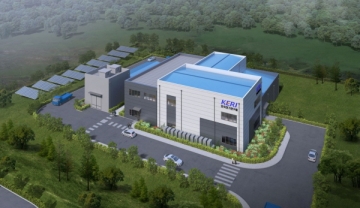
KERI Establishes 'Redox Flow Battery Testing and Certification Center'
The Korea Electrotechnology Research Institute (KERI, Director Myung Sung-ho), an internationally accredited testing and certification organization for power equipment, is establishing a 'Redox Flow Battery Testing and Certification Center,' a hidden gem of carbon neutrality, and contributing to ESS fire prevention and resolution of renewable energy intermittency through large-capacity batteries and high safety realization.
2022.03.29by 배종인 기자
KERI Develops Fire Prediction Technology Based on Lithium-ion Battery Thermal Management
A research team from the Korea Electrotechnology Research Institute and Daegu Gyeongbuk Institute of Science and Technology has developed technology capable of predicting battery fires by analyzing approximately 1.7 million time-series data points obtained from over 1,000 experiments conducted under various charge and discharge conditions.
2022.05.09by 성유창 기자
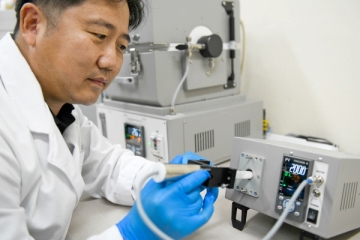
KERI succeeds in low-temperature production of all-solid-state batteries
The Korea Electrotechnology Research Institute (KERI, Acting Director Kim Nam-gyun) has reduced the heat treatment temperature for the manufacture and application of electrolytes in all-solid-state batteries to 200℃ or below, resolving issues with ionic conductivity loss and interfacial resistance, which is expected to make a significant contribution to the future commercialization of all-solid-state batteries.
2022.07.20by 배종인 기자
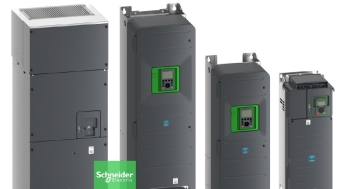
Schneider Aims for Building Energy Savings and Operational Stability with Next-Generation HVAC Drives
Schneider Electric has unveiled its next-generation HVAC drive product line 'Altivar HVAC'. The new product line's key features center on enhanced energy savings, system operational stability, and building management system integration. The products are divided into 'ATH200' for OEM and small equipment applications, and 'ATH600' for environments requiring continuous operation and advanced control. The company plans to expand the application scope from commercial buildings to facilities where HVAC system stability is critical, such as hospitals, airports, and data centers. The announcement includes over 30% energy savings, operation from -10°C to +60°C, Modbus and BACnet support, and compatibility with low global warming potential refrigerants.
2026.03.26by 명세환 기자
Ecolab Expands AI Data Center Cooling Business Through Acquisition of CoolIT
Ecolab has agreed to acquire CoolIT Systems, a liquid cooling company for AI data centers, for approximately $4.75 billion. The transaction is expected to close by Q3 2026, subject to regulatory approvals. CoolIT has been supplying direct-to-chip cooling-based coolant distribution units, cold plates, and manifolds, serving hyperscale data centers and colocation operators as customers. This acquisition is a measure to address the high-heat and high-density server environments created by AI proliferation. Ecolab plans to combine its water management and digital monitoring capabilities with CoolIT's hardware technology to expand its data center cooling business.
2026.03.26by 명세환 기자











