


Intel Labs Powers Neuromorphic Computing Robots with Continuous Interactive Learning
 Published2022.09.02 15:59
.jpg)
Achieving continuous, real-time, interactive learning
Intel Labs, in collaboration with the Italian Institute of Technology and the Technical University of Munich, announced on the 2nd that Intel has demonstrated a new object instance learning using a novel model on its neuromorphic research chip, Loihi.
This presentation targets future applications, including robots interacting with unconstrained environments in logistics, healthcare, and geriatric care. Furthermore, a novel interactive online object learning method using neuromorphic computing will enable additional object learning even after the robot is deployed.
Intel announced that its research results successfully implemented continuous interactive learning with speed and accuracy similar to or better than existing CPUs while using approximately 175 times less power than existing central processing units (CPUs).
To achieve this, the researchers limited the scope of learning to a single layer of plastic synapses, implementing a neural network architecture that describes different object views on Loihi by acquiring new neurons as needed. This neural network architecture was able to autonomously unfold the learning process while interacting with the user.
“When humans learn about a new object, they look at it closely, turn it around, and ask what it is. Then, they can instantly recognize that object in a variety of situations or environments,” said Yulia Sandamirskaya, director of robotics research at Intel’s Neuromorphic Computing Lab and lead author of the paper. “Our goal is to apply similar capabilities to future robots that operate in interactive environments, allowing them to adapt to unexpected situations and work more naturally with humans. Our achievements with Loihi further solidify the value of neuromorphic computing for the future of robotics.”
Comments
Related news
.jpg)
Intel Unveils Virtualized Wireless Access Network Capabilities
Mobile telecommunications operators have begun adopting virtualized radio access networks and open ecosystems. With increased collaborative efforts around interoperable Open RAN, Intel is also participating in experiments with O-RAN-based innovative technologies.
2022.08.05by 명세환 기자
Intel Unveils Latest Architecture and Packaging Innovations at Hot Chips 34
The semiconductor industry is entering a golden age that requires a paradigm shift from the traditional foundry model to the systems foundry model. Intel's systems foundry model goes beyond conventional wafer manufacturing support to offer Systems-in-Package that integrates △advanced packaging △open chiplet ecosystems △software components, focusing on meeting the needs of users demanding powerful computing capabilities and immersive digital experiences.
2022.08.25by 명세환 기자
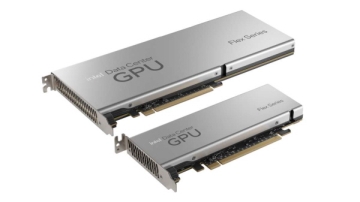
Intel Meets Intelligent Visual Cloud Requirements with Flex GPU
Intel unveiled a data center GPU capable of supporting up to 5x higher media transcode processing performance and up to 68 concurrent cloud gaming streams.
2022.08.29by 배종인 기자
.jpg)
Intel Shares 5G Network Collaboration Case Studies
Intel Korea held the "Intelligent 5G Edge Summit 2022" at El Tower in Seocho-dong with the theme of "Networks Becoming Smarter through Internet of Things."
2022.09.02by 김예지 기자
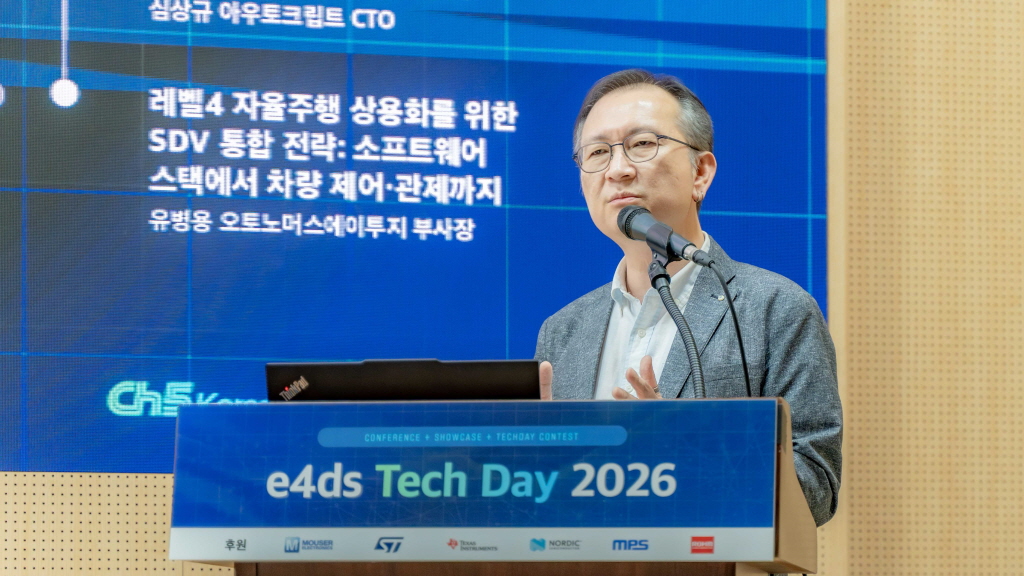
[e4ds Tech Day 2026 ⑨] Sim Sang-gyu, Autocrypt CTO: "In the Physical AI Era, Automotive Security Must Extend Beyond the Vehicle"
At e4ds Tech Day 2026, Sim Sang-gyu, CTO of Autocrypt, explained automotive cybersecurity strategies in the era of Physical AI and SDV (Software-Defined Vehicle). Automobiles are evolving as part of an ecosystem connected to AI, cloud, chargers, IoT, and robots, and he emphasized that the scope of security must expand beyond the vehicle interior to the entire connected environment. In particular, AI model tampering, adversarial attacks, OTA updates, and EV charger hacking were identified as major threats. He explained that response measures require zero trust, AI model integrity protection, intrusion detection, Security by Design and Default, and full lifecycle security management, and that proactive security system establishment beyond regulatory compliance is critical for securing future mobility competitiveness.
2026.10.12by 배종인 기자











