



Vietnam's VinFast aims to enter the global market with mixed expectations and concerns.
 Published2022.09.28 09:25
.jpg)
▲VinFast showroom in Santa Monica, California (Photo courtesy of the Korea Automotive Research Institute)
The possibility of benefiting from the windfall from the de-China trend and the support of the government and the public.
Changes in the global business environment, including IRAs, and risks to Vingroup's financial health.
The Korea Automobile Research Institute (KARI) shared positive and negative factors regarding the business direction of VinFast, a Vietnamese automobile manufacturer, through its industry trend report.
Five years after entering the auto industry, Vietnam's VinFast has announced it will discontinue all internal combustion engine models and focus solely on electric vehicles, aiming to sell more than one million units by 2028.
VinFast, which has demonstrated its ability to launch a new car in just two years based on past technical collaborations with BMW and others, recently announced plans to convert all production lines to 100% electric vehicles, quickly revealing its lineup, and said it is expanding the foundation for related business expansion, such as establishing a battery pack factory and installing electric vehicle charging stations.
The most significant feature of this business direction announcement is that it will prioritize business development in North America and Europe over the limited domestic market.
Over the past five years, new car sales in Vietnam have been around 300,000 units per year, and are expected to grow to around 500,000 units by 2022. As expected, the size of the finished vehicle market is still small compared to the population of 100 million.
Unlike other companies that target overseas markets after conquering the domestic market, VinFast is proactively challenging the European and American markets.
The company opened six showrooms in California in July 2022 to provide customers with promotional and experiential services for its electric vehicle models, with plans to expand to all regions of the United States in the future.
Not stopping there, at the 35th EV International Conference held in Oslo in June 2022, the company announced plans to expand its stores to over 50 locations across Europe, including 25 in Germany, 20 in France, and 5 in the Netherlands.
The positive factors for VinFast's future, as investigated by the Korea Automobile Research Institute, include the rise of ASEAN in line with the de-China trend and support from the government and the public.
As the trend of moving away from China in the electric vehicle supply chain spreads, the ASEAN region is likely to reap windfall benefits, and among them, Vietnam's VinFast, with its strong manufacturing base, is likely to benefit.
Considering the successful examples of Asian countries that fostered the automobile industry through close cooperation between governments and businesses in the past, the intangible growth engine of government and public support is also expected to be a positive factor for VinFast.
On the other hand, the delay in entering the US market due to the US Inflation Reduction Act (IRA) and the company's financial status are cited as risk factors.
VinFast had planned to invest $4 billion to build an electric vehicle and battery factory in North Carolina by the first half of 2024, but the IRA has restricted its ability to receive electric vehicle subsidies.
Due to the IRA, electric vehicles exported to the U.S. are ineligible for the $7,500 federal tax credit per vehicle.
In 2021, Vingroup achieved sales of 130.8 trillion dong (approximately 6.5 trillion won), but failed to achieve sales of electric vehicles. New business investments resulted in a post-tax loss of approximately 7.5 trillion dong (approximately 374.3 billion won), increasing financial risk.
In addition, in order to focus on the electric vehicle sector, the company stopped producing smartphones and TVs, which have limited value creation, in addition to internal combustion engine vehicles, resulting in a pre-tax loss of 23.9 trillion dong (approximately 1.2 trillion won) in the manufacturing sector alone.
Other tasks currently being considered include preparing for an initial public offering (IPO) in the U.S., establishing sales and maintenance infrastructure, and improving brand awareness.
Comments
Related news
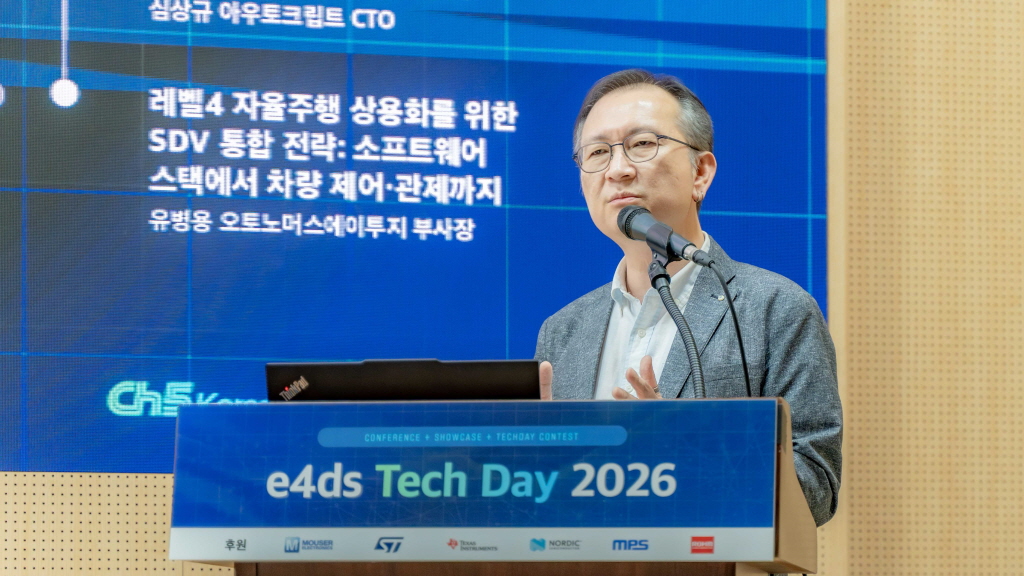
[e4ds Tech Day 2026 ⑨] Sim Sang-gyu, Autocrypt CTO: "In the Physical AI Era, Automotive Security Must Extend Beyond the Vehicle"
At e4ds Tech Day 2026, Sim Sang-gyu, CTO of Autocrypt, explained automotive cybersecurity strategies in the era of Physical AI and SDV (Software-Defined Vehicle). Automobiles are evolving as part of an ecosystem connected to AI, cloud, chargers, IoT, and robots, and he emphasized that the scope of security must expand beyond the vehicle interior to the entire connected environment. In particular, AI model tampering, adversarial attacks, OTA updates, and EV charger hacking were identified as major threats. He explained that response measures require zero trust, AI model integrity protection, intrusion detection, Security by Design and Default, and full lifecycle security management, and that proactive security system establishment beyond regulatory compliance is critical for securing future mobility competitiveness.
2026.10.12by 배종인 기자

Practical HIL Construction Strategy for Automotive and Off-Highway Controller Validation
As vehicle E/E architecture transitions to zonal structures and shifts to software-defined vehicles (SDV), the number of controllers (ECUs) requiring validation and software complexity are surging dramatically. Meanwhile, real vehicle testing cannot provide repeated verification under identical conditions and entails lead time and safety concerns. This white paper explains the principles of HIL (Hardware-in-the-Loop) validation and the structure of the NI platform composed of PXI, SLSC, and VeriStand, and through two actual implementation cases—Camera Record & Replay HIL for In-Cabin Monitoring Controller (ICMU) and Forklift Controller (VCU) HILS—describes how controller-level regression testing becomes possible. Additionally, it explicitly states application boundaries and limitations, such as lack of A2B support.
2026.10.12by 편집부
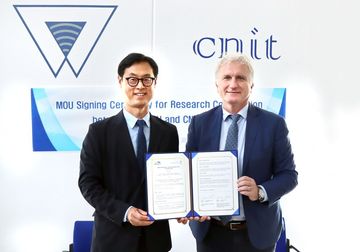
Korea Automotive Research Institute Signs MOU with Italy National Institute for Wireless Communications
The Korea Automotive Research Institute will sign an MOU with Italy's National Institute for Wireless Communications and launch joint research on next-generation mobility technologies based on 6G, V2X, and connected vehicles. The two organizations will conduct research to apply advanced wireless communication technologies to vehicles and discover international joint projects to advance next-generation connected vehicle technology development.
2026.10.12by 배종인 기자
Color Accuracy Issues in Vehicle Interior Ambient Lighting and Intelligent LED Drivers
Vehicle interior ambient lighting is spreading across all price segments, and the level of color accuracy required of lighting designers is rising accordingly. This white paper quantitatively addresses why temperature drift and individual variations of RGB LEDs cannot be corrected by standard constant-current drivers, and explains an intelligent LED driver approach that integrates an MCU, calibration data, and a LIN network interface into the driver. It covers implementation details of the LITIX Interior TLD4020-3ET currently in production, portfolio roadmap, and evaluation/development environments, and clarifies application boundaries including lack of 48V support, lack of RGBi/ISELED support, and absence of direct optical degradation diagnostics.
2026.10.08by 명세환 기자
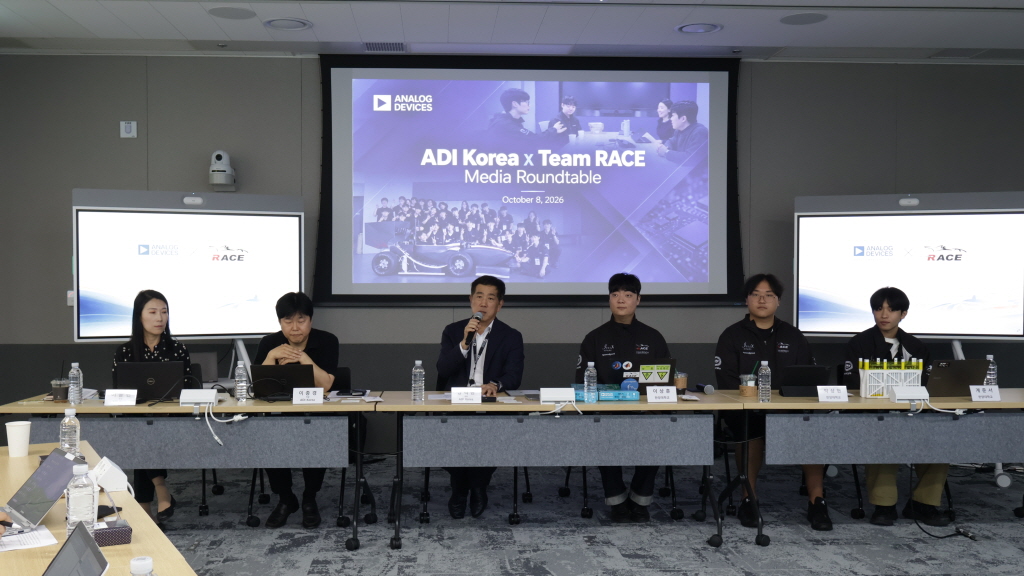
ADI, "Fostering Future Engineers Beyond Component Support"
Global semiconductor company Analog Devices (ADI) is drawing attention for moving beyond simply sponsoring university student car projects to serve as a partner in nurturing future engineers. Over the past three years, ADI has collaborated with Hanyang University's automotive research club Team RACE to support electric formula vehicle development, and recently has been providing technical consultation and semiconductor solutions to enable students to directly develop battery management systems (BMS), creating a model case of industry-academic cooperation.
2026.10.08by 배종인 기자











