



The Korea Electric Power Corporation's Redox Flow Battery Testing and Certification Center is active.
 Published2022.10.20 11:36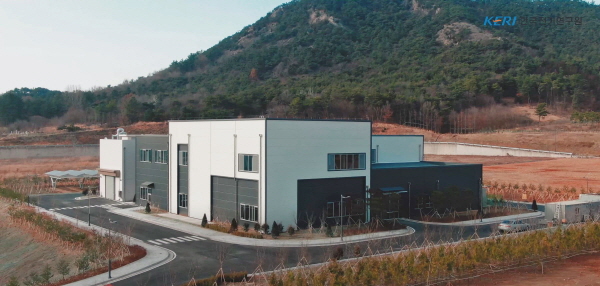
▲The Redox Flow Battery Testing and Certification Center located at the Korea Electrotechnology Research Institute's Gwangju Smart Grid Headquarters.
The 'Redox Flow Battery Testing and Certification Center' located at the Gwangju Smart Grid Headquarters of the Korea Electrotechnology Research Institute (KERI, Acting President Nam-Kyun Kim) has been receiving much attention from companies since its inception and is emerging as a cradle for building a large-capacity secondary battery ecosystem.
The Korea Electrotechnology Research Institute (KERI) announced on the 20th that the 'Redox Flow Battery Testing and Certification Center' is actively utilized by companies, with more than 20 tests being conducted in the third quarter alone.
Redox flow batteries are a portmanteau of reduction, oxidation, and flow. Unlike conventional secondary batteries, they separate the chemical reaction zone from the electrical storage zone, allowing for independent design of output and capacity, enabling larger battery capacities.
Redox flow batteries are environmentally friendly as they do not produce exhaust gases and the electrolyte is 100% recyclable after use. Additionally, the battery can be used semi-permanently through periodic re-adjustment of the electrolyte, and there is no risk of fire, which is a major advantage.
Due to these advantages, redox flow batteries are considered to be the next-generation long-cycle, large-capacity secondary batteries that will lead the ESS (Energy Storage System) industry. However, due to the lack of specialized testing infrastructure, domestic companies had to go overseas, which resulted in many difficulties such as economic burden, delays in product development, and outflow of core design technologies.
To address this, KERI, with the assistance of the Ministry of Trade, Industry and Energy and Gwangju Metropolitan City, invested a total of KRW 23.35 billion to build a 'Large-Capacity Redox Flow Battery Testing and Certification Center for Power Storage' on a site of 10,000㎡ (3,025 pyeong) with a total floor area of 2,250㎡ (680 pyeong) at the end of March.
Since then, 44 pieces of equipment across 19 categories have been installed to evaluate the performance and safety of batteries, including components, materials, stacks, modules, and systems. Full-scale operations began in July. Recently, the center was designated as a "Korea Laboratory Accreditation Scheme (KOLAS) Internationally Accredited Testing Laboratory," further strengthening its credibility and expertise.
Corporate interest in establishing Korea's first redox flow battery testing infrastructure has been extremely high. The center conducted over 20 tests for six companies in the third quarter of this year alone, and demand for battery fire (explosion) and environmental testing is reaching an average monthly utilization rate of over 90%.
In addition, domestic companies can now quickly undergo testing and certification, shortening the product commercialization period and enhancing export competitiveness. According to KERI's Energy Device Testing Laboratory, the early commercialization of redox flow batteries through this center is expected to reduce the cost of building ESS systems by approximately 30% annually.
KERI Energy Device Testing Lab Director Sangpil Ahn said, “Redox flow batteries, which can safely store large amounts of electricity, will greatly contribute to the expansion of large-capacity ESS, and the center that tests and certifies them will play a major role in accelerating the commercialization period and supporting related companies.”
The Redox Flow Battery Testing and Certification Center aims to build the largest testing facility in Korea by the end of this year to conduct electromagnetic environmental assessments of large-capacity batteries and electric vehicle chargers, and to begin providing full-scale testing and certification services to related companies starting next year.
In addition, in cooperation with Gwangju Metropolitan City, where the center is located, the plan is to: △create a regional battery-based innovation infrastructure by providing technical support and various information to enhance the competitiveness of domestic companies; △explore ways to support companies moving into the Gwangju Energy Valley and subsidize testing and certification fees; and △implement training to cultivate future energy personnel in the battery field.
Meanwhile, KERI is a government-funded research institute under the National Research Council of Science and Technology of the Ministry of Science and ICT. It conducts research and development related to advanced electrical technology as well as internationally recognized testing and certification for power equipment.
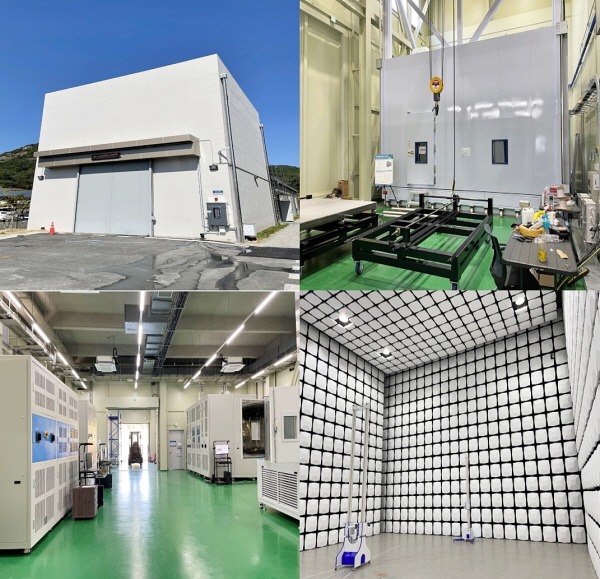
▲Key equipment of the Redox Flow Battery Testing and Certification Center

Comments
Related news
KERI Establishes 'Redox Flow Battery Testing and Certification Center'
The Korea Electrotechnology Research Institute (KERI, Director Myung Sung-ho), an internationally accredited testing and certification organization for power equipment, is establishing a 'Redox Flow Battery Testing and Certification Center,' a hidden gem of carbon neutrality, and contributing to ESS fire prevention and resolution of renewable energy intermittency through large-capacity batteries and high safety realization.
2022.03.29by 배종인 기자
KERI succeeds in low-temperature production of all-solid-state batteries
The Korea Electrotechnology Research Institute (KERI, Acting Director Kim Nam-gyun) has reduced the heat treatment temperature for the manufacture and application of electrolytes in all-solid-state batteries to 200℃ or below, resolving issues with ionic conductivity loss and interfacial resistance, which is expected to make a significant contribution to the future commercialization of all-solid-state batteries.
2022.07.20by 배종인 기자
KERI Takes 'One Step' Toward Commercialization of Large-Capacity Lithium Metal Batteries
A research team led by Dr. Kim Byung-gon at the Korea Electrotechnology Research Institute (KERI, Acting President Kim Nam-gyun) has enhanced the output and stability of high-capacity lithium metal batteries, opening possibilities for commercialization.
2022.08.29by 배종인 기자
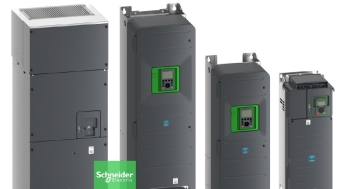
Schneider Aims for Building Energy Savings and Operational Stability with Next-Generation HVAC Drives
Schneider Electric has unveiled its next-generation HVAC drive product line 'Altivar HVAC'. The new product line's key features center on enhanced energy savings, system operational stability, and building management system integration. The products are divided into 'ATH200' for OEM and small equipment applications, and 'ATH600' for environments requiring continuous operation and advanced control. The company plans to expand the application scope from commercial buildings to facilities where HVAC system stability is critical, such as hospitals, airports, and data centers. The announcement includes over 30% energy savings, operation from -10°C to +60°C, Modbus and BACnet support, and compatibility with low global warming potential refrigerants.
2026.03.26by 명세환 기자
Ecolab Expands AI Data Center Cooling Business Through Acquisition of CoolIT
Ecolab has agreed to acquire CoolIT Systems, a liquid cooling company for AI data centers, for approximately $4.75 billion. The transaction is expected to close by Q3 2026, subject to regulatory approvals. CoolIT has been supplying direct-to-chip cooling-based coolant distribution units, cold plates, and manifolds, serving hyperscale data centers and colocation operators as customers. This acquisition is a measure to address the high-heat and high-density server environments created by AI proliferation. Ecolab plans to combine its water management and digital monitoring capabilities with CoolIT's hardware technology to expand its data center cooling business.
2026.03.26by 명세환 기자











