


Germany to provide 80 million euros in support for fuel cell technology for cargo transport.
 Published2022.10.24 16:23
▲ This photo is not related to the article. (Photo credit: Freepik)
Current electric and hydrogen trucks face clear technical and economic limitations.
Creating an environment for mass production of hydrogen-to-electricity direct conversion fuel cells.
According to the Ministry of Science and ICT's Science, Technology and ICT Trends No. 224, the German Federal Ministry for Digital Transport (BMDV) is planning to provide over 80 million euros in R&D subsidies to the Fraunhofer Society for the development of fuel cell technology in the heavy-duty freight transport sector.
Federal Minister for Digitalisation and Transport Volker Wissing presented the 'H2GO - National Action Plan for Fuel Cell Production' and announced a total of over €80 million in funding for a consortium of 19 Fraunhofer institutes.
The budget is based on the inter-ministerial 'Automobile Industry Future Fund (Zukunftsfonds Automobilindustrie)' launched in 2020 with the goal of promoting product and process innovation through the development of future mobility production technologies.
Despite the spread of eco-friendly mobility and improvements in vehicle fuel efficiency, the increase in freight volume is increasing carbon emissions, raising the need for alternative mobility that does not use fossil fuels in the large-scale freight transport sector.
Freight transport is still dominated by diesel fuel, and current technologies that could replace it have clear economic and technological limitations.
Electric trucks have battery weight and long recharge times.Due to the system, it is used in niche markets that focus on small, short-distance, or urban delivery.
Another option, hydrogen, has the advantage of being able to provide energy as quickly as diesel and offering a similar maximum driving range, but the fuel cells required for this are not being widely adopted due to their economic feasibility and technological complexity.
This project by the German Federal Ministry for Digitalization and Transport aims to develop fuel cell technology that is industrially feasible and market-competitive, and to establish a system in which the developed solutions are provided digitally to all participants through a platform (Virtual Reference Factory).
Nineteen Fraunhofer institutes will work to create an environment for mass production of high-performance fuel cells that directly convert hydrogen into electricity onboard vehicles, and will actively utilize the regional network where each institute is located to focus on developing new manufacturing technologies.
The Virtual Reference Factory architecture is expected to serve as a foundation for value chain participants to reference and implement the technology more organically and quickly.
This project is expected to strengthen the competitiveness of Germany's related industries, reduce the costs of introducing and operating hydrogen vehicles in the large freight transport sector, and provide an environmentally friendly transportation alternative.
In addition, given the characteristics of the Fraunhofer Institute, which engages in many joint research activities with industry, direct and indirect support is expected to be provided to small and medium-sized enterprises involved in the fuel cell value chain, such as fuel cell production technology, machinery, electrolysis plant engineering, and technology for large cargo and special vehicles.
Comments
Related news
Stellantis and GME Resources Sign Contract for EV Battery Raw Materials
Reuters reported on the 10th that Stellantis has entered into a non-binding preliminary agreement with GME Resources to secure supplies of nickel and cobalt sulfate, key raw materials for electric vehicle batteries.
2022.10.11by 성유창 기자
LG Energy Solution and Honda Confirm Battery Plant Construction in Ohio
The battery plant site worth $4.4 billion announced by LG Energy Solution (hereinafter LG Enersol) and Honda in August has been confirmed to be located in Ohio.
2022.10.12by 성유창 기자
Infineon Launches Single-Stage Flyback Controller for Battery Charging Applications
Infineon Technologies (hereinafter Infineon) has launched the ICC80QSG single-stage PWM controller for flyback topology, part of its AC-DC controller IC product line.
2022.10.12by 성유창 기자
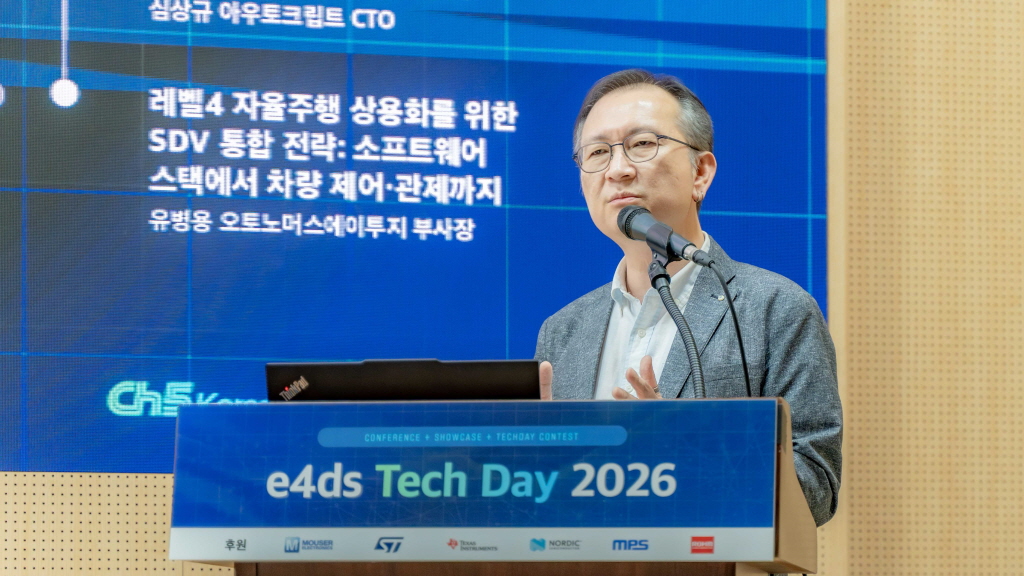
[e4ds Tech Day 2026 ⑨] Sim Sang-gyu, Autocrypt CTO: "In the Physical AI Era, Automotive Security Must Extend Beyond the Vehicle"
At e4ds Tech Day 2026, Sim Sang-gyu, CTO of Autocrypt, explained automotive cybersecurity strategies in the era of Physical AI and SDV (Software-Defined Vehicle). Automobiles are evolving as part of an ecosystem connected to AI, cloud, chargers, IoT, and robots, and he emphasized that the scope of security must expand beyond the vehicle interior to the entire connected environment. In particular, AI model tampering, adversarial attacks, OTA updates, and EV charger hacking were identified as major threats. He explained that response measures require zero trust, AI model integrity protection, intrusion detection, Security by Design and Default, and full lifecycle security management, and that proactive security system establishment beyond regulatory compliance is critical for securing future mobility competitiveness.
2026.10.12by 배종인 기자

Practical HIL Construction Strategy for Automotive and Off-Highway Controller Validation
As vehicle E/E architecture transitions to zonal structures and shifts to software-defined vehicles (SDV), the number of controllers (ECUs) requiring validation and software complexity are surging dramatically. Meanwhile, real vehicle testing cannot provide repeated verification under identical conditions and entails lead time and safety concerns. This white paper explains the principles of HIL (Hardware-in-the-Loop) validation and the structure of the NI platform composed of PXI, SLSC, and VeriStand, and through two actual implementation cases—Camera Record & Replay HIL for In-Cabin Monitoring Controller (ICMU) and Forklift Controller (VCU) HILS—describes how controller-level regression testing becomes possible. Additionally, it explicitly states application boundaries and limitations, such as lack of A2B support.
2026.10.12by 편집부











