


KERI Pledges to Be an Unwavering Research Institute on Its 46th Anniversary
 Published2022.10.27 12:11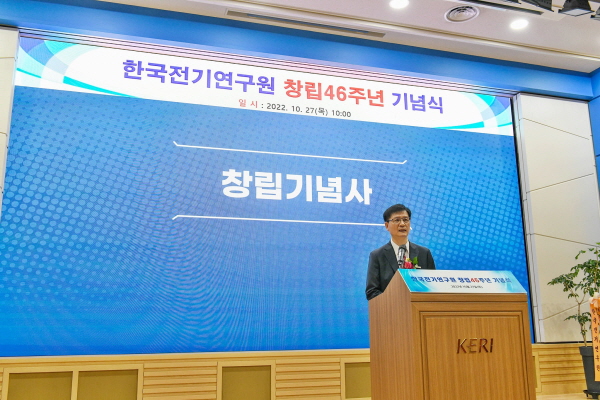
The Korea Electrotechnology Research Institute (KERI) pledged to build an unwavering and solid research institute to mark its 46th anniversary.
The Korea Electric Research Institute held a ceremony commemorating its 46th anniversary on the 27th. This event was held in person with all employees in attendance for the first time in three years since the spread of COVID-19.
Acting Director Kim Nam-kyun began his commemorative speech by once again praying for the repose of the soul of the late Director Myung Sung-ho, who passed away from a cerebral hemorrhage last June, and by urging all employees to carry on the deceased's noble legacy and do their utmost to produce tangible results that the public and businesses can experience.
He continued by commending the employees for their hard work, stating, “Although 2022 was a year with particularly many internal and external difficulties, the fact that the institute was able to endure without wavering was thanks to the dedication of the entire KERI family, as always.” He added, “As a result of these efforts, we are making a significant impression of KERI’s name externally under the proud vision of ‘KERI, the center of the electrified world of the future.’”
Acting Director Kim said, “KERI, which is stronger in times of crisis, has produced many achievements this year as well,” and congratulated the various external awards for development technologies in the graphene and battery fields within the research sector.
Major technology transfer achievements mentioned include power converter technology for hydrogen-based fuel cells, cathode binder technology for high-capacity lithium-ion batteries, lightning arrester element manufacturing technology for underground transmission cables, X-ray focus voltage generation technology, and a non-contact optical convergence in vitro diagnostic healthcare system.
In the testing and certification sector, achievements include the establishment of the Gwangju Redox Flow Battery Testing and Certification Center and the hosting of Asia's first 'Charin International Testival,' which contributes to improving electric vehicle charging environments and leading international standards; regarding external cooperation and management performance, achievements include the completion of the 'Smart Innovation Center' and the 'Expansion of the Technology Startup Center' to lead manufacturing innovation and startup revitalization in Gyeongnam and Changwon, as well as the 19 billion won 'e-Nanomaterial Chemical/Wet Process Platform' to realize technological self-reliance in new electric materials and components. The groundbreaking, the smooth progress of the Gyeongnam Changwon Small Giant Special Zone and the Korea-Canada Manufacturing AI project, and the acquisition of the international standard anti-corruption management system certification (ISO 37001) were cited as representative achievements.
Finally, Acting President Kim Nam-kyun concluded his founding anniversary speech by saying, “Let us become a solid research institute that remains unwavering, just as we have done so far, and a KERI that is loved and trusted by the people.”
At the ceremony held on this day, the awards for the National Science and Technology Research Council Chairman's Award, Long Service Award (10–40 years), Exemplary Employee Award, and Integrity Award were presented together.
Meanwhile, KERI is a government-funded research institute specializing in electricity under the National Science and Technology Council of the Ministry of Science and ICT, established on December 29, 1976, to promote the electric industry and power business in South Korea. Currently, in addition to its headquarters located in Changwon, Gyeongnam, it has three regional offices (Ansan, Uiwang, and Gwangju). It has a workforce of approximately 800 people and is organized into 12 divisions, 2 research groups, 1 department, 26 centers, and 29 offices.
Major research and development fields include power grids and new and renewable energy, High Voltage Direct Current (HVDC) transmission and power equipment, electric propulsion and industrial application technologies, nanomaterials and batteries, next-generation power semiconductors, and electrical technology-based convergence medical devices. Furthermore, as an internationally accredited testing and certification body for power equipment, it acquired full membership in the Short Circuit Testing Liaison (STL) in 2011. Based on world-class facilities and professional personnel, it contributes significantly to the expansion of overseas markets for domestic power equipment manufacturers by ensuring that the institute's test reports are accepted in global markets.

Comments
Related news
.jpg)
KERI Wins '2022 Korea Social Media Awards'
The Korea Electrotechnology Research Institute received the '2022 Korea SNS Award (Grand Prize in Research Institute Category)' in recognition of its outstanding achievements and contributions in online public relations.
2022.10.18by 배종인 기자
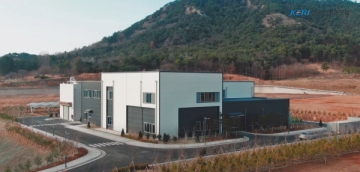
The Korea Electric Power Corporation's Redox Flow Battery Testing and Certification Center is active.
The 'Redox Flow Battery Testing and Certification Center' located at the Gwangju Smart Grid Division of the Korea Electrotechnology Research Institute has been attracting significant interest from companies since its initial operation and is emerging as a hub for building a large-capacity secondary battery ecosystem.
2022.10.20by 배종인 기자
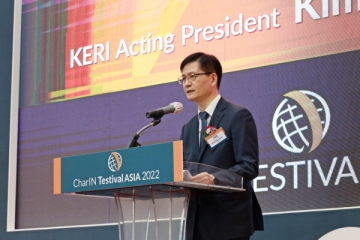
Korea Electric Power Corporation (KEPC) is leading the way in establishing international standards for rapid charging of electric vehicles.
The Korea Electrotechnology Research Institute (hereinafter KERI) and Charini collaborate to inspect technical problems occurring during fast charging of electric vehicles, sharing the common objective of investigating charging errors and contributing to problem resolution.
2022.10.25by 성유창 기자
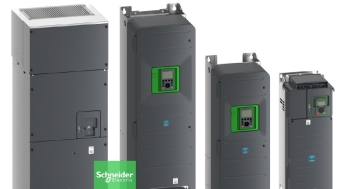
Schneider Aims for Building Energy Savings and Operational Stability with Next-Generation HVAC Drives
Schneider Electric has unveiled its next-generation HVAC drive product line 'Altivar HVAC'. The new product line's key features center on enhanced energy savings, system operational stability, and building management system integration. The products are divided into 'ATH200' for OEM and small equipment applications, and 'ATH600' for environments requiring continuous operation and advanced control. The company plans to expand the application scope from commercial buildings to facilities where HVAC system stability is critical, such as hospitals, airports, and data centers. The announcement includes over 30% energy savings, operation from -10°C to +60°C, Modbus and BACnet support, and compatibility with low global warming potential refrigerants.
2026.03.26by 명세환 기자
Ecolab Expands AI Data Center Cooling Business Through Acquisition of CoolIT
Ecolab has agreed to acquire CoolIT Systems, a liquid cooling company for AI data centers, for approximately $4.75 billion. The transaction is expected to close by Q3 2026, subject to regulatory approvals. CoolIT has been supplying direct-to-chip cooling-based coolant distribution units, cold plates, and manifolds, serving hyperscale data centers and colocation operators as customers. This acquisition is a measure to address the high-heat and high-density server environments created by AI proliferation. Ecolab plans to combine its water management and digital monitoring capabilities with CoolIT's hardware technology to expand its data center cooling business.
2026.03.26by 명세환 기자











