


VSI Unveils Industry Standard High-Speed Link Solution for Automotive Applications in Yokohama, Japan
 Published2022.10.28 10:59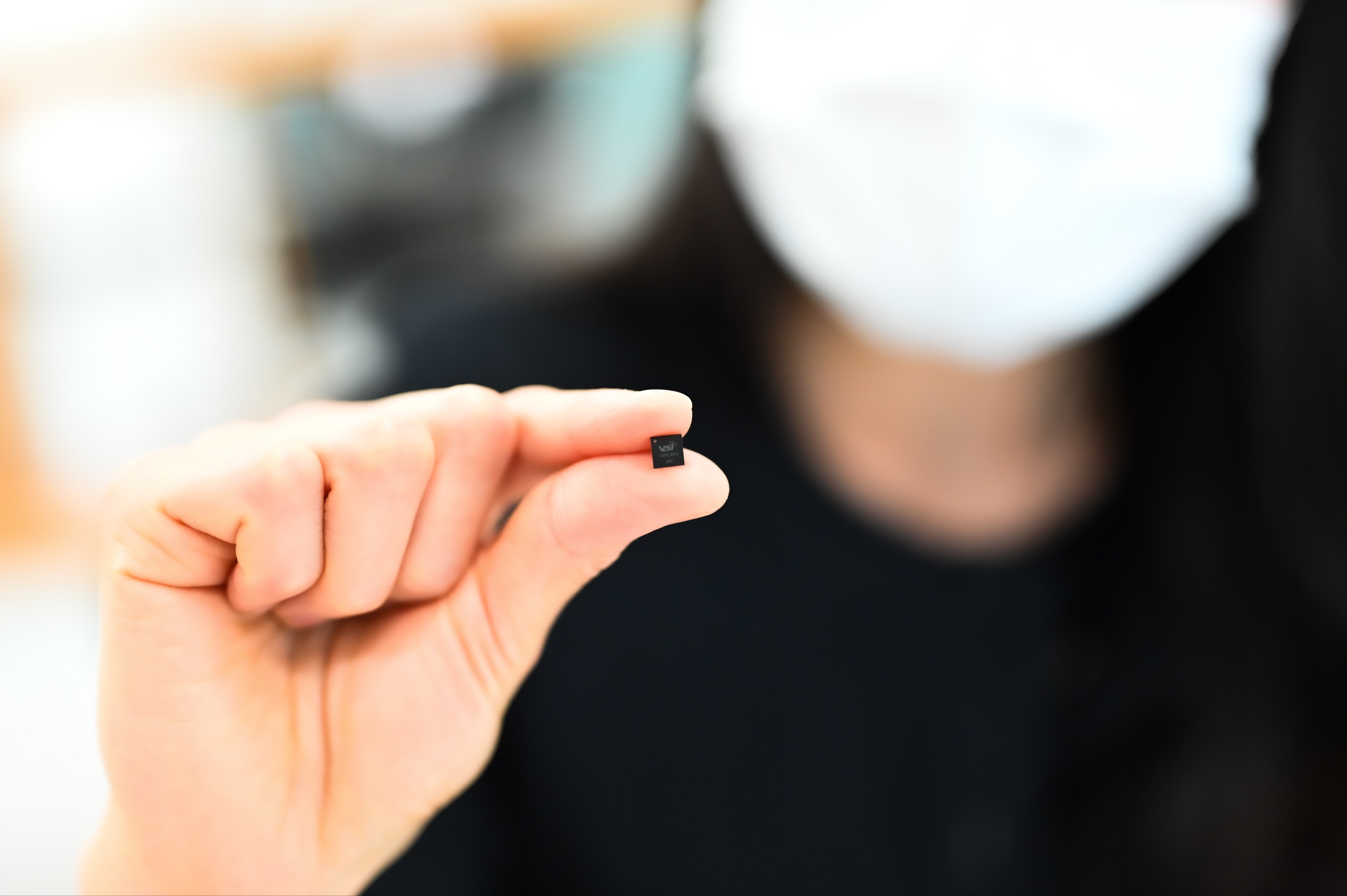
Implementation of ASA standard high-speed SerDes and IEEE standard high-speed Ethernet connections
As autonomous driving levels become more advanced, the number of sensors installed in vehicles, such as cameras, LiDAR, and radar, increases. Some predict that Level 4 and 5, fully autonomous driving levels requiring little or no driver intervention, will require more than 20 sensors per vehicle. The increasing number of sensors installed in vehicles will require high-speed data transmission technology, and the demand for real-time high-speed data transmission is expected to continue to increase.
VSI Co., Ltd., a domestic fabless company specializing in the design of high-speed communication semiconductors for vehicles, announced that it will present a live demonstration of the world's first commercial automotive high-speed link solution that integrates the ASA (Automotive SerDes Alliance) standard high-speed SerDes (Serializer/Deserializer) technology and the IEEE standard high-speed Ethernet technology at the IEEE SA's E&IP@ATD (IEEE Ethernet IP & Automotive Technology Day) to be held in Yokohama, Japan from November 9 to 10.
VSI said that this demonstration is an official proof-of-concept demonstration program conducted by 'B', a global German automaker leading ASA, and that the demo equipment utilizes VSI's 'VS775' SerDes chip.
The VS775 is the world's first commercially available semiconductor product that implements the ASA standard 16Gbps camera link, providing real-time high-speed data transmission between multiple camera sensors and the central processing unit (ECU) in a vehicle. The system used in this live demonstration is configured using high-speed image sensors and ECU platforms that are actually used in an environment identical to that of a real vehicle.
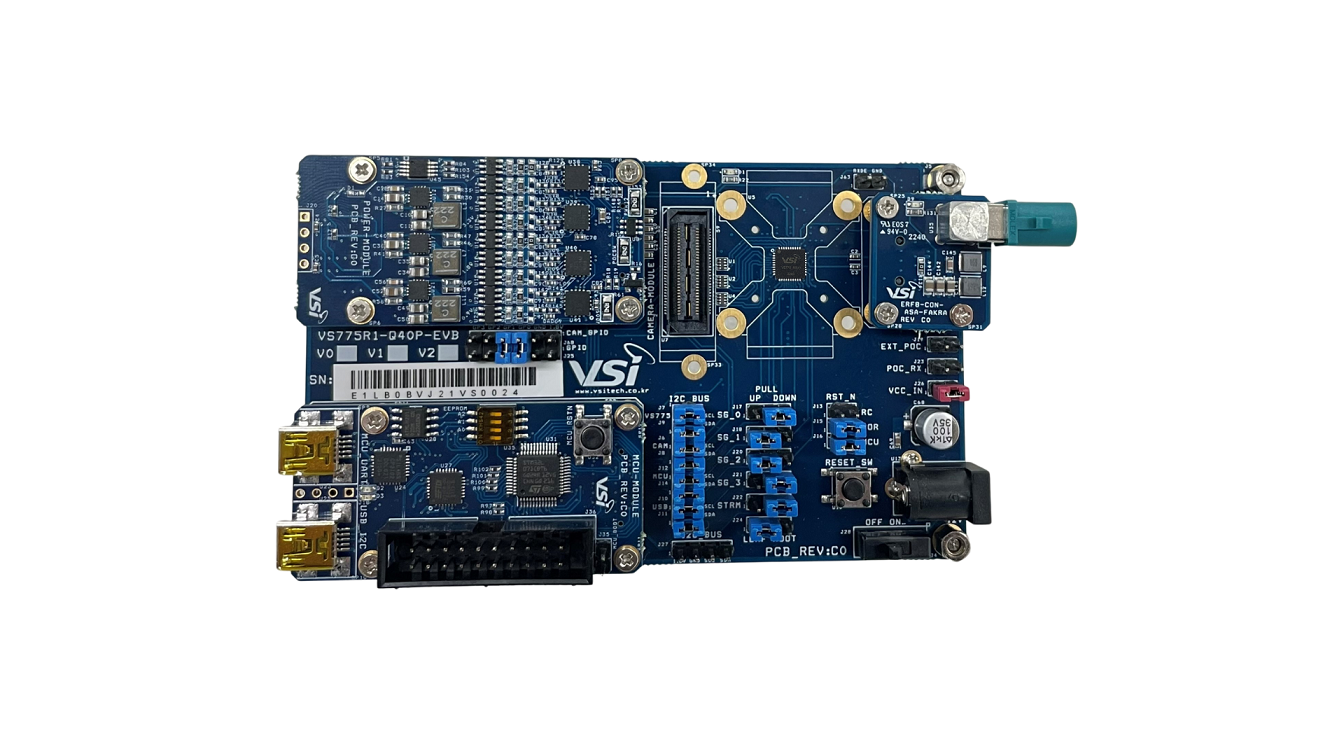
▲VSI serializer board (Photo - VSI)
“We are honored to have the opportunity to demonstrate our standard commercial semiconductor products with global automakers at a global event,” said Kang Su-won, CEO of VSI. “Through this demonstration, we will widely publicize the benefits of the 16Gbps high-speed link performance provided by the VS775 and the ability to resolve the bottleneck of incompatibility caused by the use of proprietary technologies by existing vendors through compliance with the ASA standard.”
Existing solutions offer low-speed data transmission performance of around 6 Gbps. Furthermore, each supplier uses proprietary technology, raising compatibility concerns. To address this, global OEMs have launched an initiative to standardize high-speed link solutions for vehicles (ASA).
Following the launch of the world's first ASA standard-compliant 8Gbps SerDes chip sample 'VS775' in May, VSI introduced a commercial chip in October, doubling the transmission speed to 16Gbps. In addition to high-speed data transmission performance, the VS775 features a low-power design that reduces power consumption by up to 50% compared to existing products, and an ultra-small size, making it optimized for electric vehicles (EVs) and space-constrained vehicle camera modules.
CEO Kang said, “With the launch of the VS775 commercial chip, which complies with the ASA international standard, VSI expects to contribute to the rapid expansion of the SerDes market itself, an essential component for autonomous driving and high-performance automobile manufacturing, while also providing a positive impact to the domestic automobile industry by localizing SerDes technology, which has been 100% dependent on imports.”

Comments
Related news

Intel Unveils Next-Generation 'Core Ultra Series 3' and vPro Platform for Enterprise PCs
Intel has officially unveiled the "Intel Core Ultra Series 3" for next-generation enterprise PCs and the latest vPro platform, addressing a wide range of demands from enterprise notebooks to high-performance workstations.
2026.03.26by 배종인 기자

ROHM Launches ESD Protection Diode Compatible with High-Speed Interfaces of 10Gbps or Higher
Semiconductor specialist ROHM has developed the 'RESDxVx series' of ESD (electrostatic discharge) protection diodes capable of responding to next-generation high-speed data communication environments exceeding 10Gbps, simultaneously enhancing both signal quality maintenance required in high-speed interfaces and IC protection performance.
2026.03.26by 배종인 기자
ST Launches 75V Drive IC Targeting 48V Industrial Motor Driving
ST Microelectronics has unveiled the 'STSPIN9P' series of 75V motor drive ICs tailored for 48V-class industrial drive system design. The new product family is characterized by half-bridge and full-bridge configurations that enable design scalability according to motor type and output conditions. Power supply circuits, protection functions, and current sensing circuits are integrated on-chip to simplify system configuration, and the devices are designed to support applications up to 500W maximum. The company plans to provide reference designs and demo boards to support development and evaluation in industrial automation, robotics, pumps, fans, lighting, and textile machinery.
2026.03.26by 배종인 기자

Nordic supports security updates for the entire lifecycle of IoT devices at a single fixed cost
Nordic Semiconductor, a global leader in low-power wireless connectivity solutions, has unveiled a single fixed-cost licensing model that delivers FOTA (Firmware Over-the-Air) and device management capabilities throughout the device lifecycle via nRF Cloud, and introduced a new firmware update solution to prepare for the enforcement of the European Union's Cyber Resilience Act (CRA).
2026.03.26by 배종인 기자

Practical Training in Low-Noise, Low-Power Circuit Design All in One Place… Training Fee Support
The "2026 Advanced Engineer Practical Masterclass" to strengthen competencies in high-sensitivity analog circuit and sensor-based system design will be held on April 16 at the e4ds Conference Center in Gasan-dong, Seoul. This program will be conducted as an offline paid hands-on training session, not online, and is targeted at engineers seeking on-site intensive learning. Texas Instruments will provide educational support for this training, allowing participation at 150,000 won, a 100,000 won discount from the original price of 250,000 won.
2026.03.26by 배종인 기자











