


Innovation in regulations related to electromagnetic waves for wireless charging, IoT, and 5G
 Published2022.11.10 12:27
As the government begins to seriously improve frequency-related regulations that hinder the spread of advanced digital technologies, digital-based economic innovation is expected to accelerate.
At the '2nd Regulatory Innovation Strategy Meeting' held on the 9th and chaired by the Prime Minister, the 'Regulatory Innovation Plan to Revitalize the Digital Industry' was announced.
According to this plan, 12 regulatory improvement tasks in 3 major areas will be promoted, including frequency distribution for implementing wireless charging for electric vehicles and application of low-power, ultra-precision ultra-wideband wireless technology (UWB) to smartphones.
In order to establish a foundation for commercialization of wireless charging for electric vehicles, the 85 kHz frequency will be announced by the end of this year, and wireless charging devices will gradually transition to a product-by-product device certification system.
In addition, we are working to activate the Internet of Things (IoT) by applying low-power, ultra-precision ultra-wideband wireless technology (UWB) to smartphones.
Currently, the use of technologies exceeding 500MHz bandwidth, which are in high demand in the industry, is restricted, but the policy is to fully allow the installation of ultra-wideband wireless technology functions in smartphones.
Article 10 of the related regulation, “Notice on Technical Standards for Wireless Facilities for Wireless Stations That Can Be Established Without Reporting,” is subject to revision by December 2022.
In addition, the inspection of radio equipment in semiconductor factories will be improved to a building-by-building inspection method.
<br /> In the past, semiconductor manufacturing facilities, etc., when inspecting radio equipment, the manufacturing process had to be stopped and each piece of equipment inspected directly, which was a burden to the manufacturing companies.
Accordingly, facilities equipped with electromagnetic shielding facilities will be improved to allow for collective equipment inspections outside the building, rather than directly inspecting each piece of equipment.
The inspection period is expected to be shortened from approximately seven days to one day, and the uncertainty surrounding process interruptions will be eliminated, which is expected to revitalize the semiconductor industry.
The introduction of an electromagnetic compatibility declaration system for light-emitting diode (LED) lighting devices is expected to reduce the burden on companies due to existing electromagnetic compatibility testing.
The 5G network will simplify frequency supply procedures and apply the radio station licensing system to 5G-equipped terminals.
It is expected that this will lead to the construction of approximately 1,000 5G specialized networks by 2030, and stimulate investments worth approximately 3 trillion won.
In addition, to promote investment in optical cables, the plan is to allow the replacement of local telephones with Internet telephones and to allow the use of local government networks as public services to expand smart cities.
Through this, it is expected that local governments will be permitted to register as fixed-line telecommunications businesses when they intend to conduct non-profit projects for public interest purposes, which will expand public Wi-Fi and intelligent city services through their own networks and enhance the telecommunications welfare of the people.
In addition, we plan to improve the design supervision of information and communication facilities in buildings so that information and communication experts can also perform the supervision, and improve the standards for recognizing 'special grade' information and communication technicians to resolve the shortage of technical personnel.
In addition, to rationally improve regulations related to the use of digital equipment that unreasonably affect industrial sites, we will exempt industrial equipment such as imported radio components from electromagnetic compatibility assessment, and rationally improve the method of inspection for changes to radio stations from full inspection to sample inspection.>
Here, we plan to improve the installation standards for in-house communication lines in residential officetels from business to residential.
Minister of Science and ICT Lee Jong-ho said, “The digital industry is a high-growth sector and the foundation for creating economic and social value,” and added, “We will boldly and swiftly break down regulations on the digital industry to revitalize the industrial sector and lay the foundation for our country to become a model digital nation.”
He also stated, "To ensure that the system remains relevant to digital technology and industrial changes in the future, we will continue to pursue regulatory innovation by incorporating industry opinions."
Meanwhile, e4ds news will hold a seminar titled '2022 e4ds Analog Day' on Friday, December 9, 2022 regarding EMI countermeasures in the wireless charging market.
This seminar will focus on trends in EMI/EMC standard certification , EMI countermeasures in response to advancements in wireless power transmission technology, and electromagnetic interference issues in electrical equipment .

Comments
Related news
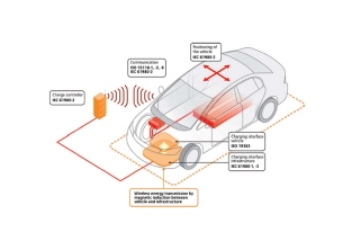
Accelerates introduction of wireless charging for electric vehicles
The government is making a full-scale push to establish the foundation for commercializing wireless charging for electric vehicles by the end of this year, and the introduction of wireless charging for electric vehicles is expected to accelerate.
2022.11.10by 배종인 기자

ESP32 Development Environment Selection and GPS Application Implementation
The ESP32 is a microcontroller that integrates Wi-Fi, Bluetooth, 12-bit ADC, capacitive touch, PWM, DAC, and UART in a single SoC. However, the abundance of features does not by itself solve the designer's problems. The real challenges lie in selecting the appropriate development environment, determining which pins can be used and which must be avoided, and converting raw data from modules into usable information. This document addresses ESP32 peripheral constraints (ADC2 and Wi-Fi coexistence limitation, UART1 occupancy, ADC non-linear regions), the trade-offs between Arduino IDE and ESP-IDF, and the process from connecting NEO-6M/NEO-M8N GPS modules to UART2, parsing NMEA sentences, and visualizing routes in Google Earth, all organized based on documented references.
2026.10.12by 편집부
MIPI CSI-2, DSI-2, C-PHY, D-PHY Test Solution Technical White Paper
The MIPI interface adopts a burst mode that transitions between low-power (LP) and high-speed (HS) states for low-power consumption, and in return, strict timing rules are imposed on state transitions. Additionally, the high-speed section operates as a packet-based protocol with headers, ECC, and CRC, so verification engineers must handle waveforms and protocols simultaneously. Traditional configurations combining general-purpose oscilloscopes and AWGs reveal limitations in setup complexity, measurement uncertainty, and lack of reproducibility when faced with these requirements. This white paper, based on webinar materials, organizes the structure of this problem and describes how the SV5C-DPTXCPTX generator for receiver testing and SV5C-DPRXCPRX analyzer for transmitter testing integrate state transition testing, stressed eye testing, and protocol analysis into a single bench, along with their application boundaries.
2026.10.12by 편집부

NVIDIA to Invest $1 Billion in U.S. Science Over Next Five Years
NVIDIA has announced plans to invest $1 billion over the next five years to strengthen U.S. scientific and technological competitiveness. The company will enhance cutting-edge artificial intelligence research and development capabilities in key areas including quantum computing, healthcare, and energy security, while expanding support for higher education research institutions and cloud service providers. NVIDIA is participating as a major industry partner in the White House Office of Science and Technology Policy's Genesis Mission, and is promoting supercomputer construction in collaboration with national laboratories including Argonne and Los Alamos.
2026.10.12by 배종인 기자
Advanced Capacitive Sensing Technology for Moisture-Resistant Touch and Digital Level Sensing
Capacitive sensing is replacing mechanical buttons and contact-type water level sensors by virtue of its non-contact and movable-part-free characteristics. However, water and frequently changing ground conditions directly disturb its measurement principle. Based on Microchip webinar materials, this white paper describes the principles, configuration, and performance basis of Digital Level Sensing (DLS), which reports water level regardless of ground conditions, and Impulse Touch Sensing (ITS), which eliminates the effect of water at the moment of signal acquisition. Furthermore, it specifies application boundaries that designers should be aware of, including recommended mechanical stack-up below 5mm, inapplicability to metal containers, and the necessity of validation for media other than water.
2026.10.12by 편집부











