


Korea’s Foundry Competitiveness Depends on the Growth of Fabless Companies
 Published2022.11.17 09:43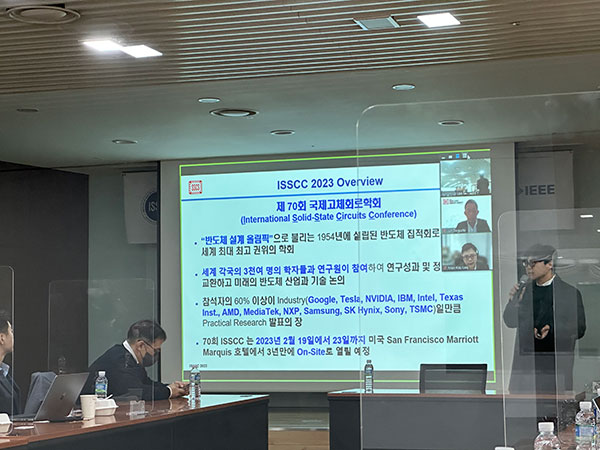
Semiconductor Technology Trends Shared at 'ISSCC 2023 Preview'
Lagging behind Chinese papers in fields such as analog and PM
Memory-System Semiconductor Convergence: 'CIM' in Focus on ML/AI Fields
With the convergence of advanced technologies such as AI, autonomous driving, and the metaverse gaining attention following the Fourth Industrial Revolution, the system semiconductor market has grown to more than double the size of the memory semiconductor market. It is being emphasized that Korea's fabless (semiconductor design) market must grow to secure competitiveness in foundry (semiconductor production).
Korea, a powerhouse in memory, is failing to stand out in the system semiconductor market, accounting for only 1.5% of the market share. With an annual talent output of only about 50 people, it is difficult to secure competitiveness compared to the United States, China, and Taiwan.
As a result, expectations are mounting that Korea, a powerhouse in memory, will be able to secure technological leadership, particularly in the ML/AI field, through 'CIM (Compute-in-Memory)' technology that integrates systems.
■ Numerous Papers Submitted and Accepted by Chinese Investors with Massive Investments at ISSCC
The International Solid-State Circuits Conference (ISSCC) held the 'ISSCC 2023 Preview' event on the 16th at Pangyo InnoValley in Bundang-gu, Seongnam-si, and shared information on the ISSCC 2023 program and papers, as well as the latest technology trends, to be held in San Francisco, USA, next February.
ISSCC is the world's largest conference related to semiconductor integrated circuits and is known as the "Semiconductor Olympics." Every year, more than 3,000 participants from industry, academia, and research institutions, including big tech companies from over 30 countries, present and share the latest technologies related to various semiconductor integrated circuits and systems.
In this 70th competition, a total of 629 papers were submitted across the fields of ANA (Analog), Image, MEMS, Medical, and Display (IMMD), PM (Power Management), DAS (Digital Architecture/System)/DCT (Digital Circuit), WLS/RF (Radio Frequency), DC (Data Converter), and MEM (Memory), and a total of 198 were accepted.
Korea had a total of 32 papers accepted, led by 8 from Samsung Electronics. Although the number of presentations decreased by 9 compared to last year and was lower than that of China and the United States, it is encouraging that the number of presenting institutions has steadily increased and maintained a high level in the field of AI accelerators.
Furthermore, according to presentation materials from each division, it was revealed that, overall, due to massive Chinese investment, the number of Chinese papers in areas such as analog, PM, and data converters has increased dramatically, with the exception of some fields like memory and IMMD.
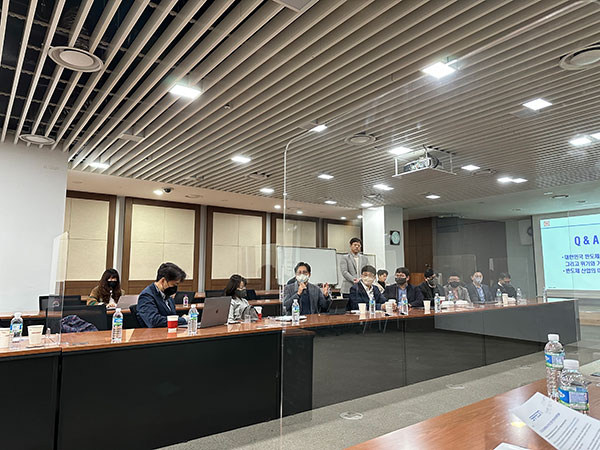
▲ A scene of the Q&A session during the 'ISSCC 2023 Preview' held at Pangyo Innovalley.
It was reported that research related to ML/AI has recently increased in the memory division, and Korea remains strong, with technologies such as NAND with over 300 layers and DRAM being introduced for the development of high-capacity memory.
Professor Kim Ji-hoon of the DAS/DCT Division stated that demand in the IoT and automotive sectors is continuously rising, adding, “We must devote efforts to and maintain continuous interest in technologies based on the latest processes, such as 3 nanometers or smaller.”
Lee Jong-woo, Senior Vice President at Samsung Electronics, said, "I believe that fabless companies must grow in order to enhance foundry competitiveness," adding, "Since foundry process technology itself grows through a feedback-input relationship with design capabilities, continuous interest and investment are needed for the growth of fabless value."
■ Extensive research on improving overall system performance and efficiency in the ML/AI field
Sapion Korea CEO Ryu Su-jeong presented overall trends related to the ML/AI field.
In the ML/AI field, 56 papers were submitted and 16 were accepted. Most were submitted by universities.
CEO Ryu stated that interest in 'CIM (Compute-in-Memory)' technology, which implements the system and memory on a single chip, has grown.
CIM technology is a field that began to be researched to address high energy efficiency as the requirements for ML/AI workloads continue to increase. It is expected to resolve the bottlenecks of AI semiconductors that need to process large amounts of data.
CEO Ryu stated, "Research is continuously being conducted on technologies such as CIM, Convolutional Neural Networks (CNN), and Spiking Neural Networks (SNN) that implement artificial brains," adding, "Although it has not shown a large growth rate, the domestic AI semiconductor technology industry is continuously expanding." "We must continue cooperation to ensure we do not lose technological leadership by integrating system-related technologies into memory in Korea, a powerhouse in memory," he said.
Meanwhile, Sapion is Korea's first AI semiconductor, and it was revealed last September that the X220 recorded processing performance approximately 2.3 times faster than NVIDIA products in MLPerf.
CEO Ryu stated, “Sapion has developed 100% of the hardware and software of its core technology, the Neural Processing Unit (NPU), using its own technology,” and added, “It is strengthening its efforts to target the data center inference service semiconductor market and the autonomous driving semiconductor market.”
To lead the next-generation semiconductor industry, it appears necessary to have a mid-to-long-term perspective on the division of roles, along with pan-national interest and support and continuous collaboration among industry, academia, and research institutes.
Comments
Related news
Sapion AI Semiconductor 'X220' Proven to Top Performance in MLPerf
Sapeon demonstrated world-leading performance as its 'X220' recorded approximately 2.3 times faster processing performance compared to Nvidia's latest GPU, A2, at the recently held MLPerf.
2022.09.16by 김예지 기자
AI Semiconductors Will Be a Breakthrough That Determines Technological Hegemony
AI technology, which has transformed the semiconductor paradigm, is shaping hegemony, and expert opinion suggests that semiconductors will become a critical determining factor.
2022.11.07by 김예지 기자
2022 SK Tech Summit Opens: "A Grand Gathering of ICT Capabilities"
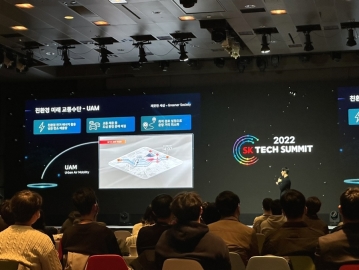
SK Group announced that it will host the '2022 SK Tech Summit' at the Walkerhill Hotel in Gwangjin-gu, Seoul on the 8th and 9th. This event will be the first in-person focused event since COVID-19, with 17 SK Group companies participating to showcase 127 technologies across 10 fields including AI, semiconductors, cloud, and security.
2022.11.08by 김예지 기자
Sapion Accelerates Improvements in 'Image Quality and Speed' for Old Video Recovery
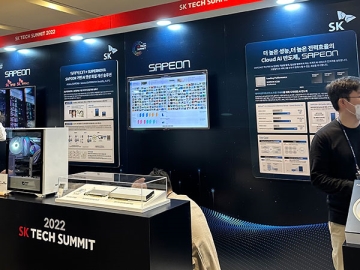
SKT's 'SUPERNOVA' is an AI and deep learning-based media quality enhancement solution that enables restoration of media data such as video, images, and audio to original quality levels through AI technology.
2022.11.15by 김예지 기자
Intel Unveils Next-Generation 'Core Ultra Series 3' and vPro Platform for Enterprise PCs
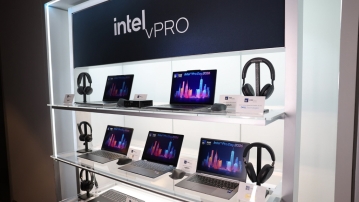
Intel has officially unveiled the "Intel Core Ultra Series 3" for next-generation enterprise PCs and the latest vPro platform, addressing a wide range of demands from enterprise notebooks to high-performance workstations.
2026.03.26by 배종인 기자











