


[Interview] Yeon-su Kim, Deputy General Manager at STMicroelectronics – “M0-9 HSD Optimized for Automotive with Packaging and Design Convenience”
 Published2022.11.17 10:30
Digital current sensing function reduces external components and MCU workload
Various current capacity multi-channel products can be configured in the same QFN package.
[Editor's Note] Recently, STMicroelectronics announced the M0-9 HSD series, featuring ST's latest technology. Primarily used for replacing in-vehicle relays and fuses, motor control, power distribution, and controlling automotive bulbs, this product is expected to see a surge in demand in the automotive market due to its smaller package size and improved current sensing accuracy compared to its predecessors. Accordingly, this publication arranged an interview with Deputy General Manager Kim Yeon-su of the STMicroelectronics Automotive Team on October 13th, who gave a presentation on the topic of "Introduction to VIPower High Side Driver M0-9 and HSD Selection Guide," to learn more about the VIPower High Side Driver M0-9.
.jpg)
▲ Kim Yeon-su, Deputy General Manager at STMicroelectronics
■ Please introduce the VIPower High Side Driver product family. I am also curious about the differences between the newly developed M0-9 and the M0-7.
ST's High Side Driver consists of products controlled via SPI communication based on VIPower (Vertical Intelligent Power) technology and products controlled using Control Pins.
VIPower is a technology developed by ST and has been in production since 1993. This technology provides control, protection, and diagnostic functions for medium and high-power automotive loads. This technology combines a vertical dual-diffusion MOS power supply, its own temperature and current sensors, and CMOS and HV components for Power-Analog-Mixed designs.
In the latest configuration of this technology, a TrechFET power supply is integrated, resulting in a Ron resistance that is 35% lower than that of the previous DMOS structure.
The High Side Driver products introduced here are the M0-9 Series, featuring ST's latest technology, and have a smaller package size and improved current sensing accuracy compared to products using the existing M0-7 technology.
The SPI-controlled product is the world's first to feature a digital current sensing function, offering the benefits of reducing external components and the workload of the MCU compared to the analog method that requires the use of the existing MCU's ADC function.
In addition, multi-channel (4-channel/6-channel) products with various current capacities are configured in the same QFN package (6x6), allowing for easy adaptation to design changes, and the small package size offers the advantage of being advantageous for mounting space.
The product family controlled by the control pin consists entirely of the same package (PSSO-16), ranging from Low Rdson (4mΩ) to High Rdson (80mΩ), enabling efficient design application. Furthermore, since it is compatible with the existing M0-7 series, it can accommodate a wider range of specifications.
■ I understand that the M0-9 HSD product family is intended for automotive use. I would like to know about its applications within vehicles and its advantages compared to existing products. In addition, if it can be used for industrial purposes other than automotive, I would like to know the areas of application.
The HSD product family is used for controlling resistive, capacitive, and inductive loads.
It is effectively used primarily for replacing in-vehicle relays/fuses, motor control, power distribution, and controlling automotive bulbs.
This product family was released for automotive use based on AEC-Q100 certification, but it can be used without issue if it is determined to meet the reliability requirements of the relevant industry upon application review.
■ Considerations for selecting M0-9 HSD are
When selecting the M0-9 HSD, the most important factor to consider is the load requirements to be controlled.
After determining whether control via SPI or simple GPIO is required, the rated power and characteristics of the load must be checked.
Since the controllable allowable current varies depending on the device's Rdson value and power dissipation based on heat dissipation conditions, the operating current of the load must be considered first and foremost.
If a product capable of controlling the operating current has been selected through a theoretical review, it is necessary to check the load characteristics (resistive, capacitive, and inductive) to verify the impact of inrush current and back EMF on the device.
Not only is theoretical review possible using the relevant factors provided in the datasheet, but preliminary simulation reviews of these characteristics can also be performed using TwisterSIM, which is available for free on the ST website.
I understand that, unlike the existing M0-7 product, the M0-9 has a built-in internal PWM engine. There are. The advantages and considerations when designing actual applications are
Compared to the existing M0-7 SPI product, the M0-9 SPI product features a built-in PWM engine, improving user convenience during design.
This function allows the user to obtain the desired frequency output simply by setting registers when an external reference PWM frequency is applied. If there is no reference PWM frequency, the internal Fallback Frequency (typ. It operates at 400Khz, and the advantage is that it can reduce the workload of the MCU when using this function.
In addition, it supports a function named Priority Management in the PWM engine, which allows for sequential real-time monitoring by selecting the edge (Failing or Rising) to be recognized during PWM output and verifying the output to be monitored by the IC itself.
■ Please explain the operating modes.
There are a total of 7 driving modes for the M0-9 SPI product.
Entry cases for each mode are subdivided into Startup Transition, Reset Mode, Sleep-Mode-1, Sleep-Mode-2, Fail-safe Mode, Normal Mode, and Standby Mode, and the entry conditions and characteristics for each mode are established through major power states and SPI commands.
The flowchart for this section is specified in detail within the data sheet.
To briefly explain the modes with key features, Normal Mode allows for device control and diagnosis via SPI, and if Watchdog toggling is not performed within a specified time frame, it is recognized as an MCU malfunction and enters Fail-Safe mode.
This mode supports Limp-home mode, which allows output control via Direct input. (Same for Reset mode and Standby mode)
■ What products are available to achieve optimal performance when used together with the M0-9 HSD?
The M0-9 HSD, capable of driving at 5V and 3.3V voltage levels of a 12V system, is any There are no compatibility issues with products, making it useful for users to utilize according to application conditions.
Furthermore, since Pin-to-Pin compatibility with the M0-7 HSD is possible, it offers the advantage of generational replacement and the ability to select various types of products to suit specific conditions.
Additionally, the M0-9 SPI product is scheduled to support the AUTOSAR complex device driver.
■ Please share a final message with the readers of E4DS NEWS.
ST is continuously developing technology to adapt to new applications and the rapidly changing market.
For example, VIPower was developed by ST starting with the M0-1 technology in 1993, and since then, new technologies have been developed to release competitive products with more diverse functions and lower driving currents in smaller packages.
Furthermore, in terms of quality, in-house technology developers, IC designers, package designers, application engineers, and manufacturers all thoroughly manage the entire process and lifecycle of all products according to strict quality standards.
We ask for your continued interest in the ST VIPower HSD product family. If you have any inquiries or requests, please feel free to contact an ST distributor or the ST Korea branch at any time.

Comments
Related news

[e4ds Tech Day 2026 ⑨] Sim Sang-gyu, Autocrypt CTO: "In the Physical AI Era, Automotive Security Must Extend Beyond the Vehicle"
At e4ds Tech Day 2026, Sim Sang-gyu, CTO of Autocrypt, explained automotive cybersecurity strategies in the era of Physical AI and SDV (Software-Defined Vehicle). Automobiles are evolving as part of an ecosystem connected to AI, cloud, chargers, IoT, and robots, and he emphasized that the scope of security must expand beyond the vehicle interior to the entire connected environment. In particular, AI model tampering, adversarial attacks, OTA updates, and EV charger hacking were identified as major threats. He explained that response measures require zero trust, AI model integrity protection, intrusion detection, Security by Design and Default, and full lifecycle security management, and that proactive security system establishment beyond regulatory compliance is critical for securing future mobility competitiveness.
2026.10.12by 배종인 기자

Practical HIL Construction Strategy for Automotive and Off-Highway Controller Validation
As vehicle E/E architecture transitions to zonal structures and shifts to software-defined vehicles (SDV), the number of controllers (ECUs) requiring validation and software complexity are surging dramatically. Meanwhile, real vehicle testing cannot provide repeated verification under identical conditions and entails lead time and safety concerns. This white paper explains the principles of HIL (Hardware-in-the-Loop) validation and the structure of the NI platform composed of PXI, SLSC, and VeriStand, and through two actual implementation cases—Camera Record & Replay HIL for In-Cabin Monitoring Controller (ICMU) and Forklift Controller (VCU) HILS—describes how controller-level regression testing becomes possible. Additionally, it explicitly states application boundaries and limitations, such as lack of A2B support.
2026.10.12by 편집부
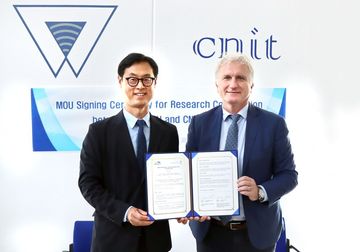
Korea Automotive Research Institute Signs MOU with Italy National Institute for Wireless Communications
The Korea Automotive Research Institute will sign an MOU with Italy's National Institute for Wireless Communications and launch joint research on next-generation mobility technologies based on 6G, V2X, and connected vehicles. The two organizations will conduct research to apply advanced wireless communication technologies to vehicles and discover international joint projects to advance next-generation connected vehicle technology development.
2026.10.12by 배종인 기자
Color Accuracy Issues in Vehicle Interior Ambient Lighting and Intelligent LED Drivers
Vehicle interior ambient lighting is spreading across all price segments, and the level of color accuracy required of lighting designers is rising accordingly. This white paper quantitatively addresses why temperature drift and individual variations of RGB LEDs cannot be corrected by standard constant-current drivers, and explains an intelligent LED driver approach that integrates an MCU, calibration data, and a LIN network interface into the driver. It covers implementation details of the LITIX Interior TLD4020-3ET currently in production, portfolio roadmap, and evaluation/development environments, and clarifies application boundaries including lack of 48V support, lack of RGBi/ISELED support, and absence of direct optical degradation diagnostics.
2026.10.08by 명세환 기자
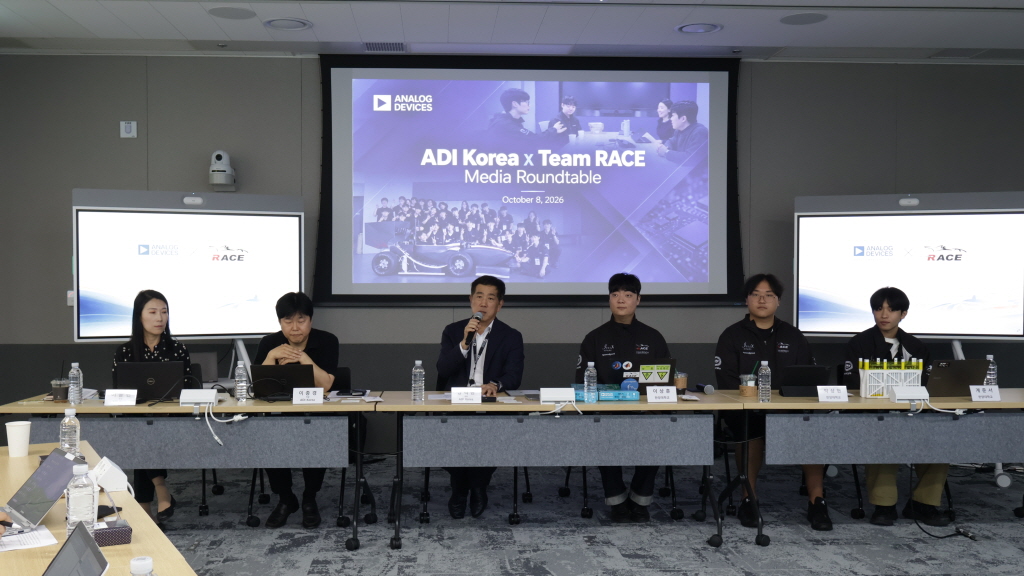
ADI, "Fostering Future Engineers Beyond Component Support"
Global semiconductor company Analog Devices (ADI) is drawing attention for moving beyond simply sponsoring university student car projects to serve as a partner in nurturing future engineers. Over the past three years, ADI has collaborated with Hanyang University's automotive research club Team RACE to support electric formula vehicle development, and recently has been providing technical consultation and semiconductor solutions to enable students to directly develop battery management systems (BMS), creating a model case of industry-academic cooperation.
2026.10.08by 배종인 기자











