


UNIST Develops Virtual AI Manufacturing Technology for Metal Surfaces
 Published2022.11.21 10:21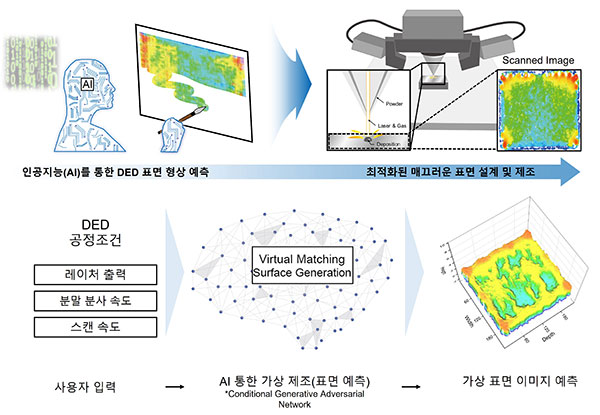
UNIST Professor Im-Doo Jeong's Team Successfully Manufactures AI-Based 3D Shapes
Contributes to improved productivity by reducing quality variation when acquiring surface characteristics.
AI technology for virtually manufacturing metal surfaces has been developed, contributing to increased productivity by reducing quality variations caused by process operators in manufacturing sites.
Professor Im-Doo Jeong's team at the Department of Mechanical Engineering at UNIST announced on the 15th that they have succeeded in developing a technology to virtually manufacture '3D metal surface shapes expected according to metal processing conditions' based on actual data.
This technology is an advancement of AI technology into the 'Direct Energy Additive Manufacturing (DED) process,' a 3D printing technique that is useful for manufacturing large metal parts such as rocket components or repairing broken parts that are difficult to repair because they are no longer processed.
However, there has been a problem in that controlling surface characteristics that affect fatigue properties is difficult, resulting in high process development costs when using expensive materials such as titanium for non-experts.
With a technology developed by Jeong Im-doo's research team that utilizes AI to virtually generate surfaces expected based on DED process conditions, it is expected that even unskilled workers will be able to easily obtain desired surface characteristics.
AI learns surface scan images based on laser output, powder spray speed, and scan speed, and creates expected virtual 3D surfaces for arbitrary process inputs. We quickly created metal surface images expected under various process conditions in seconds.
The research team stated that the characteristics of the metal surface manufactured using the actual identical process were well represented, and that the surface manufactured under the process conditions recommended by AI also exhibited excellent microstructural properties.
Meanwhile, the research results were published in 'Virtual and Physical Prototyping,' an international academic journal ranked within the top 5% of the world's JCR rankings in the manufacturing sector.
Professor Im-Doo Jeong of the Department of Mechanical Engineering at UNIST, who led the research as the corresponding author, stated, “In the manufacturing industry, quality is often heavily dependent on the skill level of workers, and the absence of workers with know-how can disrupt operations.” He added, “The more technologies like the virtual manufacturing AI developed in this study are created, the more they can reduce quality variations caused by process workers and contribute to the ultimate improvement of productivity through digitalization.”
Comments
Related news

[e4ds Tech Day 2026 ⑨] Sim Sang-gyu, Autocrypt CTO: "In the Physical AI Era, Automotive Security Must Extend Beyond the Vehicle"
At e4ds Tech Day 2026, Sim Sang-gyu, CTO of Autocrypt, explained automotive cybersecurity strategies in the era of Physical AI and SDV (Software-Defined Vehicle). Automobiles are evolving as part of an ecosystem connected to AI, cloud, chargers, IoT, and robots, and he emphasized that the scope of security must expand beyond the vehicle interior to the entire connected environment. In particular, AI model tampering, adversarial attacks, OTA updates, and EV charger hacking were identified as major threats. He explained that response measures require zero trust, AI model integrity protection, intrusion detection, Security by Design and Default, and full lifecycle security management, and that proactive security system establishment beyond regulatory compliance is critical for securing future mobility competitiveness.
2026.10.12by 배종인 기자
NVIDIA to Invest $1 Billion in U.S. Science Over Next Five Years
NVIDIA has announced plans to invest $1 billion over the next five years to strengthen U.S. scientific and technological competitiveness. The company will enhance cutting-edge artificial intelligence research and development capabilities in key areas including quantum computing, healthcare, and energy security, while expanding support for higher education research institutions and cloud service providers. NVIDIA is participating as a major industry partner in the White House Office of Science and Technology Policy's Genesis Mission, and is promoting supercomputer construction in collaboration with national laboratories including Argonne and Los Alamos.
2026.10.12by 배종인 기자
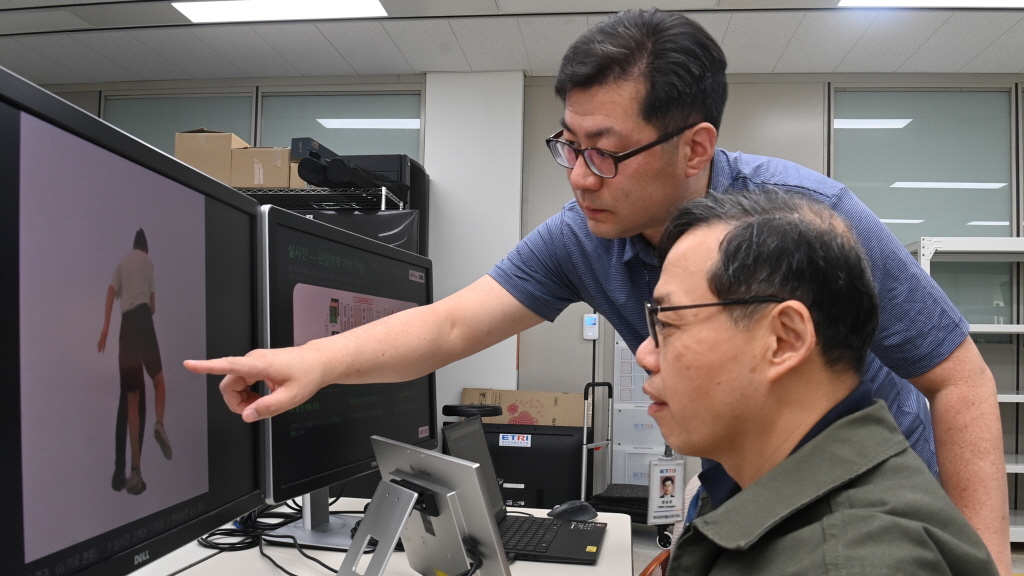
ETRI Unveils 3 Next-Generation Media Technologies Including AI-Dedicated Video Compression
ETRI has unveiled three next-generation media technologies optimized for AI. These include AI-based video encoding (VCM), 3D human generation based on sparse cameras, and generative AI-based pre-visualization technology. In environments where AI directly processes video such as autonomous vehicles, robots, and drones, these technologies enable efficient compression and transmission of large-scale data, and can be applied across various industrial sectors including smart cities, video security, and sports broadcasting.
2026.10.12by 배종인 기자
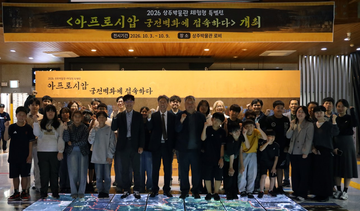
KETI Connects Domestic and Uzbekistan Museums Through Robot Telepresence for Remote Exhibition
The Korea Electronics Technology Institute (KETI) has hosted a remote experiential exhibition that connects domestic museums with an Uzbekistan museum in real-time using robot telepresence technology. Elementary school students in the Sangju area were able to directly operate autonomous robots to remotely view 7th-century Goguryeo envoy palace murals at the Afrasiab Museum in Samarkand, and the exhibition provides spatial experience comparable to on-site visits by combining real-time high-quality video transmission, AI docent, and autonomous driving technologies.
2026.10.12by 배종인 기자

Arduino UNO Q Technical Whitepaper: MPU·MCU Hybrid Board for Cloud-Free Edge AI
Arduino UNO Q is a product that integrates a Qualcomm Dragonwing QRB2210 microprocessor (MPU) running Debian Linux and an STM32U585 microcontroller (MCU) executing Arduino sketches on Zephyr RTOS into a single UNO form factor board. The two processors do not share RAM and resources, exchanging data only through remote procedure calls (RPC) of Arduino_RouterBridge, and the development environment Arduino App Lab and apps reside within the board. This whitepaper describes the design intent of this hybrid architecture, development workflow, hands-on verification results, and limitations in industrial application based on webinar presentation materials and technical Q&A.
2026.10.09by 편집부











