



"Chemical substances scheduled for regulation, response required"
 Published2022.11.25 14:05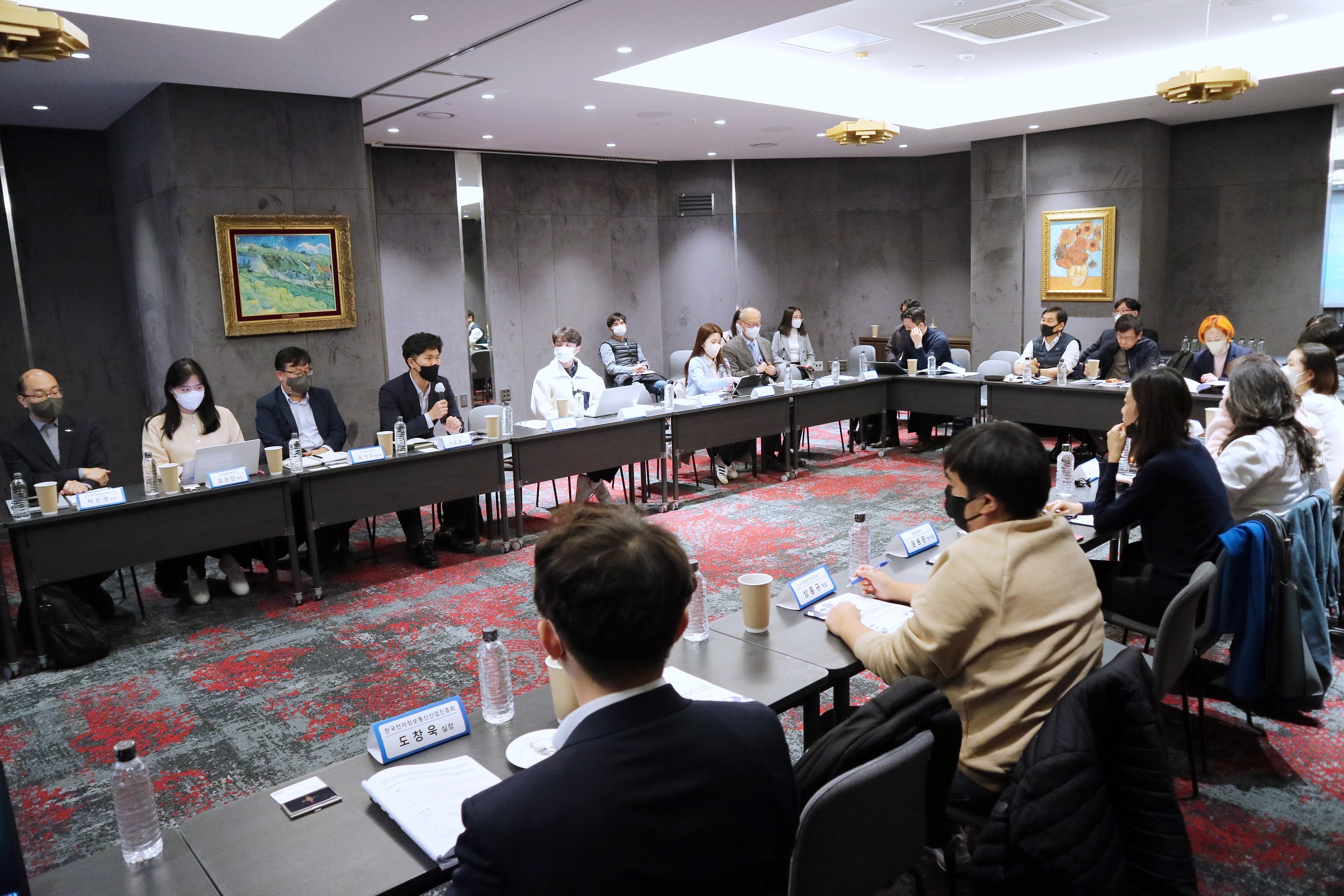
▲Domestic and international technical regulation response chemical substance exchange meeting and technical regulation issue explanation meeting
Appeal to the electronics, electrical, and automobile industries for support in response to chemical TBT
Due to the activation of global ESG policies, domestic and international environmental and safety regulations are intensifying in the manufacturing industry. With regulatory discussions centered around the EU and the US, related regulations are acting as trade technical barriers (TBT) for the electronics, electrical, and automobile industries, and relevant organizations and industries are putting their heads together to discuss countermeasures.
On the 24th, the 'Domestic and International Technology Regulation Response Chemical Substance Exchange Meeting and Technology Regulation Issue Briefing Session' hosted by the National Institute of Standards and Technology was held at the Inn Nine Hotel in Samseong-dong, Seoul. This briefing session, jointly hosted by the Korea Specialty Chemical Industry Promotion Association and the Korea Testing & Certification Industry Association, brought together experts from relevant ministries to seek ways to respond to technical barriers to trade (TBT) in the chemical industry.
At the event, SeedPartOne's Kim Seon-jin presented the main contents of the Stockholm Convention, and Korea Testing & Research Institute for Chemical Industry's Tak Jin-kyung gave a presentation on the EU REACH regulatory trends.
At the Chemical Substances Exchange Meeting, representatives from related organizations such as the National Institute of Standards and Technology, TBT Comprehensive Support Center, and the Korea Electronics and Telecommunications Industry Promotion Association, as well as manufacturers of electrical, electronic, automobile, and home appliances such as Samsung Electronics, LG Electronics, Hyundai Motor Company, and Hyundai Doosan Infracore, attended to listen to a wide range of opinions from the industry and seek response strategies.
■ POPs·EU REACH, active discussion on new regulated substances
Persistent organic pollutants (POPs) are highly toxic organic pollutants that accumulate in the body through the ecosystem food chain because they are not properly photochemically, biologically, or chemically decomposed. These POPs include organochlorine pesticides such as Aldrin and DDT, as well as perfluorinated compounds (PCBs) that are widely used for industrial purposes such as electronic devices, and dioxins and furans that are produced as byproducts of industrial processes.
A total of 30 chemical substances are designated and regulated by the Stockholm Convention, and according to Annexes A to C, A prohibits production/use and import/export, B restricts production/use, and C requires reduction of emissions.
Kim Sun-jin, head of SeedPartOne, said in a statement that day, “Regulatory reviews are being conducted very actively on perfluorinated compounds and flame retardants that are widely used across industries,” and predicted that Dechlorane Plus, a type of flame retardant used in ABS, PBT, and nylon, and UV-328, which is mainly used in automobiles and plastics, were proposed for Annex A in September and are expected to be banned.
Kim added that Vietnam is the most active emerging country in enforcing regulations on hazardous toxic substances, along with active regulatory discussions between the US and EU. He recommended that companies monitor EU trends most closely in relation to POPs regulations.
However, there is a problem that the scope and timing of regulation are different in the process of legislating global agreement materials to suit the circumstances of each country, and in particular, it has been raised that there is a need to monitor and analyze regulatory trends for emerging countries such as New Southern countries and South American countries where information is insufficient and to establish a manual for mismatch response strategies.
As the European Chemicals Agency (ECHA) continues to add substances of very high concern (SVHC) subject to authorization, monitoring of the list of regulated substances in the future is essential.
Tak Jin-kyung, a senior researcher at the Chemical Regulatory Response Center of the Korea Testing & Research Institute for Chemical Industry, explained the contents related to the EU REACH finished product regulation. When a manufacturer or importer of an finished product produces or imports more than 1 ton per year of a substance included in the SVHC candidate list and the content in the product exceeds 0.1%, the manufacturer or importer must report it. Products of less than 1 ton per year are required to provide information.
In this regard, the reason why the electronics, electrical, and finished vehicle industries are appealing to the relevant authorities for support and countermeasures is revealed. Manufacturers with supply chains for parts and materials, such as 1st and 2nd vendors, are responding by identifying the list of SVHC candidates contained in finished products and analyzing their content, but their response capabilities are currently weak due to the manufacturers’ lack of chemical expertise and the partners’ lack of capacity.
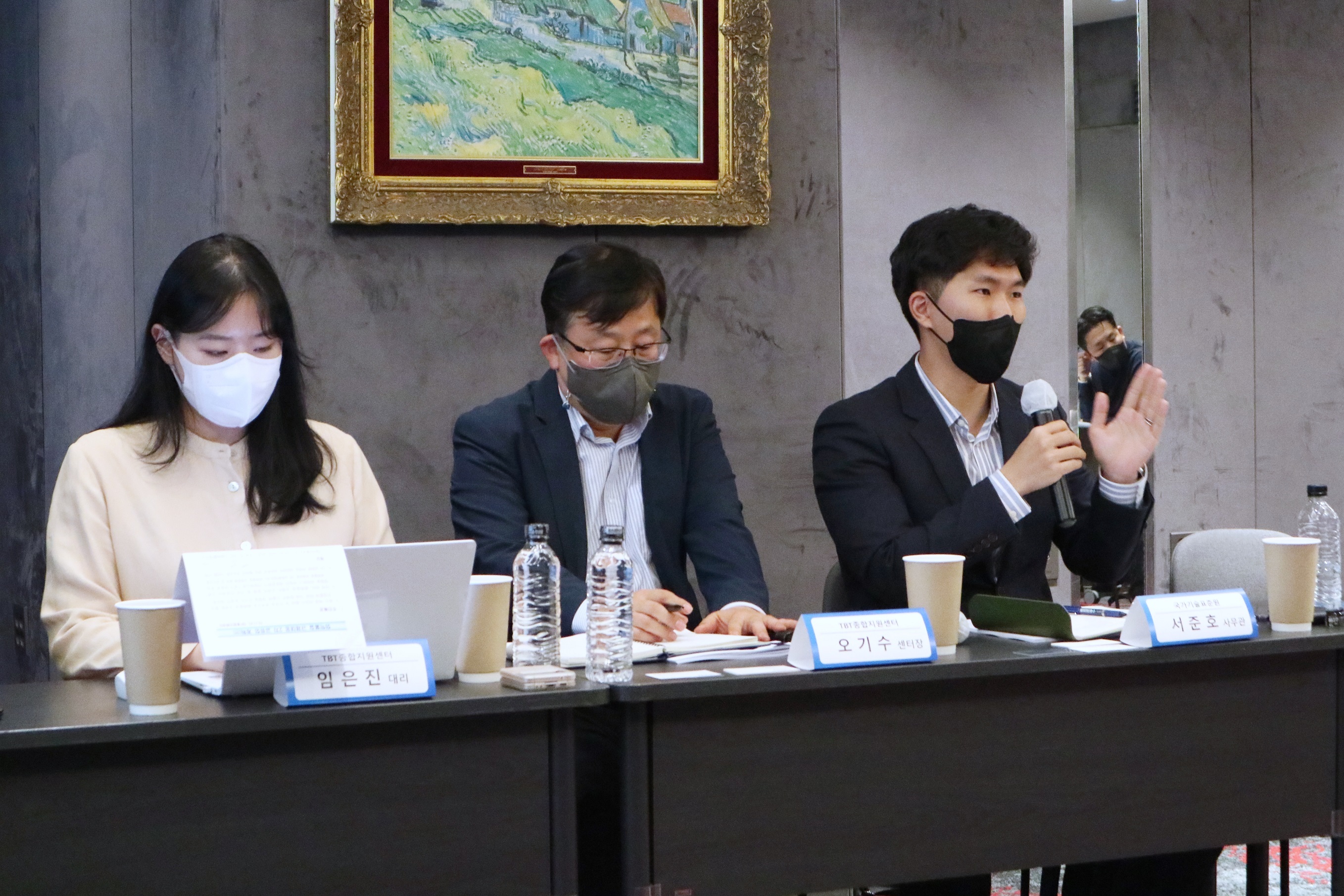
▲ Representatives from the National Institute of Standards and Technology and the TBT Comprehensive Support Center are in attendance to discuss countermeasures.
■ “A system to respond to chemical substances scheduled for regulatory introduction is essential”
Manufacturers who make finished products are in dire need of establishing a channel to monitor and respond to new hazardous substances and chemicals that are being introduced or discussed as regulated substances. In addition, they requested related education and consulting support for the supply chain, including first- and second-tier vendors.
Several manufacturing representatives asked the agency to identify unannounced regulations that are in the drafting and discussion stages. It has been reported that the government is considering responding to the demand by utilizing a cooperative system between private organizations and establishing a cooperative system with regulatory authorities at the government level.
In addition, the officials demanded the establishment of related response measures, saying that in addition to the lack of response capabilities from partners, “in order to proactively respond to exemptions or deferrals before the finalization of regulations on substances subject to regulation, we need to know the CAS number, which is a unique number assigned to a chemical substance whose chemical structure or composition has been confirmed, or the exact use of the substance in question, before we can request a response from partners.” They also added that finding out in advance whether there are alternative substances is a necessary part of regulatory response.
The relevant agencies and industry also appeared to be struggling to establish a rapid response channel to submit opinions within a short period of 60 days. Looking at the procedure for listing the SVHC candidate list, stakeholders must submit opinions within 60 days from the date the Annex XV document is published on the ECHA website. After that, the European Commission decides whether to list the candidate list, and in order to respond to this, it appears necessary to preemptively identify substances scheduled for introduction of regulations and establish a rapid response channel.
Meanwhile, the Korea Fine Chemical Industry Promotion Association is contributing to the development of the industry by serving as a bridge between related organizations and companies, such as hosting issue briefing sessions and technology exchange meetings to help domestic companies respond to technical barriers to trade (TBT) in the chemical industry and supporting domestic and international regulatory responses.

Comments
Related news
Brominated Flame Retardant Regulations, "HBCD 2 Types Must Be Approved for Use by June Next Year"
As interest in environmental pollution and human health hazards increases, regulations on persistent organic pollutants are being strengthened in global trends, including domestically. In particular, brominated flame retardants, which are widely used in electronic products, PCB boards, and automobiles, require careful handling due to various usage restrictions and regulatory requirements.
2022.09.05by 명세환 기자

Schneider Aims for Building Energy Savings and Operational Stability with Next-Generation HVAC Drives
Schneider Electric has unveiled its next-generation HVAC drive product line 'Altivar HVAC'. The new product line's key features center on enhanced energy savings, system operational stability, and building management system integration. The products are divided into 'ATH200' for OEM and small equipment applications, and 'ATH600' for environments requiring continuous operation and advanced control. The company plans to expand the application scope from commercial buildings to facilities where HVAC system stability is critical, such as hospitals, airports, and data centers. The announcement includes over 30% energy savings, operation from -10°C to +60°C, Modbus and BACnet support, and compatibility with low global warming potential refrigerants.
2026.03.26by 명세환 기자
Ecolab Expands AI Data Center Cooling Business Through Acquisition of CoolIT
Ecolab has agreed to acquire CoolIT Systems, a liquid cooling company for AI data centers, for approximately $4.75 billion. The transaction is expected to close by Q3 2026, subject to regulatory approvals. CoolIT has been supplying direct-to-chip cooling-based coolant distribution units, cold plates, and manifolds, serving hyperscale data centers and colocation operators as customers. This acquisition is a measure to address the high-heat and high-density server environments created by AI proliferation. Ecolab plans to combine its water management and digital monitoring capabilities with CoolIT's hardware technology to expand its data center cooling business.
2026.03.26by 명세환 기자

AI Semiconductor Era, Key is 'Materials Technology'… KIEC Holds Seminar on High-Performance Semiconductor Materials
With rapid growth in the global semiconductor market driven by expanded AI data center investments and increased demand for high-bandwidth memory (HBM), a specialized seminar examining next-generation semiconductor materials and packaging technologies will be held. The Korea Chemical Industry Institute will host a "High-Performance Semiconductor Materials Technology Seminar" on April 24 at the FKI Tower of the Korea Economic Association in Yeouido, Seoul. Applications to participate in the seminar are being accepted on a first-come, first-served basis through the Korea Chemical Industry Institute's official website, with early bird discounts available until March 27 and advance registration open until April 22.
2026.03.25by 배종인 기자
.jpg)
KIMS Shares Techniques for Industrial Application of Casting Technology
The Korea Institute of Materials Science held a casting technology seminar at its headquarters in Changwon, South Gyeongsang Province, and introduced core process technologies utilized in industrial applications. The seminar covered fundamental principles of casting processes and defect control methods, lightweight-oriented die-casting technology, and trends in aluminum casting alloys for mobility applications. At the conclusion of the event, consultations on industrial technical challenges were also conducted, providing an opportunity to expand the interface between research institutions and industry.
2026.03.25by 명세환 기자











