


UNIST's Power Management and Sensor IC Technology Receives Global Recognition
 Published2022.12.01 08:17
.jpg)
▲ (From the back row on the left, clockwise) Professor Jaejun Kim, Professor Seun Shin, Researcher Yeonwoo Jeong, Researcher Seungju Lee, and Researcher Hyunjoong Kim of the Department of Electrical and Electronic Engineering at UNIST
UNIST’s Department of Electrical and Electronic Engineering has had three papers accepted at the International Solid-State Circuits Conference (ISSCC), and UNIST’s power management and sensor IC technology has been recognized on the global stage.
UNIST (President Lee Yong-hoon) announced on the 1st that three of its papers have been accepted to the International Solid-State Circuits Conference (ISSCC) 2023, known as the "Semiconductor Design Olympics."
ISSCC is one of the world's top three semiconductor conferences, having started in 1954 and approaching its 70th annual event. Approximately 3,000 researchers from around the globe gather to share research findings and information, and to discuss the future of the semiconductor industry and technology.
According to the recently held 'ISSCC 2023 Korea Conference,' a total of 198 papers were presented at the conference, of which 32 were from Korea. UNIST submitted three papers, ranking second among domestic universities in the number of papers.
Two papers were published by Professor Shin Se-woon's team and one by Professor Kim Jae-jun's team from the Department of Electrical and Electronic Engineering at UNIST. In particular, Professor Shin Se-woon's team is drawing attention for having two out of eight papers accepted in the field of Power Management Integrated Circuits (PMIC). They are also the only research team in Korea to have papers accepted in this field.
Professor Shin's team presents one semiconductor circuit design that can manage power in mobile devices more efficiently, and one semiconductor circuit design to be used in a 'piezoelectric power generation device' that produces electricity using pressing force.
The first paper effectively converts battery voltage to increase energy efficiency and processing speed. Lee Seung-ju, a researcher in the integrated master's and doctoral program in Electrical and Electronic Engineering at UNIST and the first author, explained, "The structure of converters, which are voltage conversion devices used in existing mobile devices, is very simple, making it difficult to improve energy efficiency and processing speed." He added, "The semiconductor circuit presented here offers a completely different structure and a method to enhance stability."
The second paper presented a semiconductor circuit design that reduces energy loss by regularly dividing the process of transmitting alternating current obtained through pressure into equal parts. Thanks to this, the amount of energy extracted could be increased even when using low-performance, small components. First author Yeon-Woo Jeong, a researcher in the Department of Electrical and Electronic Engineering at UNIST, emphasized, “We improved energy extraction by 11.7 times with a volume more than 10 times smaller than commercially available piezoelectric energy harvesting chips,” adding that it is “a semiconductor circuit that enhances competitiveness in power, size, and price.”
Professor Jae-Jun Kim's team, in collaboration with Professor Dong-Pyo Jang's team at Hanyang University and Soso Co., Ltd., proposed semiconductor circuit and system design technologies applicable to the smart healthcare field. The system proposed by the research team allows users to monitor brainwaves, stress, blood pressure, and heart rate simply by wearing it behind their ears, while simultaneously supporting electrical stimulation. It is to detect various biosignals with a single chip and device.
Kim Hyun-joong, a first author and integrated master's and doctoral researcher in the Department of Electrical and Electronic Engineering at UNIST, explained, “This is a circuit design technology capable of mitigating adverse effects, such as power noise and changes in electrode state, that hinder the stable acquisition of biosignals in healthcare platforms. In addition, it allows for the efficient extraction of skin conductivity information from existing electrocardiogram channels without consuming additional area.”
President Lee Yong-hoon stated, “UNIST is gaining recognition for its competitiveness in the field of electrical and electronic engineering by distinguishing itself in Power, MEMS, and Medical at ISSCC,” adding, “We will further grow in the system semiconductor field, which is expected to become increasingly important in the future, and contribute to the industry.”
Meanwhile, ISSCC 2023 will be held from February 19 to 23, 2023. The conference will present 198 papers across 12 fields, including analog, data converters, digital architecture and systems, digital circuits, IMMD, RF (radio frequency), wireless, wired, and memory. More than half of the attendees are from leading semiconductor companies such as Samsung Electronics, Intel, and TSMC, and they will gather to focus on practical research.

Comments
Related news
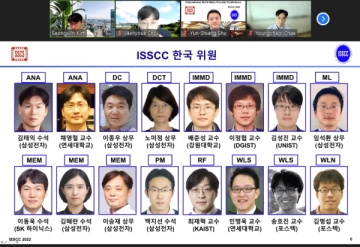
ISSCC 2022, 41 Korean papers accepted, the largest number ever
South Korea has achieved excellent results in semiconductor-related research, with a record-high 41 papers accepted at the International Solid-State Circuits Conference (ISSCC 2022) to be held in the United States in February next year.
2021.11.17by 배종인 기자
UNIST Semiconductor Circuit Design Technology 3, Unveiled at ISSCC
Three semiconductor circuit design technologies from UNIST (President Lee Yong-hoon) will be presented at the 2022 International Solid-State Circuits Conference (ISSCC), known as the "Semiconductor Olympics."
2021.11.23by 배종인 기자
Korea’s Foundry Competitiveness Depends on the Growth of Fabless Companies
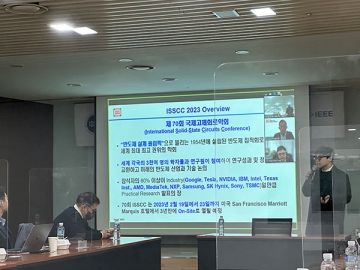
ISSCC (International Solid-State Circuits Conference) held an "ISSCC 2023 Preview" event and shared information on the ISSCC 2023 program and papers, as well as the latest technology trends, to be presented at ISSCC 2023 in San Francisco, USA next February.
2022.11.17by 김예지 기자
Intel Unveils Next-Generation 'Core Ultra Series 3' and vPro Platform for Enterprise PCs
Intel has officially unveiled the "Intel Core Ultra Series 3" for next-generation enterprise PCs and the latest vPro platform, addressing a wide range of demands from enterprise notebooks to high-performance workstations.
2026.03.26by 배종인 기자
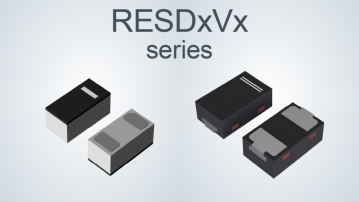
ROHM Launches ESD Protection Diode Compatible with High-Speed Interfaces of 10Gbps or Higher
Semiconductor specialist ROHM has developed the 'RESDxVx series' of ESD (electrostatic discharge) protection diodes capable of responding to next-generation high-speed data communication environments exceeding 10Gbps, simultaneously enhancing both signal quality maintenance required in high-speed interfaces and IC protection performance.
2026.03.26by 배종인 기자











