


Hanwha Systems Builds Military's Future Combat System Network
 Published2022.12.14 12:15
Ensuring free hyper-connected communication in diverse operational environments
Hanwha Systems is embarking on the full-scale construction of a future combat system network to enable our military to communicate freely in various operational environments.
Hanwha Systems announced on the 14th that it has signed a project agreement worth approximately 32.1 billion won with the Agency for Defense Development, a dedicated planning and management agency for the defense sector, for the "Development of a Hyper-connected Mobile Distributed Tactical Communication System," and has begun full-scale development of core technologies for the Mobile Integrated Communication System (TICN-II) to realize the future ground combat system "Army TIGER 4.0."
Army TIGER 4.0 is a future combat system pursued by the Army, a concept that aims to increase soldier survival rates and combat efficiency by applying new technologies of the Fourth Industrial Revolution, such as artificial intelligence, with the goal of realizing the mobility, intelligence, and networking of various combat platforms.
The project involves the development of 5G-based tactical mobile base stations, aerial relay drone systems, and tactical communication terminals to enable ultra-high-speed, ultra-connected, and ultra-low-latency command and control even between ground and air networks and during maneuvers, with a total project scale of 40 billion won.
As the lead organization for this project, Hanwha Systems plans to develop two types of mobile command and control communication systems—vehicle-mounted and drone-mounted—as well as tactical communication terminals and tactical communication modems by 2026, and will also perform system interoperability with aerial relay drone systems.
Modern warfare is evolving into Network Centric Warfare (NCW), and military communication systems and space, air & miThere is a need to build a multidimensional integrated communication network that organically combines communication networks of the terrestrial and maritime layers.
In addition, future ground combat systems are expected to evolve into a combined manned and unmanned system in which all combat platforms are mobilized, networked, and intelligent, based on Fourth Industrial Revolution technologies such as artificial intelligence (AI), big data, cloud, and mobile.
The TICN currently in use by our military is a core system of C4I (Command, Control, Communication, Computer, Intelligence), a network-centric warfare command and control system, and is a system that integrates military communication networks to transmit high-speed wired and wireless data.
Hanwha Systems successfully completed TICN research and development in 2015, and following the first, second, and third mass productions, signed the final fourth mass production contract last year.
Our military is focusing on developing core technologies to build a mobile integrated communications system (TICN-II) that aligns with the Army's future combat system, while simultaneously fully deploying TICN to the Army, Navy, and Air Force by 2025.
Accordingly, Hanwha Systems expects that through the execution of this project, it will contribute to the establishment of the 'Mobile Integrated Communications Network-II (TICN-II),' which enables real-time battlefield situation sharing, by successfully developing a 'Mobile Command and Control System' equipped with networking capabilities that allow for uninterrupted distributed and independent operation anytime and anywhere, AI-based information collection and analysis capabilities, and the ability to smoothly transmit and receive large-capacity multimedia information, as well as a 'Tactical Communications Terminal' that can be utilized in the Warrior Platform and various sensors and unmanned systems.
Kim Gyu-baek Han"Once this project is successfully completed, our military will be able to guarantee hyper-connected communication in various operational environments anytime and anywhere, and furthermore, enhance the survivability of combatants and maximize combat capabilities," said the Head of the C4I & Ground Systems Business Group at Hanwha Systems. "Based on the technological capabilities and know-how accumulated while being part of the Republic of Korea's tactical communication system from its inception to its development, Hanwha Systems will do its utmost to help our military build a future hyper-connected network."
Meanwhile, Hanwha Systems, a systems contractor that has been at the forefront of modernizing our military's communication systems since 1990, plans to expand its business scope to include low-orbit communication satellite services and secure capabilities to build a multi-layered hyper-connected military communication system.

Comments
Related news
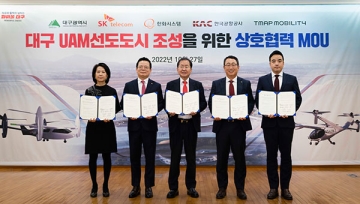
SKT and Daegu City Collaborate on 'K-UAM Dream Team'
SK Telecom will cooperate with the 'K-UAM Dream Team' consortium, which was formed together with SKT, Korea Airports Corporation, Hanwha Systems, and Tmap Mobility through a business agreement with Daegu Metropolitan City.
2022.10.28by 김예지 기자
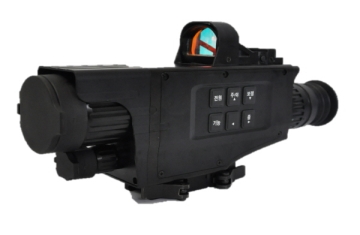
Hanwha Systems, approximately 160 billion won worth of aiming device contract
Hanwha Systems (CEO Eor Sung-chul) is contributing to the enhancement of our military's combat capability through the supply of K15 machine gun aiming devices worth 160 billion won.
2022.11.02by 배종인 기자
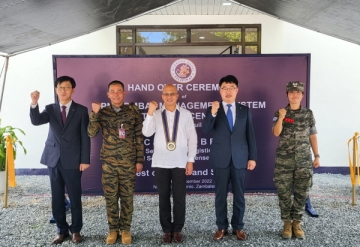
Hanwha Systems Completes 'Philippine Navy Combat Systems Training Center'
Hanwha Systems (CEO Eo Sung-chul) installed a naval combat system and simulation training equipment for the Philippine Navy, thereby strengthening friendly relations between Korea and the Philippines and contributing to the enhancement of cooperative ties between the two nations.
2022.12.02by 배종인 기자
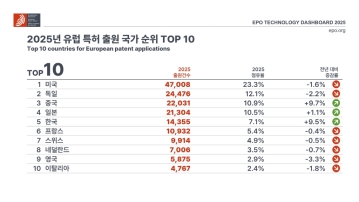
European Patent Applications Surpass 200,000 for the First Time… South Korea Maintains 5th Place, Led by Batteries and Telecommunications
According to the European Patent Office (EPO)'s 'Technology Dashboard 2025', European patent applications last year reached 201,974, surpassing 200,000 for the first time. Korean companies and inventors filed 14,355 applications, representing a 9.5% increase from the previous year and maintaining 5th place by country. Battery, digital communication, and semiconductor technologies led the growth, with Samsung ranking as the top EPO applicant for the second consecutive year and LG reaching 3rd place. The presence of major domestic cities such as Seoul, Suwon, and Yongin was also confirmed. It was also revealed that Korea's European patent strategy is expanding beyond individual technologies to span the entire industry.
2026.03.24by 명세환 기자
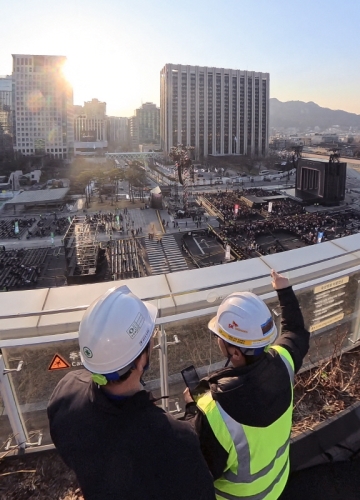
SK Telecom First Applies AI-Based Network Operations at Gwanghwamun K-Pop Concert
SK Telecom announced that it applied an AI-based network operation system for the first time at a large-scale K-pop concert held in the Gwanghwamun area of Seoul on March 21st, managing communication quality throughout the event. Mobile data usage during the three hours before and after the concert reached 12.15TB, approximately doubling compared to the same time slot the previous weekend. SK Telecom monitored traffic using the AI system 'A-One' in five-minute and 50-meter units to respond to potential overload situations, while also operating temporary communication facilities and on-site personnel in parallel. This case is interpreted as confirmation of the practical applicability of AI-based autonomous network operation in an environment where demand from dense events and foreign users increases simultaneously.
2026.03.23by 명세환 기자











