



New electrode structure for rapid battery performance
 Published2023.01.18 08:59
.jpg)
▲ Pouch-type double-layer negative electrode battery
Battery electrode design and process technologies have been developed to significantly enhance the performance and stability of batteries used in electronic devices such as smartphones and laptops, as well as electric vehicles, and are expected to contribute to improving battery lifespan and performance in the future.
A joint research team consisting of Principal Researcher Seungmin Hyun of the Nanomechanical Equipment Research Laboratory at the Korea Institute of Machinery and Materials (President Sangjin Park), under the Ministry of Science and ICT, and Professor Hujeong Lee of Sungkyunkwan University (President Yoo Ji-beom) has developed a new battery electrode (anode) structure that improves the reliability and performance of lithium-ion batteries, and published the related research results in the prestigious journal Advanced Functional Materials (IF: 19.924).
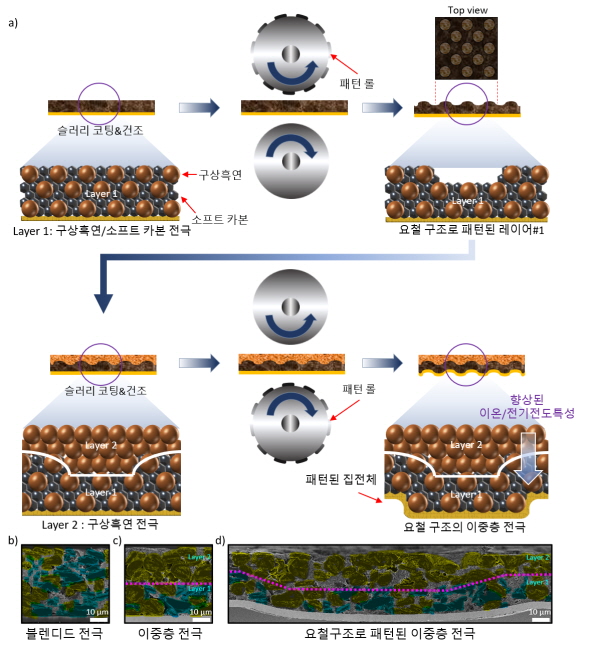
A joint research team from the Korea Institute of Machinery and Materials (KIMM) and Sungkyunkwan University designed the anode with a double-layer structure and an uneven surface where small materials with enhanced ion and electrical conductivity can exist between high-capacity materials, in order to develop design and process technologies that maintain high performance and reliability even with thick lithium-ion battery electrodes.
Generally, the electrodes of lithium-ion batteries are manufactured by coating and drying the slurry so that it can be evenly distributed over the entire electrode. Accordingly, the uniformity of the slurry determines the performance of the battery, and as the electrode becomes thicker, the energy density and uniformity decrease, making it difficult to maintain performance in high-power environments.
On the other hand, the negative electrode structure of the battery developed in this study allows the entire electrode to maintain high energy density and uniform reaction stability even when the electrode becomes thicker, which significantly contributes to improving performance and lifespan.
Hyun Seung-min, a principal researcher at the Korea Institute of Machinery and Materials (KIMM), stated, “This is an efficient method to improve battery performance and lifespan by applying a new design while utilizing existing lithium-ion battery materials and processes.” He added, “We will strive to apply this not only to electronic devices such as commercial smartphones and laptops but also to electric vehicles and soft robots that require high energy density even in high-power environments.”
Meanwhile, this research was conducted with support from the Ministry of Science and ICT's 'Nano and Materials Technology Development Project' and the KIMM basic project 'Development of Nano-based Omni-TEX Manufacturing Technology'.

Comments
Related news
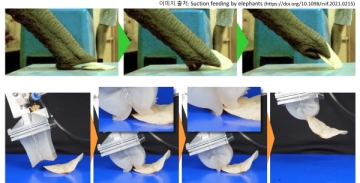
A robotic hand with an elephant trunk that can even grasp micro-needles.
An elephant trunk-inspired gripper robot has been developed that can grasp everything from very thin objects like acupuncture needles to large objects like boxes, and is expected to be applicable to various fields including effective material handling.
2022.10.21by 배종인 기자
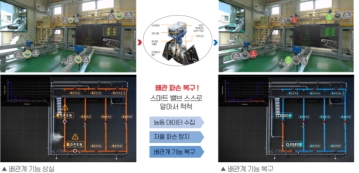
KIMM Develops Self-Repairing Valve for Damaged Pipes
A smart valve that automatically repairs damaged piping in the event of accidents has been developed for the first time in Korea, and it is drawing expectations that it will quickly restore damaged piping within the golden time window during future piping failure incidents, thereby preventing major accidents.
2022.10.28by 배종인 기자
.jpg)
KIMM Develops Underwater Cutting Simulator for Reactor Decommissioning
A remote virtual simulator for worker training in underwater laser and plasma cutting of reactor internal structures (RVI) required for nuclear power plant decommissioning has been developed for the first time in Korea.
2022.11.11by 배종인 기자
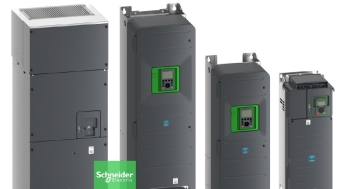
Schneider Aims for Building Energy Savings and Operational Stability with Next-Generation HVAC Drives
Schneider Electric has unveiled its next-generation HVAC drive product line 'Altivar HVAC'. The new product line's key features center on enhanced energy savings, system operational stability, and building management system integration. The products are divided into 'ATH200' for OEM and small equipment applications, and 'ATH600' for environments requiring continuous operation and advanced control. The company plans to expand the application scope from commercial buildings to facilities where HVAC system stability is critical, such as hospitals, airports, and data centers. The announcement includes over 30% energy savings, operation from -10°C to +60°C, Modbus and BACnet support, and compatibility with low global warming potential refrigerants.
2026.03.26by 명세환 기자
Ecolab Expands AI Data Center Cooling Business Through Acquisition of CoolIT
Ecolab has agreed to acquire CoolIT Systems, a liquid cooling company for AI data centers, for approximately $4.75 billion. The transaction is expected to close by Q3 2026, subject to regulatory approvals. CoolIT has been supplying direct-to-chip cooling-based coolant distribution units, cold plates, and manifolds, serving hyperscale data centers and colocation operators as customers. This acquisition is a measure to address the high-heat and high-density server environments created by AI proliferation. Ecolab plans to combine its water management and digital monitoring capabilities with CoolIT's hardware technology to expand its data center cooling business.
2026.03.26by 명세환 기자











