



The Ministry of Science and ICT plans to invest 453.7 billion won this year to develop 1 million digital talent.
 Published2023.01.25 10:45
.jpg)
The company was selected for the "Digital Leaders Club" and established a graduate school specializing in AI semiconductors.
The Ministry of Science and ICT will invest 453.7 billion won in 2023 to foster digital talent.
The Ministry of Science and ICT announced on the 19th that it will invest 453.7 billion won in cultivating digital (ICT) talent by 2023, an increase of approximately 50 billion won from last year, to train a total of 52,000 people. On Wednesday, the 18th, the Ministry held a joint training session for "Digital Talent Development Project Implementation Organizations." The training reviewed the preparations and schedules for each project and discussed current issues.
The Ministry of Science and ICT is moving forward with the full implementation of the 'Comprehensive Plan for Nurturing Digital Talent ('22.8)' and the 'Plan to Nurture 100,000 Cybersecurity Talents ('22.7)' announced last year, and plans to increase the annual training scale by approximately 10,000 people compared to last year through measures such as establishing new projects and expanding existing training courses.
First, we will strengthen the public-private cooperation system in which the private sector takes the lead in fostering digital talent.
The "Campus/Network Software Academy," which is linked to corporate talent recruitment, will train 1,250 people, an increase of 650 from last year. Additionally, the 'Digital Talent Alliance', launched in October of last year, is beginning its activities in earnest by forming a steering committee and divisions.
To encourage and expand voluntary talent development activities by companies, the Digital Talent Alliance selects outstanding companies as members of the "Digital Leaders Club" and provides them with special benefits such as certificates, commendations from the Minister of Science and ICT, and provision of computing infrastructure.
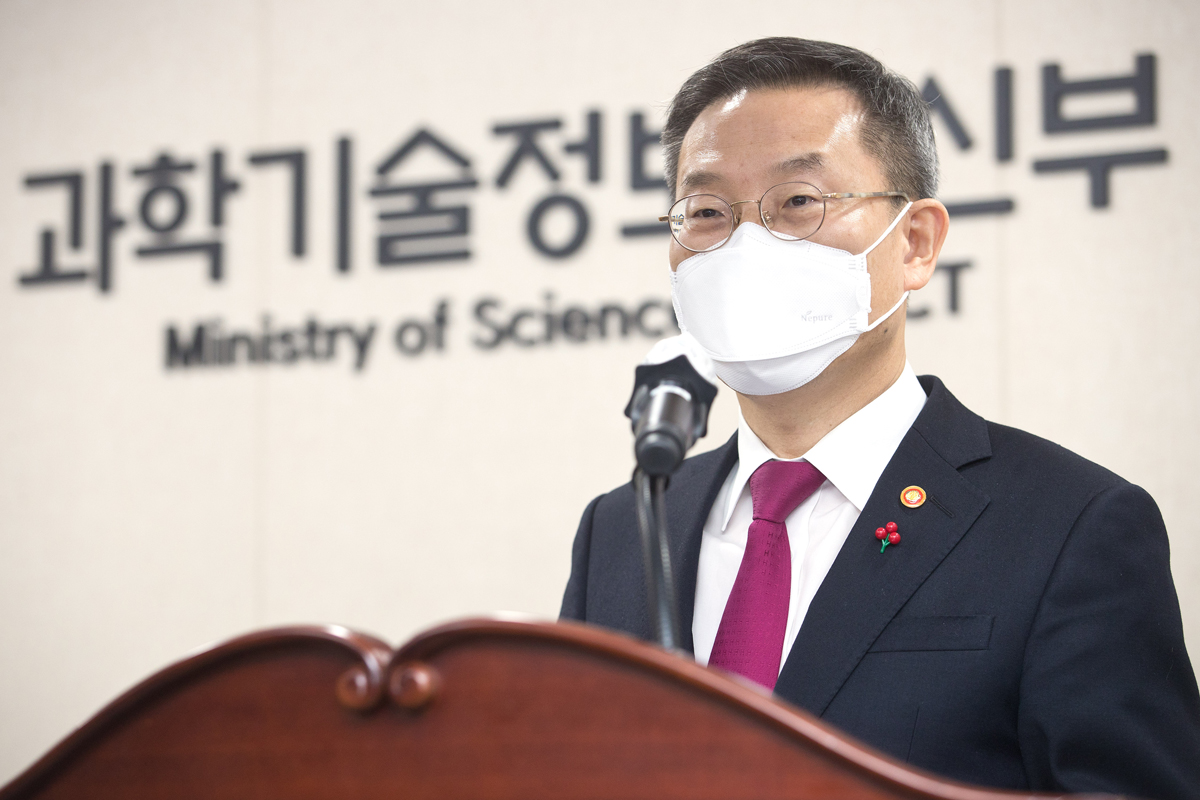
Minister of Science and ICT Lee Jong-ho
Next, the training of top-level master's and doctoral students to lead digital innovation technologies will be expanded across various fields.
To secure high-caliber talent to spearhead the development of domestically produced AI semiconductors and expand the K-Cloud ecosystem, three new "AI Semiconductor Graduate Schools" will be established. Furthermore, additional graduate schools will be selected in key digital fields such as AI, metaverse, and cybersecurity. University information technology research centers will also be reorganized around six key areas, increasing from 47 to 52.
"Software-Centered Universities," which are leading the innovation of university digital education, will select 11 new universities this year, bringing the total number of universities to 51, and will work to secure software majors. "Information Protection Specialized Universities" will also expand by two to five universities, fostering cybersecurity talent.
In addition, we will expand digital education for local youth along with the establishment of non-degree specialized courses. To foster young cybersecurity experts, we are introducing non-degree specialized training programs such as the 'Security Academy (corporate-led),' 'S-Developer (top-tier developer),' and 'White Hat School (professional white hat hacker).'
Additional expansions to the Virtual World Academy (Northeast) and Innovation Academy (Gyeongbuk) are planned for each region. Digital training for military personnel, which began last year, will be significantly expanded to support 3,800 individuals this year.
Meanwhile, as the Ministry of Education's 2022 curriculum revision will more than double the number of hours for information subjects in elementary and secondary schools starting in 2025, we will support smooth preparations ahead of implementation.
This year, 1,233 elementary and secondary schools were selected for the "AI Leading Schools" program, which aims to strengthen the information capabilities of future generations and collaborate with the Ministry of Education. Existing teachers will receive support to enhance their expertise in preparation for the expanded curriculum through on-site training at digital companies and remote training.
At the joint training session, Software Policy Director Oh Yong-su said, “Securing core digital talent is a critical task for all companies and countries, so I ask that implementing organizations make every effort to ensure that the comprehensive plan for fostering digital talent can be implemented without a hitch in the field and regions.” He added, “The Ministry of Science and ICT will do its utmost to support and cooperate with the private sector’s voluntary participation and demonstration of innovative capabilities in fostering digital talent.”
Comments
Related news
KETI Launches Industrial Digital Transformation Task Force
Korea Electronics Technology Institute (KETI, Director Shin Hee-dong) has launched the Industrial Digital Transformation Promotion Task Force and will lead a major industrial transformation through cooperation among 11 research centers under KETI.
2022.12.08by 배종인 기자
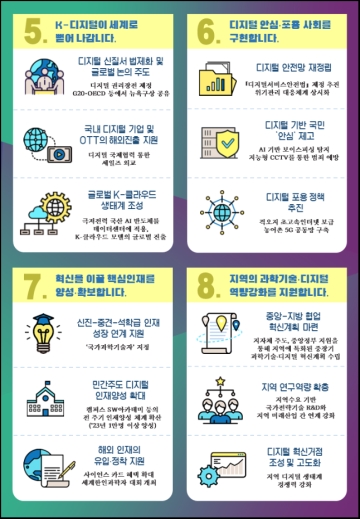
The government's digital platform initiative will be fully implemented in 2023.
The Ministry of Science and Technology announced its 2023 business plan on the 28th, with the goal of "realizing a global science and technology powerhouse and a digital model nation." The ministry stated that it will actively promote three major strategies and eight core tasks.
2022.12.28by 김예지 기자
ETRI Announces New Year's Plan: "Securing Core Technologies and Accelerating ICT Convergence"
The Electronics and Telecommunications Research Institute (ETRI) has revealed its ambition to lead global digital innovation through the acquisition of core strategies and fundamental technologies in 2023. On the 2nd, ETRI announced its research and management plans for 2023. The main framework centers on securing strategic and fundamental technologies in the information and communications field, and pursuing technological leadership through the discovery of international standard technologies and expanded support for industrialization, thereby achieving technological innovation that serves as a driver of national growth.
2023.01.04by 김예지 기자
.jpg)
Sangyoyeon presents future outlook for smart factories
The Industrial Education Research Institute will simultaneously hold an online and offline seminar on January 19th titled "2023 Smart Factory and Digital Twin/Meta-Factory New Technology: Current Status and Future Prospects." The seminar will run from 9:50 AM to 5:10 PM.
2023.01.04by 김예지 기자

[Planning] '5G MEC' Leads to a World Without Loading
Edge computing, a core technology implementing the Fourth Industrial Revolution, is experiencing rapid growth due to the pandemic and transforming the paradigm of existing industries. <br><br>Thanks to its advantages of enabling fast, reliable, and cost-effective service delivery, edge computing technology is expanding its scope beyond security, healthcare, autonomous vehicles, and smart factories to widespread applications, establishing itself as critical digital infrastructure. <br><br>Domestically, the three telecom carriers have entered full-fledged competition to secure 5G MEC technology leadership. <br><br>#EdgeComputing #MobileEdgeComputing #5G #MEC #IDC #SKT #KT #LGU+
2023.01.12by 김예지 기자











