


[Technical Contribution] Mouser-Matter Use Case: Industrial Equipment Automation
 Published2023.02.21 16:11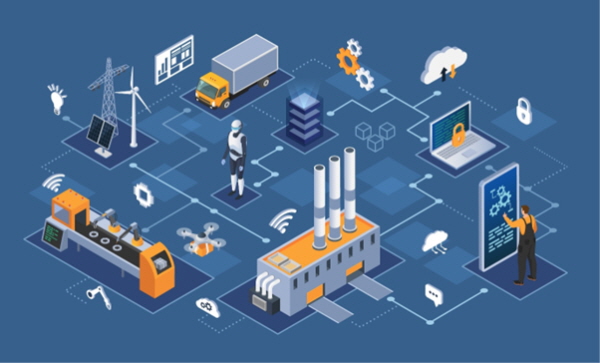
Device-to-device interoperability, solving communication issues
High autonomy, less human intervention required, improved production, reliability, and safety
When we talk about the Internet of Things (IoT), we often think of things that ordinary consumers use. Applications such as smart homes and consumer ecosystems have become the most popular use cases for IoT. However, there are countless other areas where IoT can be used.
The most interesting and important applications of IoT are in the industrial sector. However, one of the challenges that lies in exploiting the full potential of IoT in the industrial sector is the lack of interoperability between devices from different manufacturers. Matter was introduced to overcome this problem in the smart home sector. Many see this precedent being followed in the industrial sector as well.
In this article, we explore what the Industrial Internet of Things (IIoT) is, how Matter is influencing the smart home, and how industrial applications can also adopt this concept to improve the factory floor.
■ Industrial IoT (IIoT)
'IoT' is about connecting devices to build an ecosystem and sharing data and information collected from each sensor. The most popular application of IoT is probably the smart home. However, IoT also has great potential for use in industrial fields.
IIoT is the application of IoT to the factory environment. To achieve this, various devices in the industrial field, including industrial machinery equipment, control equipment, and other general equipment such as HVAC (heating, ventilation, air conditioning), must be able to communicate with workers and each other in real time.
IoT can play a significant role in industrial applications, as it can enable devices to share insightful data about the operation of factory equipment with a central hub or human workers. For example, IIoT-enabled machines can share information about their operation, which can then be compared to acceptable standards to determine what maintenance or repairs are needed.
While most IIoT devices today can communicate with workers, many still cannot communicate with each other. A big reason for this is that IIoT devices on the factory floor are manufactured by different manufacturers. In other words, they were not designed to interoperate with each other in the first place.
To truly realize the potential of the IIoT, these disparate devices must be able to communicate with each other and use the data they obtain to decide what actions to take.
■ Following the precedent in the consumer sector
While device-to-device interoperability remains a challenge for the industrial sector, the smart home has already found a solution: a standard led by the Connectivity Standards Alliance (CSA) and supported by the major home automation companies that are its members: Matter.
Matter is a membership-based standard for home automation that aims to reduce fragmentation among IoT vendors. To achieve this, Matter defines a standardized communications protocol that allows all Matter-certified devices to interoperate.
The motivation for developing Matter also came from the same situation that the industrial sector is facing today. In other words, the smart home market is also extremely fragmented. The modern smart home is made up of devices from multiple manufacturers, and these devices were not designed to interoperate. The smart home industry has overcome this problem by jointly developing Matter.
Matter therefore provides an exemplary case for industrial use, showing that device interoperability is possible when the industry works together.
Matter is focused on security above all else. It is designed to meet the needs for device security and privacy across the board, from the device hardware level to the software level. This includes a number of privacy protection measures.
Privacy protection measures are especially important for industrial applications, as the data being exchanged is a valuable asset to businesses. Matter therefore also sets an example by enabling IIoT device interoperability without compromising security.
■ Factory floor improvement
By following the lead set by Matter and leveraging the many technologies that IIoT offers, we can realize effective industrial use cases. In particular, IIoT enables device-to-device interoperability, enabling true automation and scalability for industrial facilities.
In an industrial environment, various devices are used, including circuits for controlling industrial power, lighting systems, and mechanical equipment. If these devices are built individually, each device will perform its assigned task well, but the entire factory will not be able to work together to create synergy.
For example, let's say that in an assembly line, equipment in an upper process assembles parts and passes them to a lower process for another task. But let's say that the equipment in the upper process has a problem and produces defective parts. If device-to-device communication is not possible, the equipment in the lower process will not know about this failure and will continue to work with the defective parts. This will make the problem worse and eventually cause machine damage and reduce profits.
In contrast, if you make the equipment interoperable across the factory floor, each device can be informed of the status of the other devices and make insightful decisions based on that. So when an upstream piece of equipment notices that something is wrong, it can cause the downstream equipment to stop working and notify human operators so they can take action. In this way, IIoT device interoperability can enable greater autonomy and less human intervention in factories, ultimately increasing productivity, reliability, and safety.
Device-to-device interoperability in IIoT allows plant owners to more easily expand and upgrade their facilities. Without standards like Matter, all devices in an IIoT ecosystem that interoperate would have to come from a single manufacturer. This makes it difficult to replace or add equipment to the plant floor, as plant owners have limited choices.
By adopting solutions like Matter, factory owners have the freedom to choose from multiple manufacturers when they want to upgrade or add functionality to their factory floors without sacrificing connectivity between systems.
■ Conclusion
To fully realize the potential of IIoT in industrial applications, interoperability between different IIoT devices is necessary. Matter is leading the way. By following this path, we will be able to create safer, more productive and more profitable factory floors for industrial applications.
※ Contributor
Courtesy of Mouser Electronics
 Written by Tom Klein
Tom Klein is a Senior Director of IoT Business Development at DigiCert. He has over 40 years of experience in IT, specializing in IoT security. He has extensive experience working at IBM, Microsoft, AWS, and security-focused companies.

Comments
Related news
Korea Instrument, KOLAS Accredited Calibration Agency First to Simultaneously Acquire ISO/IEC 27,001·27,701
Korea Instrument has become the first among KOLAS accredited calibration agencies to simultaneously acquire ISO/IEC 27,001 and ISO/IEC 27,701 certifications. Through its proprietary platforms CWIZ Enterprise and CWIZ Partners, the company has embedded information security and personal data protection requirements across all business processes including customer information, equipment data, and calibration reports, with plans to continuously advance its management system through regular audits and security inspections.
2026.10.12by 배종인 기자
TeamViewer One, IT Incident Automation Workflow and Resolution Center Enhanced
TeamViewer has added IT incident automation capabilities and an advanced Resolution Center to its integrated digital workplace management platform 'TeamViewer ONE'. Recurrent service disruptions, configuration errors, and capacity shortages are automatically handled according to preset policies, and device status verification through script deployment can be managed in a unified interface, significantly reducing repetitive tasks for IT teams.
2026.10.12by 배종인 기자
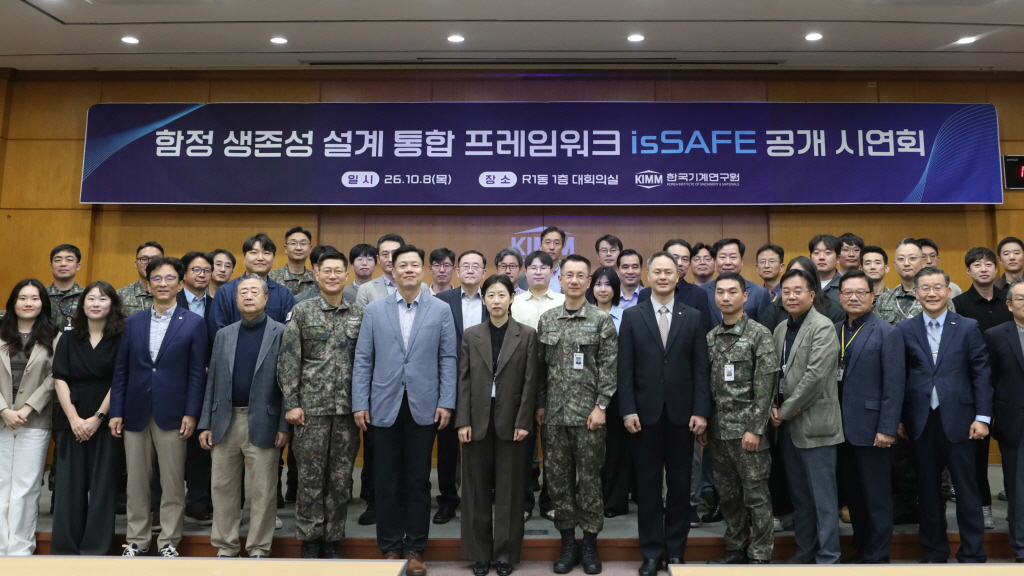
KAERI Develops Domestically-Produced SW 'isSAFE' for Integrated Warship Survivability Analysis
The Korea Institute of Machinery and Materials has developed domestically-produced software 'isSAFE' that comprehensively analyzes warship survivability. This design framework integrates the entire process—from warship modeling to hit scenario generation, vulnerability analysis, and results analysis—into a single platform, establishing an independent technology foundation in the defense technology sector that had previously relied on foreign software.
2026.10.08by 배종인 기자
ioCrops Shares AI Smart Farm Operations Case Study
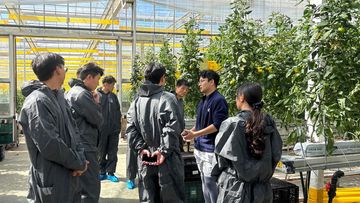
About 20 cultivators from the Agricultural Cooperative's Smart Agriculture Support Centers visited ioCrops' smart farm in Jincheon, North Chungcheong Province. They directly confirmed how data collected through substrate weight sensors, drainage weight sensors, and soil moisture sensors is applied to tomato cultivation, as well as the greenhouse pest control process using the AI-based autonomous spraying robot 'HERMAI'. By sharing on-site operational case studies combining data and automation technology, the adoption of smart farms in agricultural fields is being promoted.
2026.10.07by 배종인 기자
Rockwell, "90% Digital Transformation Essential in Life Sciences Manufacturing"
According to the digital transformation report for the life sciences manufacturing sector released by Rockwell Automation, 90% of responding companies recognized digital transformation as a business-critical element. Primary investment technologies include AI and machine learning (46%), process automation (44%), and cybersecurity (39%), with 64% of companies planning to expand AI utilization within the next year. However, only 32% of companies actually utilize more than half of the collected data, indicating an urgent need to strengthen data utilization capabilities.
2026.10.07by 배종인 기자











