



Produces L-CO2 together with blue hydrogen
 Published2023.03.17 10:07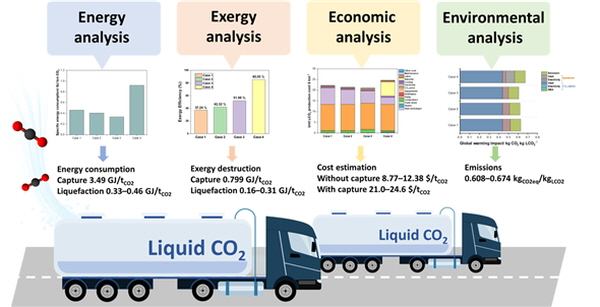
An optimal method for producing liquid carbon dioxide (L-CO2) based on blue hydrogen has been developed, raising expectations for future L-CO2 supply and demand, as well as carbon reduction in L-CO2 production.
UNIST (President Lee Yong-hoon) announced on the 16th that a team led by Professor Han-Kwon Lim of the Graduate School of Carbon Neutrality and the Department of Energy and Chemical Engineering conducted a study on the "technical, economic, and environmental feasibility analysis of an optimal production model for liquid carbon dioxide for blue hydrogen linkage" and published it in the international academic journal "Applied Energy."
The main content is the derivation of optimal scenarios for various carbon dioxide liquefaction systems by applying a multi-criteria decision-making method.
This study designed and analyzed a carbon dioxide capture and liquefaction system for exhaust gases generated from the 'natural gas steam reforming process for hydrogen production'.
In particular, the hydrogen obtained through the above process is named blue hydrogen. In this study, various carbon dioxide liquefaction systems for blue hydrogen linkage were considered, along with all aspects through 4E (energy, exergy, economic feasibility, and environmental feasibility) feasibility analysis.
This study, which applied a multi-criteria decision-making technique to exhaust gases generated during the hydrogen production process, provides an opportunity to reduce carbon dioxide emissions during hydrogen production.r />
In addition, it is expected to simultaneously serve as an important indicator in the technical, economic, and environmental aspects of the liquefaction system.
As a result of this study, a 'Vapor compression refrigeration' system using ammonia refrigerant was shown to have a high 'priority'.
This indicates that it is a sustainable, optimal blue hydrogen-linked carbon dioxide liquefaction system that satisfies all technical, economic, and environmental aspects.
"First author Chang-Kwon Choi, a researcher in the integrated master's and doctoral program in Energy Chemical Engineering, stated, 'We expect that the analysis of the carbon dioxide liquefaction system conducted through this study will be able to simultaneously satisfy the anticipated future demand for hydrogen and liquid carbon dioxide.' He added, 'Through multi-criteria decision-making analysis based on 4E feasibility, we present quantitative results regarding the technical, economic, and environmental aspects of liquid carbon dioxide production, which can be applied as concrete guidelines.'"
Co-corresponding author Junaid Haider, a research professor in the Department of Energy and Chemical Engineering, emphasized the study, stating, “This research is the first study for the production of liquid carbon dioxide linked to blue hydrogen, and it seeks an efficient liquid carbon dioxide production process based on 4E.”
Professor Lim Han-kwon of the Graduate School of Carbon Neutrality stated, “While carbon dioxide liquefaction is already being widely addressed by various companies and industries, this research holds great significance as it presents a sustainable carbon dioxide liquefaction system model linked to carbon capture-based blue hydrogen production processes,” adding, “This study could serve as an important indicator for the liquid carbon dioxide industry in the future.”
This research was conducted with the support of the Carbon Neutrality Convergence Center and the Carbon Neutrality Demonstration Research Center at Ulsan National University of Science and Technology (UNIST) and was published online in the international journal Applied Energy on February 15.

Comments
Related news
Materials Research Institute Develops Ultra-thin Coating Water Electrolysis Catalyst Technology
The Korea Institute of Materials Science has simultaneously resolved the performance and durability trade-off problem in water electrolysis catalysts by applying ultra-thin surface coating technology. Achieving 1.9 times higher performance compared to conventional catalysts while demonstrating 1,000-hour long-term stability, the institute has developed technology scalable to industrial water electrolysis systems through a simple process.
2026.10.07by 배종인 기자
Gigaphoton Develops Neon Gas Recycling System for ArF Excimer Lasers...Achieves 50% Recycling Rate
Gigaphoton announced that it has developed a gas recycling system for ArF excimer lasers and achieved a 50% neon gas recycling rate.
2026.10.02by 배종인 기자
UNIST suppresses vaporization losses while maintaining 97% of liquefied hydrogen storage capacity
A research team led by Professor Oh Hyun-cheol from the Department of Chemistry at UNIST, in collaboration with Professor Moon Hoe-ri from Ewha Womans University and researchers from the Technical University of Munich in Germany, has verified technology that reduces boil-off loss occurring during liquefied hydrogen transportation and storage by utilizing metal-organic frameworks (MOF).
2026.09.30by 배종인 기자
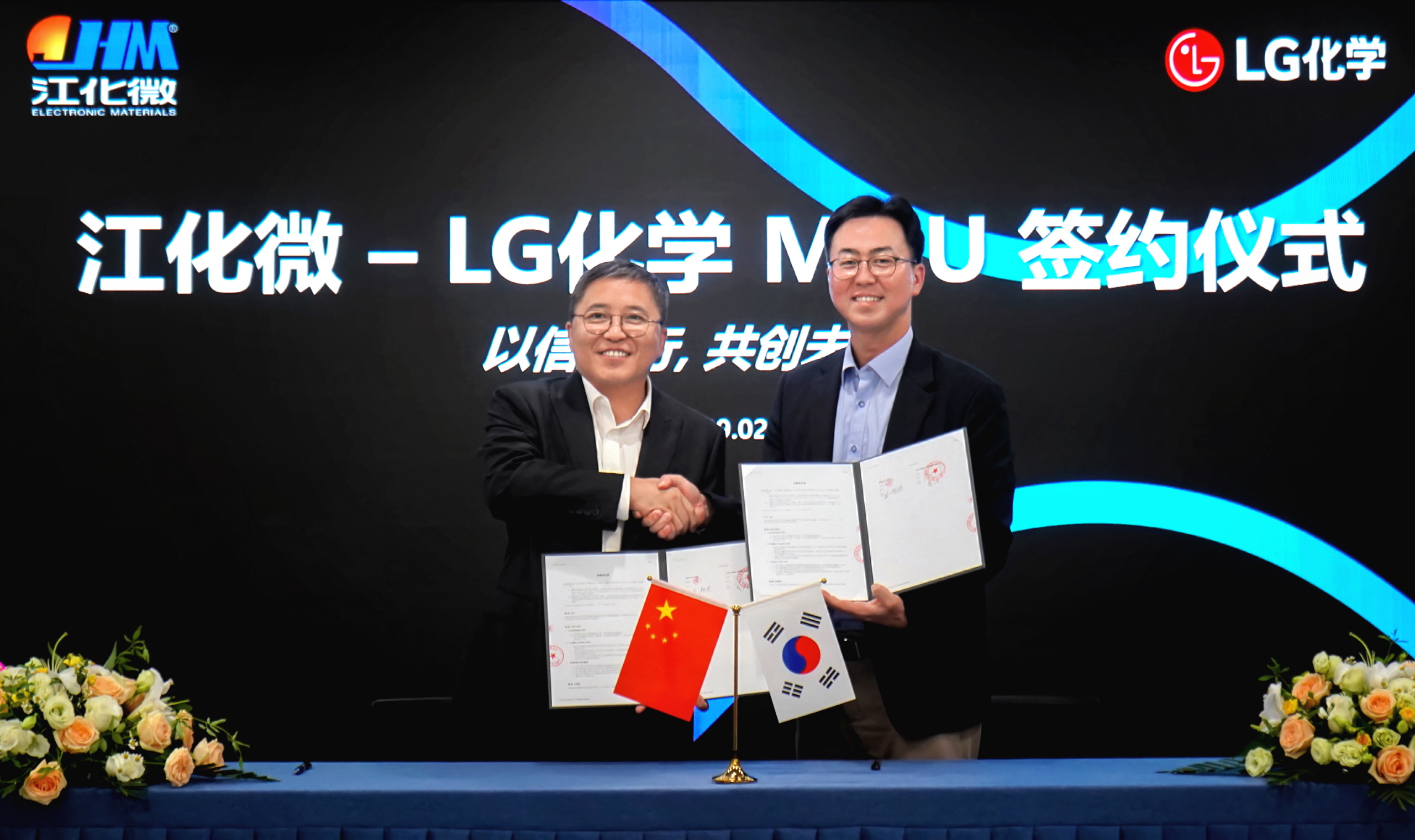
LG Chem Expands Semiconductor Cleaning Materials Business…Collaborates with China's Jianghua Wei on Ultra-high Purity IPA
LG Chem is moving to expand its ultra-high purity IPA (isopropyl alcohol) business, a core material for semiconductor processes. The company is building a local supply system in collaboration with a Chinese precision chemical company and strengthening its market strategy for AI semiconductors and advanced memory.
2026.09.14by 배종인 기자
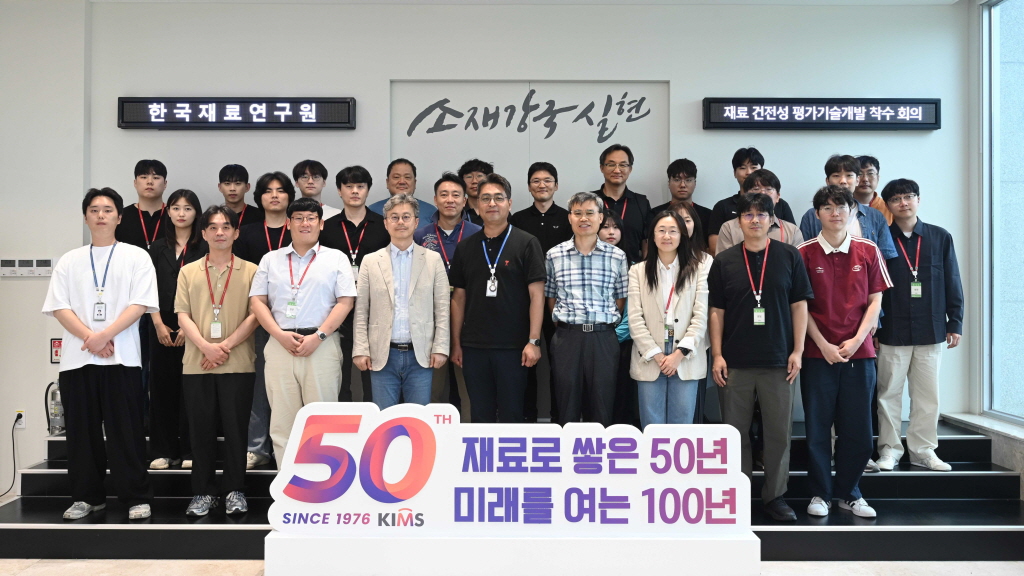
Korea Institute of Materials Science Begins Development of Anhydrous Ammonia SCC Integrated Evaluation Platform
The Korea Institute of Materials Science has begun developing an integrated evaluation platform for stress corrosion cracking (SCC) of high-strength steel for ammonia propulsion and transport vessels. By establishing a system to verify the safety of steel in anhydrous ammonia environments using domestic technology, the institute will strengthen the international competitiveness of the shipbuilding and steel industries and lay the foundation for reflecting domestic technology in regulatory and standard revisions by the International Maritime Organization (IMO) and other bodies.
2026.08.05by 배종인 기자











