



KERI Overcomes All-Solid State Battery Challenges
 Published2023.03.20 12:09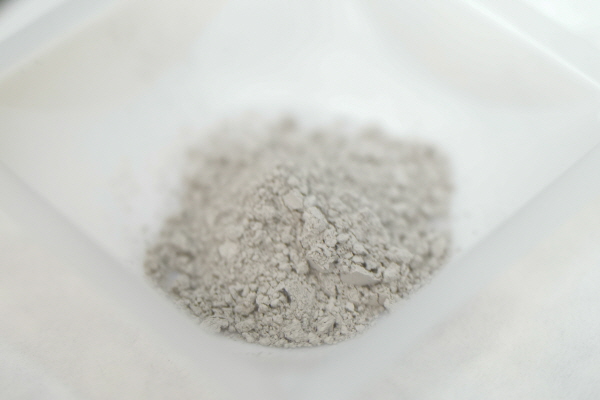
Silicon sulfide produced using manufacturing technology developed by the Korea Electrotechnology Research Institute and Kumoh National University of Technology
The challenge of rising sulfur vapor pressure at high reaction temperatures has been overcome, and it is expected that the development of all-solid-state batteries will gain momentum in the future.
The Korea Electrotechnology Research Institute (KERI) announced on the 20th that a team led by Dr. Ha Yun-cheol of the Next-Generation Battery Research Center and a team led by Professor Park Cheol-min of the Department of Materials Science and Engineering at Kumoh National University of Technology have developed a 'low-cost manufacturing technology for silicon sulfide (SiS2) for solid electrolytes (argyrodite-based)' that can accelerate the commercialization of all-solid-state batteries.
All-solid-state batteries replace the liquid electrolyte, which transmits ions between the anode and cathode, with a solid material that poses a low risk of fire or explosion. However, they face many challenges that must be overcome before commercialization, such as difficulties in manufacturing processes and mass production, as well as high unit costs. Consequently, active research and development is underway worldwide, and KERI has also achieved several results.
The material that Dr. Ha Yun-cheol's team focused on this time is silicon sulfide. It is a widely known fact in academia that adding silicon sulfide (SiS2) to solid electrolytes for all-solid-state batteries can improve ionic conductivity and moisture stability.
On the other hand, the manufacturing process for silicon sulfide is very difficult, as the synthesis of sulfur and silicon requires high reaction temperatures, which leads to problems such as excessively high sulfur vapor pressure. For this reason, silicon sulfide is currently expensive, with a price of about 1.7 million won per 20 grams.
KERI’s achievement is that it developed optimal process technology for silicon sulfide manufacturing and laid the groundwork for applying it to solid electrolytes for all-solid-state batteries.
The research team established synthesis conditions by optimizing the arrangement of sulfur and silicon and succeeded in creating a perfectly sealed environment capable of withstanding the vapor pressure resulting from the vaporization of sulfur even at a high reaction temperature of 800 degrees.
The quality of the resulting product was also comparable to that of commercial products.
The research team utilized the produced silicon sulfide in the manufacture of solid electrolytes and confirmed that it possesses more than twice the ionic conductivity and moisture stability. Through process optimization, the process can be simplified, and a reduction in manufacturing costs is also expected.
Dr. Ha Yun-cheol of KERI stated, “Many researchers at home and abroad have struggled to solve the problem of rising sulfur vapor pressure by using expensive raw materials or introducing special processes, but our achievement will open the way to easily and affordably manufacture silicon sulfide for solid electrolytes.”
Meanwhile, the research team applied this silicon sulfide not only to solid electrolytes but also to the field of negative electrode active materials for liquid electrolyte-based lithium-ion batteries, obtaining significant results (the world's first identification of the phenomenon of layered structure disappearance and recovery during charging and discharging). Recognized for the excellence of these overall research results related to silicon sulfide, it was recently selected as the cover article for the 'Journal of Materials Chemistry A (IF: 14.511),' a world-renowned journal in the energy and fuel field.
KERI is preparing to file a patent application for the technology. In addition, anticipating that this achievement will attract significant interest from companies related to all-solid-state batteries (such as manufacturers of solid electrolyte production and electrode/membrane manufacturing equipment, as well as electrode electrolyte film and cell manufacturers), the plan is to identify relevant customers and pursue the scale-up and commercialization of the silicon sulfide manufacturing process.

Comments
Related news
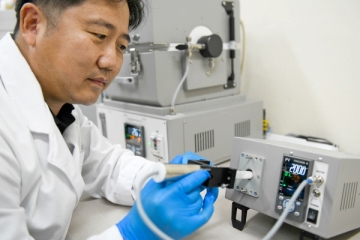
KERI succeeds in low-temperature production of all-solid-state batteries
The Korea Electrotechnology Research Institute (KERI, Acting Director Kim Nam-gyun) has reduced the heat treatment temperature for the manufacture and application of electrolytes in all-solid-state batteries to 200℃ or below, resolving issues with ionic conductivity loss and interfacial resistance, which is expected to make a significant contribution to the future commercialization of all-solid-state batteries.
2022.07.20by 배종인 기자
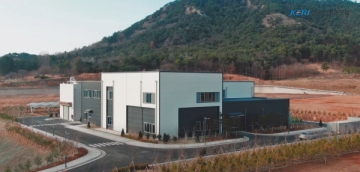
The Korea Electric Power Corporation's Redox Flow Battery Testing and Certification Center is active.
The 'Redox Flow Battery Testing and Certification Center' located at the Gwangju Smart Grid Division of the Korea Electrotechnology Research Institute has been attracting significant interest from companies since its initial operation and is emerging as a hub for building a large-capacity secondary battery ecosystem.
2022.10.20by 배종인 기자
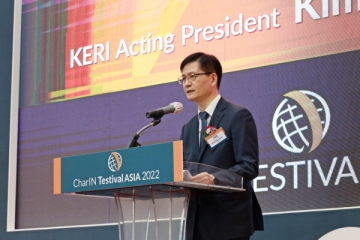
Korea Electric Power Corporation (KEPC) is leading the way in establishing international standards for rapid charging of electric vehicles.
The Korea Electrotechnology Research Institute (hereinafter KERI) and Charini collaborate to inspect technical problems occurring during fast charging of electric vehicles, sharing the common objective of investigating charging errors and contributing to problem resolution.
2022.10.25by 성유창 기자

[e4ds Tech Day 2026 ⑨] Sim Sang-gyu, Autocrypt CTO: "In the Physical AI Era, Automotive Security Must Extend Beyond the Vehicle"
At e4ds Tech Day 2026, Sim Sang-gyu, CTO of Autocrypt, explained automotive cybersecurity strategies in the era of Physical AI and SDV (Software-Defined Vehicle). Automobiles are evolving as part of an ecosystem connected to AI, cloud, chargers, IoT, and robots, and he emphasized that the scope of security must expand beyond the vehicle interior to the entire connected environment. In particular, AI model tampering, adversarial attacks, OTA updates, and EV charger hacking were identified as major threats. He explained that response measures require zero trust, AI model integrity protection, intrusion detection, Security by Design and Default, and full lifecycle security management, and that proactive security system establishment beyond regulatory compliance is critical for securing future mobility competitiveness.
2026.10.12by 배종인 기자

Practical HIL Construction Strategy for Automotive and Off-Highway Controller Validation
As vehicle E/E architecture transitions to zonal structures and shifts to software-defined vehicles (SDV), the number of controllers (ECUs) requiring validation and software complexity are surging dramatically. Meanwhile, real vehicle testing cannot provide repeated verification under identical conditions and entails lead time and safety concerns. This white paper explains the principles of HIL (Hardware-in-the-Loop) validation and the structure of the NI platform composed of PXI, SLSC, and VeriStand, and through two actual implementation cases—Camera Record & Replay HIL for In-Cabin Monitoring Controller (ICMU) and Forklift Controller (VCU) HILS—describes how controller-level regression testing becomes possible. Additionally, it explicitly states application boundaries and limitations, such as lack of A2B support.
2026.10.12by 편집부











