



NVIDIA Omniverse Innovates Workflows in the Automotive Manufacturing Industry
 Published2023.03.27 14:59
.jpg)
Omnibus Enhances Efficiency, Stability, and Customer Satisfaction Through Industrial Digitalization
Supports physically accurate large-scale virtual world simulations
The explanation is that digitizing the entire automobile manufacturing process, from design to verification and testing, enhances not only efficiency but also safety and customer satisfaction.
The automotive industry is undergoing a digital revolution driven by groundbreaking advancements in accelerated computing, AI, and the industrial metaverse.
Automotive manufacturers are using the NVIDIA Omniverse platform and AI to digitize every stage of the product lifecycle, including concept and styling, design and engineering, software and electronics, smart factories, autonomous driving, and retail.
Omniverse innovates complex 3D workflows based on the USD (Universal Scene Description) framework, enabling teams to connect and customize 3D pipelines to simulate physically accurate, large-scale virtual worlds.
If automotive manufacturers realize automotive product workflows in a virtual world, they can bypass existing bottlenecks and save time and costs.
The process of designing a new car model or redesigning an existing model involves reviewing and coordinating even the smallest details. It requires a collaboration process.
Using Omnibus allows you to refine concepts during the design phase and visualize all aspects of the car's interior and exterior within the context of the entire vehicle. Additionally, global teams can rapidly iterate on physics-based realistic renderings in real time.
For example, you can collaborate to design key components of the cockpit, such as digital instrument panels or infotainment systems, while conveying information and minimizing distractions.
Omniverse enables designers to ensure a harmonious look and feel by flexibly arranging on-screen cabin and cockpit user experiences alongside the vehicle's actual interior.
Through such next-generation design processes, automotive manufacturers can reduce the number of actual prototypes that need to be tested and verified by detecting defects early and making improvements in real time.
Once the design is complete, the developer can use Omniverse to test the new concept.
Perfect interior design is essential for both the customer experience and safety.
Developers can test interior designs in a virtual world and efficiently improve and verify them by collaborating and sharing designs.
Digitalization is also changing the way automotive manufacturers approach vehicle engineering. Teams can significantly reduce the production of physical prototypes by testing various materials and components in virtual environments. For example, engineers can use computational fluid dynamics to improve aerodynamics and implement safer vehicle designs through virtual crash simulations.
Next-generation vehicles will look like computers equipped with complex centralized electronic systems and software to enhance safety, intelligence, and security. In other words, it is literally becoming a 'high-tech computer on wheels'.
Generally, vehicle functions are controlled by dozens of electronic control units distributed throughout the vehicle. By centralizing computing into core domains, automotive manufacturers can simplify highly complex supply chains and replace many parts.
Automotive manufacturers can simulate and test vehicle software through a digital representation of the entire architecture. This enables the delivery of Over-The-Air (OTA) updates for continuous improvement throughout the vehicle's lifecycle, including remote diagnostics, autonomous driving features, entertainment, and other service subscriptions.
Automobile production is a massive undertaking that requires thousands of parts and workers to move simultaneously. Problems in the supply chain or production can result in enormous costs.
Through Omniverse, automotive manufacturers can develop and operate complex AI-assisted virtual environments for factory and warehouse design. Physics-based precision timing digital twins play a key role in improving operational efficiency through predictive analytics and process automation.
Meanwhile, factory planners can access the factory's digital twin to review and improve the factory as needed. By rapidly evaluating and verifying all changes in a virtual world and then implementing them in the real world, it is possible to ensure maximum efficiency as well as an optimal ergonomic environment for factory workers.
In addition, automotive manufacturers can synchronize factory locations anywhere in the world to perform scalable design and iteration.
Omniverse not only improves the development and manufacturing of existing products but also provides a complete toolchain for the development and verification of automation and autonomous driving systems.
NVIDIA DRIVE Sim is a physics-based simulation platform based on NVIDIA Omniverse that can perform large-scale autonomous vehicle testing and verification quickly and efficiently.
It also features time accuracy. Furthermore, since it supports the entire development toolchain, developers can run simulations at the component level or across the entire system.
Through Drive Sim, developers can repeatedly simulate everyday driving scenarios as well as situations that are dangerous and rare to test in real-world environments.
In addition, the platform's neural reconstruction engine can be used to convert actual driving records into responsive simulation scenarios.
In addition, it is possible for automakers to fine-tune advanced driver assistance and autonomous driving systems to meet New Car Assessment Program (NCAP) regulations. NCAP is a program that evaluates the safety performance of new cars based on various crash tests and safety features.
In this case, the DRIVE Sim NCAP tool provides high-fidelity NCAP test protocols in simulation, supporting manufacturers to efficiently perform large-scale development and verification.
The ability to drive in a physics-based virtual environment significantly accelerates the autonomous vehicle development process, helping to overcome obstacles encountered in actual testing, such as data collection and scenario diversity.
Omnibus’s generative AI supports reconstructing previously driven routes in 3D to recreate or modify past experiences.
Digitalization also provides benefits to end customers.
Omniverse’s immersive technologies, including 3D visualization, augmented reality (AR), and virtual reality (VR) streaming, use NVIDIA CloudXR. This provides consumers with a more attractive experience, helping them try out features before purchasing.
Potential customers can customize their vehicle by selecting colors, interior materials, trim levels, and more in the vehicle configurator, regardless of the dealership's actual inventory. Afterward, they can view the customized vehicle from all angles using 3D visualization, and through augmented reality and virtual reality, they can view the vehicle and virtually test drive it anytime, anywhere.
The benefits brought by digitalization are not limited to the automotive industry alone.
All companies can reimagine workflows through Omnibus to increase efficiency, productivity, and speed, and innovate their business methods. Omnibus is a digital-physical operating system capable of realizing the digitalization of industry.
NVIDIA CEO Jensen Huang stated, “Omniverse is a digital-physical operating system that enables industrial digitalization and can improve industry efficiency, productivity, and speed,” adding, “All NVIDIA employees will continue to help the world achieve the impossible.”
Comments
Related news
NVIDIA to Hold 'GTC 2023'... Korean Startup Generative AI Cases Announced
Nvidia held the "Nvidia GTC 2023 Conference" from March 20 to 24. The company prepared a generative AI session and invited domestic generative AI startups to participate. AI startups including △Kleon △Flask △Supertone △Recon Labs discussed the latest business trends, generative AI and GPU accelerated computing, technological developments, and challenges faced along with solutions.
2023.03.24by 김예지 기자
.jpg)
NVIDIA partners with ASML, TSMC, and Synopsys to manufacture next-generation chips.
As more transistors are packed onto advanced nodes and accuracy requirements become increasingly stringent, the computational time cost required for the most demanding workloads in semiconductor manufacturing has been outpacing Moore's law in recent years. Future nodes will demand even finer-grained calculations, but the available computational bandwidth provided by current platforms cannot accommodate all of them, resulting in a slowdown in the pace of semiconductor innovation.
2023.03.27by 명세환 기자

[e4ds Tech Day 2026 ⑨] Sim Sang-gyu, Autocrypt CTO: "In the Physical AI Era, Automotive Security Must Extend Beyond the Vehicle"
At e4ds Tech Day 2026, Sim Sang-gyu, CTO of Autocrypt, explained automotive cybersecurity strategies in the era of Physical AI and SDV (Software-Defined Vehicle). Automobiles are evolving as part of an ecosystem connected to AI, cloud, chargers, IoT, and robots, and he emphasized that the scope of security must expand beyond the vehicle interior to the entire connected environment. In particular, AI model tampering, adversarial attacks, OTA updates, and EV charger hacking were identified as major threats. He explained that response measures require zero trust, AI model integrity protection, intrusion detection, Security by Design and Default, and full lifecycle security management, and that proactive security system establishment beyond regulatory compliance is critical for securing future mobility competitiveness.
2026.10.12by 배종인 기자

Practical HIL Construction Strategy for Automotive and Off-Highway Controller Validation
As vehicle E/E architecture transitions to zonal structures and shifts to software-defined vehicles (SDV), the number of controllers (ECUs) requiring validation and software complexity are surging dramatically. Meanwhile, real vehicle testing cannot provide repeated verification under identical conditions and entails lead time and safety concerns. This white paper explains the principles of HIL (Hardware-in-the-Loop) validation and the structure of the NI platform composed of PXI, SLSC, and VeriStand, and through two actual implementation cases—Camera Record & Replay HIL for In-Cabin Monitoring Controller (ICMU) and Forklift Controller (VCU) HILS—describes how controller-level regression testing becomes possible. Additionally, it explicitly states application boundaries and limitations, such as lack of A2B support.
2026.10.12by 편집부
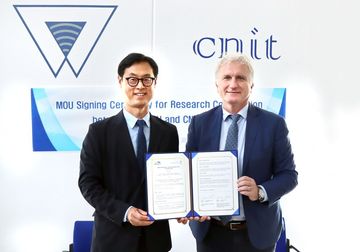
Korea Automotive Research Institute Signs MOU with Italy National Institute for Wireless Communications
The Korea Automotive Research Institute will sign an MOU with Italy's National Institute for Wireless Communications and launch joint research on next-generation mobility technologies based on 6G, V2X, and connected vehicles. The two organizations will conduct research to apply advanced wireless communication technologies to vehicles and discover international joint projects to advance next-generation connected vehicle technology development.
2026.10.12by 배종인 기자











