


Multipurpose electric vehicles penetrate the ASEAN market.
 Published2023.03.29 09:39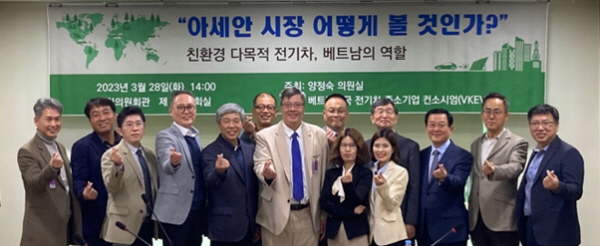
아세안 친환경 전기차 시장 진출 협약 체결…연내 진출 가시화
국내 중소기업 중심 친환경차 부품 기업들과 함께 사업화 추진
베트남한국 전기차 중소기업 컨소시엄(상임대표 김종배)와 베한기업인및투자협회(회장 쩐 하이린, 이하 VKBIA)가 28일 협약을 맺고 아세안 시장 진출을 추진한다.
.jpg)
▲김종배 베트남한국 전기차 중소기업 컨소시엄 상임대표(왼쪽), 베한기업인및투자협회 쩐 하이린 회장(오른쪽)
또한 친환경차 전문 인력 양성을 위한 (재)광주그린카진흥원과 호남대학교, VKBIA간 산학연 협약도 체결됐다. 그린카진흥원은 친환경 부품 제조사의 베트남 시장 진출을 지원하고 있으며 이번 협약으로 오는 6월 예정된 현지 마케팅 활동에 도움을 받을 것으로 기대하고 있다. 호남대학교는 광주전남도내 유일한 자동차학과를 보유하고 있으며 이미 다년간의 국제적인 교류를 진행한 경험을 바탕으로 베트남 학생들이 전문적인 자동차 관련 기술을 습득할 수 있도록 적극 지원한다.
베트남에서의 부품 생산은 가격 경쟁면에서 상당한 우위를 점할 수 있는 전략으로 꼽힌다.
베트남의 빈패스트(Vinfast)는 모든 내연기관 모델을 단종하고 전기차 부문에만 집중해 2028년까지 100만대 이상을 판매하겠다는 목표를 제시했다. 하지만 빈패스트는 자국내에서 부품을 수급하지 못하고 모든 부품을 독일로부터 들여와 내수 시장에서 가격을 낮출 방법을 찾지 못해 적자를 기록하고 있다.
배터리를 포함한 부품들을 현지에서 생산하는 방법이 가격경쟁력뿐만 아니라 공급망의 탈중국 기조가 확산되고 있는 베트남에서 유리하게 작용할 것이라는 판단이다.
이번 포럼에서 약 6.7억명의 인구를 가진 연평균 경제성장률 5%의 성장세를 이어가고 있는 아세안 시장의 중요성과 교통부분의 온실가스 배출량이 40%를 차지하고 있는 이들 지역의 친환경 운송 수단의 보급 확대 필요성 등을 중점적으로 논한다.
친환경성을 위해 VKEVC는 태양광 신재생 에너지를 기반으로 단일화된 배터리팩을 활용할 계획이다. 공유형 배터리를 사용함으로써 전기차 판매가격을 낮출 수 있고, 이로 인해 파생되는 서비스 플랫폼 사업으로의 확대도 꾀할 수 있을 것으로 보인다.
또한, 모든 에너지 수급은 베트남의 풍부한 태양열을 기반으로 한 신재생 에너지로 하기에 효율성과 경제성에 큰 도움이 될 것이라는 것이 VKEVC의 주장이다.
아세안 시장은 코로나19 팬데믹, 러시아·우크라이나 전쟁, 글로벌 침체 등 다수 악재에도 불구하고 지난해 한국의 수출은 전년대비 14.8% 증가한 약 1,249억달러, 수입은 전년대비 21.9% 증가한 약 825억달러로 교역 총액 약 2,075억 달러, 무역수지 약 424억달러로 사상 최대규모를 경신하는 등 한국의 가장 중요한 수출 교역 상대로 급부상하고 있다.
김종배 한국측 컨소시엄 상임 대표는 “아시아 지역 개발도상국에서의 저탄소 교통 전환은 CO2 감축을 통한 국가온실가스감축 목표(NDC) 달성 외에도 대기환경개선을 통한 건강보호, 에너지 안보 강화뿐만 아니라 전기차와 관련된 제품 생산 등 경제성장의 기회를 제공할 수 있다”며 아세안 시장에서의 한국 기업들의 성장 가능성에 기대감을 내비쳤다.
Comments
Related news
Innomotive Achieves Great Success in India Entry… 50,000 Units Assemble Locally
Innomotive has signed an agreement to produce 50,000 PBVs in India, marking its full-scale entry into the PBV market.
2023.03.20by 배종인 기자
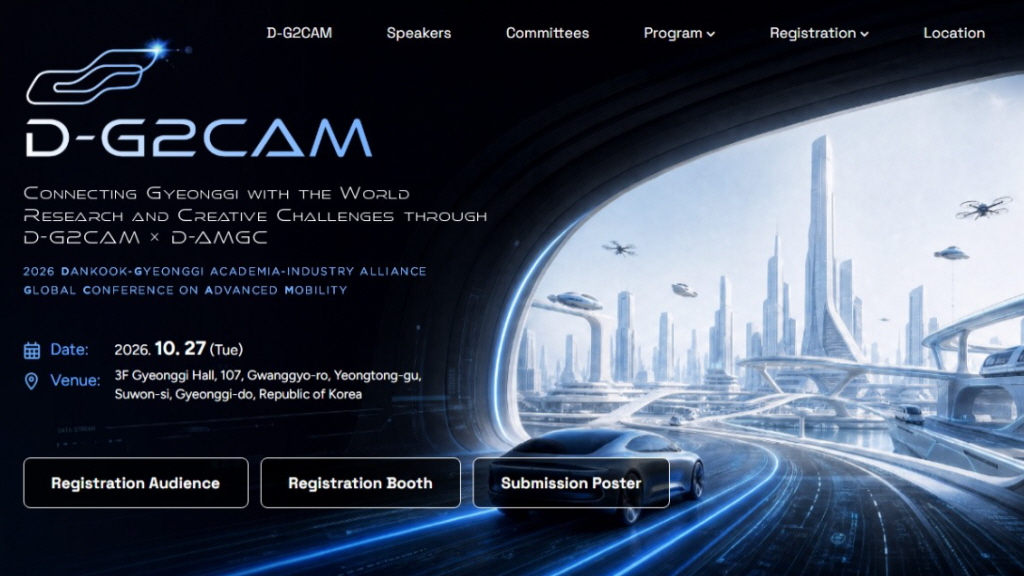
GAIA-Festa 2026, Autonomous Driving, AI, and Aerospace Experts Gather…Discussing Global Cooperation in the 'Silicon Intelligence Era'
GAIA-Festa 2026, which will be held in Suwon on October 27, is an industry-academia-research exchange event that explores the present and future of future mobility and AI technology through the global conference D-G2CAM 2026 and the international contest D-AMGC 2026. Domestic and international experts will share the latest research in autonomous driving, 5G/6G mobility, space technology, and data protection fields, while university students will showcase robots and physical AI prototypes that they have independently developed. Additionally, through poster presentations, corporate exhibitions, international cooperation meetings, and signing ceremonies, a platform will be established to connect the research capabilities and industrial needs of the Gyeonggi region with a global cooperation network.
2026.10.13by 배종인 기자

[e4ds Tech Day 2026 ⑨] Sim Sang-gyu, Autocrypt CTO: "In the Physical AI Era, Automotive Security Must Extend Beyond the Vehicle"
At e4ds Tech Day 2026, Sim Sang-gyu, CTO of Autocrypt, explained automotive cybersecurity strategies in the era of Physical AI and SDV (Software-Defined Vehicle). Automobiles are evolving as part of an ecosystem connected to AI, cloud, chargers, IoT, and robots, and he emphasized that the scope of security must expand beyond the vehicle interior to the entire connected environment. In particular, AI model tampering, adversarial attacks, OTA updates, and EV charger hacking were identified as major threats. He explained that response measures require zero trust, AI model integrity protection, intrusion detection, Security by Design and Default, and full lifecycle security management, and that proactive security system establishment beyond regulatory compliance is critical for securing future mobility competitiveness.
2026.10.12by 배종인 기자

Practical HIL Construction Strategy for Automotive and Off-Highway Controller Validation
As vehicle E/E architecture transitions to zonal structures and shifts to software-defined vehicles (SDV), the number of controllers (ECUs) requiring validation and software complexity are surging dramatically. Meanwhile, real vehicle testing cannot provide repeated verification under identical conditions and entails lead time and safety concerns. This white paper explains the principles of HIL (Hardware-in-the-Loop) validation and the structure of the NI platform composed of PXI, SLSC, and VeriStand, and through two actual implementation cases—Camera Record & Replay HIL for In-Cabin Monitoring Controller (ICMU) and Forklift Controller (VCU) HILS—describes how controller-level regression testing becomes possible. Additionally, it explicitly states application boundaries and limitations, such as lack of A2B support.
2026.10.12by 편집부
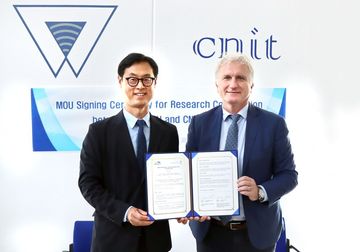
Korea Automotive Research Institute Signs MOU with Italy National Institute for Wireless Communications
The Korea Automotive Research Institute will sign an MOU with Italy's National Institute for Wireless Communications and launch joint research on next-generation mobility technologies based on 6G, V2X, and connected vehicles. The two organizations will conduct research to apply advanced wireless communication technologies to vehicles and discover international joint projects to advance next-generation connected vehicle technology development.
2026.10.12by 배종인 기자











