


SAP, “Achieving Sustainability with Cloud and AI ERP”
 Published2023.03.30 22:07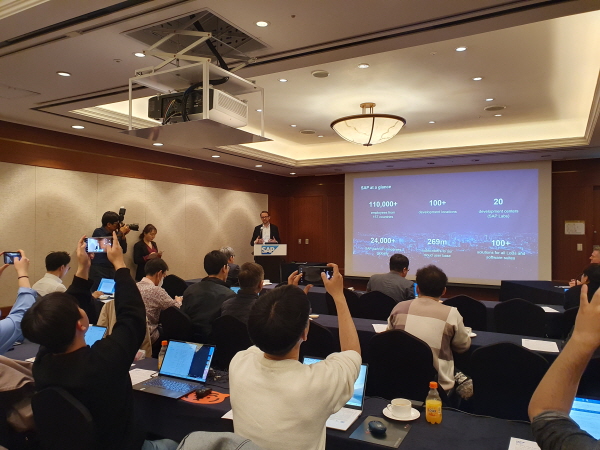
Support for optimizing automation processes when AI is used for abnormal behavior
SAP announced that cloud-based ERP will help the world become more sustainable and intelligent enterprises can achieve sustainability by participating in SAP’s network.
SAP Korea held a press conference at the InterContinental Seoul Parnas on the 30th and shared in-depth insights on digital supply chain innovation and sustainability.
The event was attended by Thomas Saueressig, Head of Product Engineering and Member of the Executive Board of SAP, and Paul Marriot, President of SAP Asia Pacific.
Thomas Jauerresig, the first to speak, highlighted SAP's efforts to help companies survive in rapidly changing markets and environments.
SAP helps companies solve their biggest challenges, including automating business processes, strengthening supply chain resilience and transforming into sustainable enterprises, said Jaueresig.
As part of this effort, SAP is helping companies of all sizes and industries, including small and medium-sized businesses, address challenges they face with its recently launched GROW with SAP and SAP DataSphere.
SAP also provides solutions that businesses faceTo overcome the challenges we face, we introduced the global SAP Labs Network, which includes SAP Labs Korea, emphasizing innovation on a global scale.
“SAP is helping the world become more sustainable, not only by enabling intelligent enterprises, but now by joining SAP’s network, they can also advance sustainability,” said Jaueresig. “SAP’s midmarket is driving this business transformation and continues to enable continuous innovation within SAP.”
He also mentioned that Korea is at the center of global innovation, and that Hana Cloud itself was developed in Korea and is a very important part of SAP.
Paul Marriott, Chairman and CEO, then made the announcement, emphasizing that SAP Labs is the foundation of SAP’s innovation and the importance of the Asia Pacific region as one of the fastest-growing regions in the world.
In particular, the Korean market is an important market where government-led efforts for digital transformation, such as the Digital New Deal 2.0 Promotion Plan and the Republic of Korea Digital Strategy, are underway, highlighting its strategic importance.
Paul Marriott, Chairman and CEO, said making progress in the fight against climate change is fundamental to SAP's strategy, noting that the Asia Pacific region produces 17 billion tonnes of carbon, half of global emissions.
There was also talk about AI.
Paul Marriott, CEO, said that SAP has applied AI to its cloud, and that when anomalies or abnormalities are detected in a process, appropriate automated processes are executed accordingly, and optimized support is provided within that process to immediately determine recommended action items or support for the user within the system.
We will also be leveraging ChatGPT technology in the future and will be announcing it at the Sapphire event in May.He mentioned that.
Meanwhile, SAP has been making efforts to establish and achieve sustainability goals since 2009, and has been disclosing sustainability-related results in its integrated report since 2012. Since 2014, it has been implementing the Green Cloud, which operates 100% of the electricity used in SAP’s data centers and all offices using renewable energy.
Additionally, SAP plans to achieve carbon neutrality by 2023 and net-zero carbon emissions across its value chain by 2030.
SAP provides solutions that help companies achieve sustainable operations not only within their organizations but also across their entire value chain. SAP offers a variety of solutions, including SAP Product Footprint Management to measure the actual carbon emissions generated by a company’s entire supply chain from Scope 1 to Scope 3, SAP Responsible Design and Production to support the transition to a circular economy, and SAP Sustainability Control Tower to support the adoption of more sustainable business models.

Comments
Related news
SAP Korea Holds Webinar Series on 'Global Semiconductor War and the Future'
The semiconductor industry is navigating a turbulent environment driven by external factors, and a forum has been established to share insights into the future of the semiconductor market and present key strategies and survival approaches.
2023.02.09by 명세환 기자
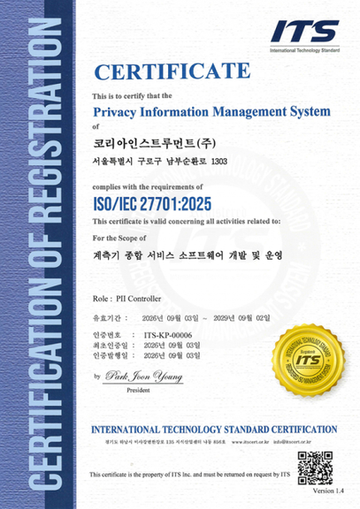
Korea Instrument, KOLAS Accredited Calibration Agency First to Simultaneously Acquire ISO/IEC 27,001·27,701
Korea Instrument has become the first among KOLAS accredited calibration agencies to simultaneously acquire ISO/IEC 27,001 and ISO/IEC 27,701 certifications. Through its proprietary platforms CWIZ Enterprise and CWIZ Partners, the company has embedded information security and personal data protection requirements across all business processes including customer information, equipment data, and calibration reports, with plans to continuously advance its management system through regular audits and security inspections.
2026.10.12by 배종인 기자
TeamViewer One, IT Incident Automation Workflow and Resolution Center Enhanced
TeamViewer has added IT incident automation capabilities and an advanced Resolution Center to its integrated digital workplace management platform 'TeamViewer ONE'. Recurrent service disruptions, configuration errors, and capacity shortages are automatically handled according to preset policies, and device status verification through script deployment can be managed in a unified interface, significantly reducing repetitive tasks for IT teams.
2026.10.12by 배종인 기자
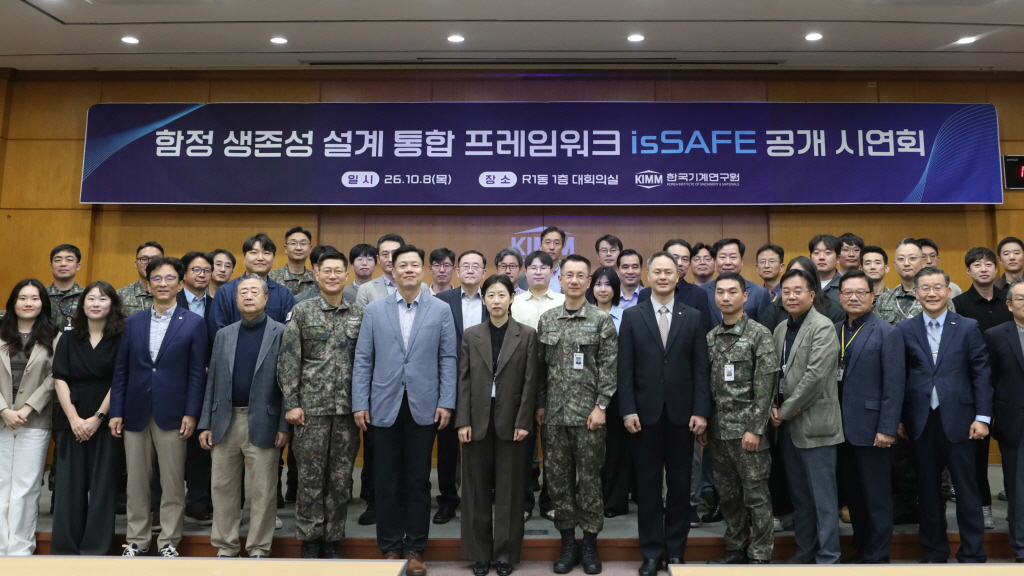
KAERI Develops Domestically-Produced SW 'isSAFE' for Integrated Warship Survivability Analysis
The Korea Institute of Machinery and Materials has developed domestically-produced software 'isSAFE' that comprehensively analyzes warship survivability. This design framework integrates the entire process—from warship modeling to hit scenario generation, vulnerability analysis, and results analysis—into a single platform, establishing an independent technology foundation in the defense technology sector that had previously relied on foreign software.
2026.10.08by 배종인 기자
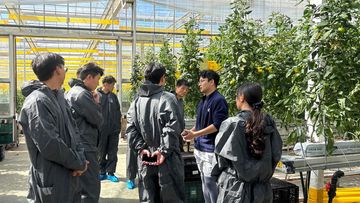
ioCrops Shares AI Smart Farm Operations Case Study
About 20 cultivators from the Agricultural Cooperative's Smart Agriculture Support Centers visited ioCrops' smart farm in Jincheon, North Chungcheong Province. They directly confirmed how data collected through substrate weight sensors, drainage weight sensors, and soil moisture sensors is applied to tomato cultivation, as well as the greenhouse pest control process using the AI-based autonomous spraying robot 'HERMAI'. By sharing on-site operational case studies combining data and automation technology, the adoption of smart farms in agricultural fields is being promoted.
2026.10.07by 배종인 기자











