


Bifacial solar cells are coming out
 Published2023.04.10 15:22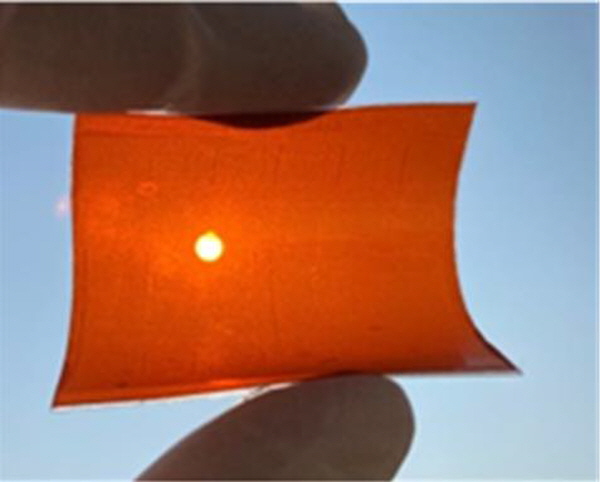
The Korea Institute of Materials Science (KIMS, President Lee Jeong-hwan), a government-funded research institute under the Ministry of Science and ICT, has developed a flexible substrate transparent thin-film solar cell with bifacial power generation capabilities by integrating a light scattering structure using laser electron processing, thereby significantly increasing the power generation efficiency of the solar cell.
The Korea Institute of Materials Science announced on the 10th that a research team led by Dr. Kwon Jeong-dae of the Nano Surface Materials Research Division, together with research teams led by Professor Song Poong-geun of Pusan National University and Professor Shin Myung-hoon of Korea Aerospace University, has succeeded in realizing a flexible substrate transparent thin-film solar cell with high double-sided power generation potential for the first time in the world by developing a flexible substrate fused with a light-scattering structure using a laser transfer process and minimizing light reflection on the back side through refractive index matching.
Since the light-absorbing layer of a transparent thin-film solar cell has an extremely thin thickness of 300 nanometers (nm) or less, a light-scattering structure is introduced to increase the amount of current generated. Until now, research has mainly focused on creating light-scattering structures using etching and photolithography processes of transparent oxide semiconductors applied to solar cells. On the other hand, these processes had limitations in that they were difficult to apply to flexible substrates due to the complexity of the manufacturing process or the high likelihood of defects.
The research team developed a laser transfer method and overcame the limitations of existing processes by depositing a laser absorption layer on a zinc oxide thin film with a light scattering structure, and then manufacturing a light scattering structure-fused flexible substrate with a thickness of about 20 micrometers (μm) having the same shape as the light scattering structure on top of it.
The 20-micrometer-thick flexible substrate formed at this time showed a light scattering rate of 51.9%, and the silicon thin-film solar cell formed on the opposite side showed an efficiency improvement of 9.7% compared to the flexible substrate solar cell without light scattering.
This process enables the formation of solar cell substrates ranging in size from 5×5 cm to 14×14 cm, and minimizes defects caused by the structure, making it suitable for existing solar cell processes.
This technology improves the power generation efficiency of solar cells by using a laser to transfer and fuse a structure that effectively generates light scattering without reducing the transmittance of the flexible substrate.
In particular, since the solar cell device is grown on the opposite side of the light-scattering structure, defects caused by the structure do not occur, and defects caused by the inherent properties of the material can be minimized. This is expected to serve as a benchmark for high efficiency in flexible substrate transparent thin-film solar cells for BIPV and for application in various thin-film solar cell absorbers. Furthermore, a high level of bifacial power generation capability has been secured by reducing reflected light through a window layer design that minimizes the loss of rear incident light.
Flexible substrate transparent thin-film solar cell technology enables attachment to all components of existing buildings for power generation, without the need for additional material design. It is expected to effectively replace the market for solar cells formed on glass or metal substrates, which offer relatively higher efficiency compared to conventional methods, at a low cost. In addition, it is expected to be applicable to a wider range of fields, such as agricultural solar power generation.
"Kwon Jeong-dae, a principal researcher at the Korea Institute of Materials Science and the lead researcher of this study, stated, 'If this technology is commercialized, we expect to be able to develop transparent thin-film solar cells on flexible substrates with light-scattering structures that are simple and free from processing difficulties, as well as realize BIPV systems for double-sided power generation with improved light absorption mechanisms.'"
The research results were achieved through the Korea Institute of Materials Science's major projects and the Korea Energy Technology Evaluation Institute's energy technology development projects with the support of the Ministry of Science and ICT.
In addition, the research results were published on March 27 in 'npj flexible electronics (IF: 12.019)', a top-tier journal in the field of electronics and a sister journal of Nature (first author: student Suwon Choi; co-corresponding authors: Professor Poong-Geun Song of Pusan National University and Professor Myung-Hoon Shin of Korea Aerospace University). Based on this research, the research team is currently actively conducting studies in fields that consider aesthetic aspects in addition to the efficient aspects of BIPV using flexible substrates.

Comments
Related news

Intel Unveils Next-Generation 'Core Ultra Series 3' and vPro Platform for Enterprise PCs
Intel has officially unveiled the "Intel Core Ultra Series 3" for next-generation enterprise PCs and the latest vPro platform, addressing a wide range of demands from enterprise notebooks to high-performance workstations.
2026.03.26by 배종인 기자

ROHM Launches ESD Protection Diode Compatible with High-Speed Interfaces of 10Gbps or Higher
Semiconductor specialist ROHM has developed the 'RESDxVx series' of ESD (electrostatic discharge) protection diodes capable of responding to next-generation high-speed data communication environments exceeding 10Gbps, simultaneously enhancing both signal quality maintenance required in high-speed interfaces and IC protection performance.
2026.03.26by 배종인 기자
ST Launches 75V Drive IC Targeting 48V Industrial Motor Driving
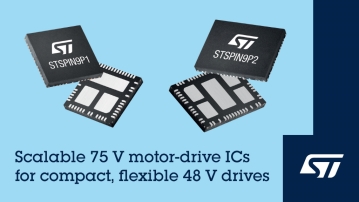
ST Microelectronics has unveiled the 'STSPIN9P' series of 75V motor drive ICs tailored for 48V-class industrial drive system design. The new product family is characterized by half-bridge and full-bridge configurations that enable design scalability according to motor type and output conditions. Power supply circuits, protection functions, and current sensing circuits are integrated on-chip to simplify system configuration, and the devices are designed to support applications up to 500W maximum. The company plans to provide reference designs and demo boards to support development and evaluation in industrial automation, robotics, pumps, fans, lighting, and textile machinery.
2026.03.26by 배종인 기자

Nordic supports security updates for the entire lifecycle of IoT devices at a single fixed cost
Nordic Semiconductor, a global leader in low-power wireless connectivity solutions, has unveiled a single fixed-cost licensing model that delivers FOTA (Firmware Over-the-Air) and device management capabilities throughout the device lifecycle via nRF Cloud, and introduced a new firmware update solution to prepare for the enforcement of the European Union's Cyber Resilience Act (CRA).
2026.03.26by 배종인 기자
Schneider Aims for Building Energy Savings and Operational Stability with Next-Generation HVAC Drives
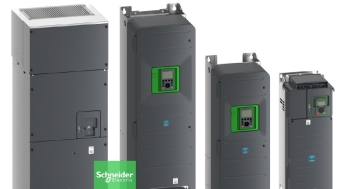
Schneider Electric has unveiled its next-generation HVAC drive product line 'Altivar HVAC'. The new product line's key features center on enhanced energy savings, system operational stability, and building management system integration. The products are divided into 'ATH200' for OEM and small equipment applications, and 'ATH600' for environments requiring continuous operation and advanced control. The company plans to expand the application scope from commercial buildings to facilities where HVAC system stability is critical, such as hospitals, airports, and data centers. The announcement includes over 30% energy savings, operation from -10°C to +60°C, Modbus and BACnet support, and compatibility with low global warming potential refrigerants.
2026.03.26by 명세환 기자











