



Solidigm Supports Breaking World Record for Pi Calculation
 Published2023.04.20 11:50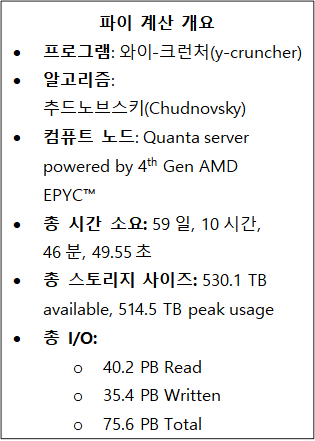
낸드플래시 메모리 솔루션 기업 솔리다임(Solidigm)이 자사의 D5-P5316 QLC SSD 어레이가 최근 실시한 테스트에서 파이(Pi) 100조 자릿수 계산 속도 기록을 경신했다고 20일 밝혔다.
글로벌 스토리지 전문 리뷰 매체 스토리지리뷰(StorageReview)는 솔리다임의 드라이브를 사용해 이전 기록 보유자인 구글(Google) 대비 약 3배 빠른 속도로 파이 자릿수를 계산했다고 전했다.
그는 “파이는 정의가 명확하고 잘 알려진 수학적 숫자이기 때문에, 다양한 시스템 간 계산 성능 결과와 출력을 쉽게 비교할 수 있어 시스템 성능 비교에 이상적인 벤치마크가 된다“라며, “솔리다임의 고성능 SSD는 기록적인 시간과 수준으로 이번 파이 계산 기록 경신에 도움을 주었고, 데이터 스토리지 솔루션의 글로벌 선두주자로서 업계에서 더욱 위상을 공고히 하는 계기가 되었다”라고 말했다.

SSD의 밀도와 성능, 비용 구성 덕분에 P5316은 이전에는 클라우드나 온프레미스·온사이트에서 대규모 투자를 통해서만 가능했던 대규모 데이터 세트 분석을 실행할 수 있게 됐다. 빌러와 스토리지리뷰 팀에 따르면, QLC 스토리지에 작성된 23PB의 데이터를 기록했으며, 새로운 체크포인트에 대한 읽기 활동도 해당 수치를 충족하거나 초과했다. 솔리다임 D5-P5316 QLC SSD는 계속해서 과부하 없이도 충분한 읽기 액세스를 제공했다

Comments
Related news

SK Hynix and Solidigm Unveil First 'Joint Venture Product'
SK Hynix is launching the enterprise SSD (Solid State Drive) 'P5530,' developed in collaboration with Solidigm, to the market.
2022.04.05by 배종인 기자
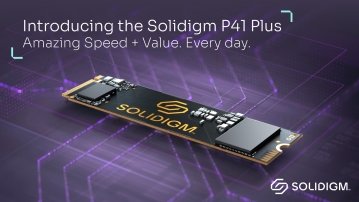
Solidime Launches PCIe 4.0 SSD 'Solidime P41 Plus'
Solidigm, a subsidiary of SK Hynix and a supplier of NAND flash memory solutions, has launched its first SSD brand product following its establishment.
2022.08.04by 명세환 기자
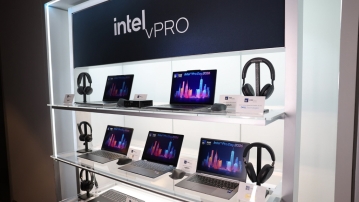
Intel Unveils Next-Generation 'Core Ultra Series 3' and vPro Platform for Enterprise PCs
Intel has officially unveiled the "Intel Core Ultra Series 3" for next-generation enterprise PCs and the latest vPro platform, addressing a wide range of demands from enterprise notebooks to high-performance workstations.
2026.03.26by 배종인 기자
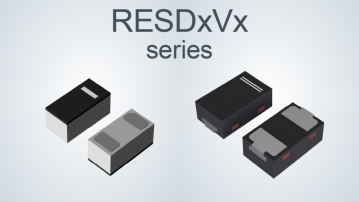
ROHM Launches ESD Protection Diode Compatible with High-Speed Interfaces of 10Gbps or Higher
Semiconductor specialist ROHM has developed the 'RESDxVx series' of ESD (electrostatic discharge) protection diodes capable of responding to next-generation high-speed data communication environments exceeding 10Gbps, simultaneously enhancing both signal quality maintenance required in high-speed interfaces and IC protection performance.
2026.03.26by 배종인 기자
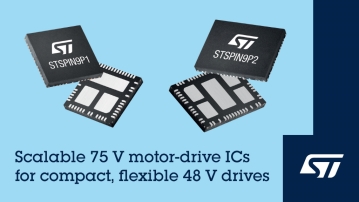
ST Launches 75V Drive IC Targeting 48V Industrial Motor Driving
ST Microelectronics has unveiled the 'STSPIN9P' series of 75V motor drive ICs tailored for 48V-class industrial drive system design. The new product family is characterized by half-bridge and full-bridge configurations that enable design scalability according to motor type and output conditions. Power supply circuits, protection functions, and current sensing circuits are integrated on-chip to simplify system configuration, and the devices are designed to support applications up to 500W maximum. The company plans to provide reference designs and demo boards to support development and evaluation in industrial automation, robotics, pumps, fans, lighting, and textile machinery.
2026.03.26by 배종인 기자











