


ST Launches Smart Acceleration Sensor with AI Functions
 Published2023.04.27 16:52
STMicroelectronics (NYSE: STM), a global semiconductor leader serving customers across the spectrum of electronics applications, is improving the performance and efficiency of always-on applications with the launch of a smart accelerometer with built-in artificial intelligence (AI) capabilities.
ST announced on the 27th that it has launched three new acceleration sensors with built-in advanced processing engines that expand the autonomous capabilities of the sensors.
This allows the system to respond more quickly to external events and consume less power.
The LIS2DUX12 and LIS2DUXS12 leverage ST’s third-generation MEMS technology, adding a Machine Learning Core (MLC) and programmable features such as an advanced Finite State Machine (FSM) and a pedometer.
The third entry-level accelerometer, the LIS2DU12, is suitable for less demanding applications. All three products feature the latest industry-standard I3C interface. These three devices integrate general-purpose digital functions for event detection along with anti-aliasing filters that provide high accuracy even at low sampling frequencies, enabling accurate gesture detection with very low power consumption.
The machine learning core integrated into LIS2DUX12 and LIS2DUXS12 implements artificial intelligence (AI) algorithms to perform reliable activity detection, while the FSM enhances motion detection. Together, these two features provide an automatic processing function that offloads host interaction and processing from the sensor, significantly reducing power consumption and further improving system responsiveness. In addition, the accelerometer implements the Adaptive Self-Configuration (ASC) function to independently adjust its own settings (such as measurement range and frequency) and calculate in milliamp units, further optimizing its performance.
The LIS2DUXS12 also features ST’s unique Qvar® sensing channels, which detect changes in the ambient electrostatic environment to provide presence and proximity detection. This capability can be used to enhance applications such as user interface control, liquid detection, and biometric sensing such as heart rate monitoring. Combining acceleration signals with Qvar channels eliminates potential false detection of two-tap and multi-tap events in user interface applications.
This smart accelerometer provides contextual sensing capabilities to the latest wearables, True Wireless Stereo (TWS) speakers and earbuds, smartphones, hearing aids, game controllers, smartwatches, asset trackers, robotic appliances, and IoT devices. All three products are based on ST’s latest ultra-low-power architecture, which can be combined with anti-aliasing filters to further reduce power consumption, improve application performance, and remove unwanted noise from signals. The machine-learning core and FSM algorithms are available directly from ST’s MEMS GitHub Model Zoo, ready for use in a variety of applications, including complex gestures and position tracking.
With these enhanced capabilities, the LIS2DUX12 and LIS2DUXS12 enable the next generation of “onlife” applications that make everyday life intuitive, seamless, always-on, always-aware, and continuously in sync with the user’s needs. Following the introduction of the Inertial Measurement Unit (IMU) in 2019, the new accelerometers expand ST’s portfolio of MEMS sensors with AI capabilities.
The LIS2DUX12 and LIS2DUXS12 are in production now, available in a 2mm x 2mm x 0.74mm 12-lead LGA package. Pricing starts at $1.38 for the LIS2DUX12 and $1.43 for the LIS2DUXS12 in quantities of 1,000. The LIS2DU12 in the same package type is priced at $1.20.

Comments
Related news
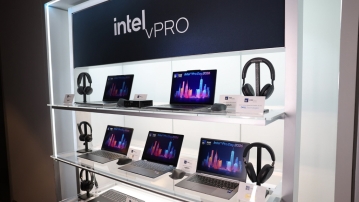
Intel Unveils Next-Generation 'Core Ultra Series 3' and vPro Platform for Enterprise PCs
Intel has officially unveiled the "Intel Core Ultra Series 3" for next-generation enterprise PCs and the latest vPro platform, addressing a wide range of demands from enterprise notebooks to high-performance workstations.
2026.03.26by 배종인 기자
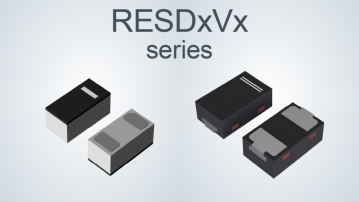
ROHM Launches ESD Protection Diode Compatible with High-Speed Interfaces of 10Gbps or Higher
Semiconductor specialist ROHM has developed the 'RESDxVx series' of ESD (electrostatic discharge) protection diodes capable of responding to next-generation high-speed data communication environments exceeding 10Gbps, simultaneously enhancing both signal quality maintenance required in high-speed interfaces and IC protection performance.
2026.03.26by 배종인 기자
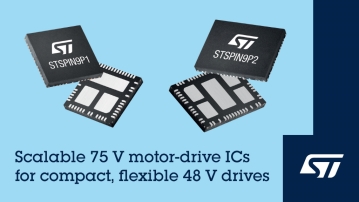
ST Launches 75V Drive IC Targeting 48V Industrial Motor Driving
ST Microelectronics has unveiled the 'STSPIN9P' series of 75V motor drive ICs tailored for 48V-class industrial drive system design. The new product family is characterized by half-bridge and full-bridge configurations that enable design scalability according to motor type and output conditions. Power supply circuits, protection functions, and current sensing circuits are integrated on-chip to simplify system configuration, and the devices are designed to support applications up to 500W maximum. The company plans to provide reference designs and demo boards to support development and evaluation in industrial automation, robotics, pumps, fans, lighting, and textile machinery.
2026.03.26by 배종인 기자

Nordic supports security updates for the entire lifecycle of IoT devices at a single fixed cost
Nordic Semiconductor, a global leader in low-power wireless connectivity solutions, has unveiled a single fixed-cost licensing model that delivers FOTA (Firmware Over-the-Air) and device management capabilities throughout the device lifecycle via nRF Cloud, and introduced a new firmware update solution to prepare for the enforcement of the European Union's Cyber Resilience Act (CRA).
2026.03.26by 배종인 기자

Practical Training in Low-Noise, Low-Power Circuit Design All in One Place… Training Fee Support
The "2026 Advanced Engineer Practical Masterclass" to strengthen competencies in high-sensitivity analog circuit and sensor-based system design will be held on April 16 at the e4ds Conference Center in Gasan-dong, Seoul. This program will be conducted as an offline paid hands-on training session, not online, and is targeted at engineers seeking on-site intensive learning. Texas Instruments will provide educational support for this training, allowing participation at 150,000 won, a 100,000 won discount from the original price of 250,000 won.
2026.03.26by 배종인 기자











