



Robotaxi Industry Maintains Momentum…Technology and Funding Remain Key Challenges
 Published2023.04.28 14:46
Technology Development Delays, Funding Shortage, and Social Acceptance Issues Remain
Jeon Hyun-ju, a senior researcher at the Korea Automotive Research Institute (KARI) Industrial Analysis Division, published an industry analysis report on the 28th with the theme of "Current Status and Major Challenges of Robotaxi."
The report states that robotaxi, which has the potential to lead social change as a transportation service, is experiencing changes in the industry landscape due to delays in autonomous driving technology development and funding issues, but the fundamental momentum of the industry will be maintained.
According to technological symbolism and winner-take-all characteristics, robotaxi companies' research and development and commercialization attempts are expected to continue.
Based on network effects where additional costs decrease and value increases as users grow, competition among major companies to capture market share and become a handful of suppliers that maximize market share is expected to continue.
Complete vehicle manufacturers can expand into autonomous driving-based service businesses, and big tech companies and ride-sharing firms have advantages in business diversification, such as monetizing autonomous driving systems themselves, which has garnered interest from many companies.
The United States and China have implemented robotaxi operating permit systems where safety personnel are not required to be onboard by establishing regulations. Notably, Waymo and Cruise have obtained operating permits in California, and Baidu has obtained permits in Wuhan, Chongqing, and Beijing.
Major companies are attempting to respond to unverified operating revenues through platformization of robotaxi vehicles and supply chain efficiency improvements.
According to the report, Baidu has reduced the cost of Apollo from 960,000 yuan (estimated 4th generation price) to 250,000 yuan (estimated 6th generation price), and Cruise produces Origin as an electric vehicle-exclusive platform.
Robotaxi, which seemed destined for rapid growth, is experiencing rapid industry landscape changes due to delays in autonomous driving technology development and deteriorating financial conditions, which are essential preconditions.
While significant investments have been made in autonomous driving technology development and robotaxi demonstration projects, progress has been slower than initially expected due to technology complexity, safety concerns, and high costs associated with individual system configurations.
In December 2020, Uber sold its autonomous driving division to Aurora, and Ford and Volkswagen liquidated autonomous driving startup Argo AI in October last year, showing signs of industry contraction.
BCG Consulting forecasts that approximately 59 trillion won in research and development costs will be necessary to realize fully autonomous driving by 2035, indicating that astronomical budgets will need to be invested going forward.
Ride-sharing companies are focusing on Level 2 and 3 technologies or engaging in M&A and joint venture establishments with various purposes with complete vehicle manufacturers and big tech companies to reduce development risks due to delays in Level 4 and above technology commercialization.
Amazon and Woven Planet (Toyota subsidiary) acquired Zoox (2020.6) and Lyft (2021.5), respectively, and Hyundai Motor established a joint venture Motional with software solutions company Aptiv (2020.3) and acquired autonomous driving startup 42dot (2022.8).
The report also states that commercialization of robotaxi services requires advancement of autonomous driving technology, cost realization, and clear presentation of consumer and social value.
Errors can occur in the recognition, judgment, and control processes of autonomous driving systems in response to various road conditions, and it is difficult to determine responsibility in case of accidents involving the system, manufacturer, and communication.
In reality, autonomous driving is showing instability, with two injuries resulting from a Cruise robotaxi accident in San Francisco in June last year.
Growing consumer distrust in autonomous driving remains an important issue that needs to be addressed.
According to a survey by the American Automobile Association, consumer distrust of autonomous vehicles has increased from 55% in 2022 to 68% in 2023 due to consumers confusing the meaning of ADAS and autonomous driving.
Senior Researcher Jeon stated at the end of the report that it is necessary to provide opportunities for education and experience to improve consumer understanding and secure social support for robotaxi development.
Comments
Related news
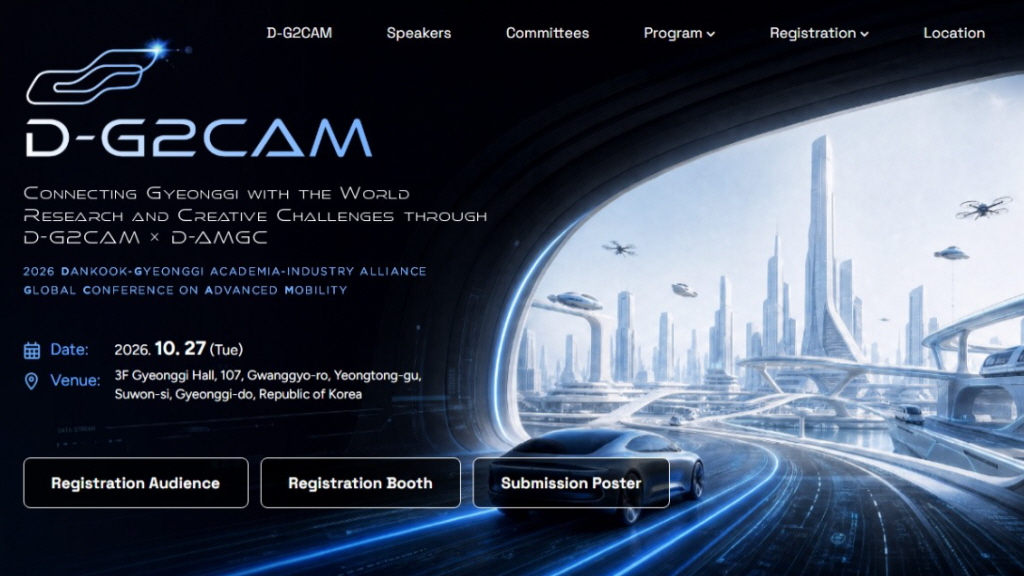
GAIA-Festa 2026, Autonomous Driving, AI, and Aerospace Experts Gather…Discussing Global Cooperation in the 'Silicon Intelligence Era'
GAIA-Festa 2026, which will be held in Suwon on October 27, is an industry-academia-research exchange event that explores the present and future of future mobility and AI technology through the global conference D-G2CAM 2026 and the international contest D-AMGC 2026. Domestic and international experts will share the latest research in autonomous driving, 5G/6G mobility, space technology, and data protection fields, while university students will showcase robots and physical AI prototypes that they have independently developed. Additionally, through poster presentations, corporate exhibitions, international cooperation meetings, and signing ceremonies, a platform will be established to connect the research capabilities and industrial needs of the Gyeonggi region with a global cooperation network.
2026.10.13by 배종인 기자

[e4ds Tech Day 2026 ⑨] Sim Sang-gyu, Autocrypt CTO: "In the Physical AI Era, Automotive Security Must Extend Beyond the Vehicle"
At e4ds Tech Day 2026, Sim Sang-gyu, CTO of Autocrypt, explained automotive cybersecurity strategies in the era of Physical AI and SDV (Software-Defined Vehicle). Automobiles are evolving as part of an ecosystem connected to AI, cloud, chargers, IoT, and robots, and he emphasized that the scope of security must expand beyond the vehicle interior to the entire connected environment. In particular, AI model tampering, adversarial attacks, OTA updates, and EV charger hacking were identified as major threats. He explained that response measures require zero trust, AI model integrity protection, intrusion detection, Security by Design and Default, and full lifecycle security management, and that proactive security system establishment beyond regulatory compliance is critical for securing future mobility competitiveness.
2026.10.12by 배종인 기자

Practical HIL Construction Strategy for Automotive and Off-Highway Controller Validation
As vehicle E/E architecture transitions to zonal structures and shifts to software-defined vehicles (SDV), the number of controllers (ECUs) requiring validation and software complexity are surging dramatically. Meanwhile, real vehicle testing cannot provide repeated verification under identical conditions and entails lead time and safety concerns. This white paper explains the principles of HIL (Hardware-in-the-Loop) validation and the structure of the NI platform composed of PXI, SLSC, and VeriStand, and through two actual implementation cases—Camera Record & Replay HIL for In-Cabin Monitoring Controller (ICMU) and Forklift Controller (VCU) HILS—describes how controller-level regression testing becomes possible. Additionally, it explicitly states application boundaries and limitations, such as lack of A2B support.
2026.10.12by 편집부
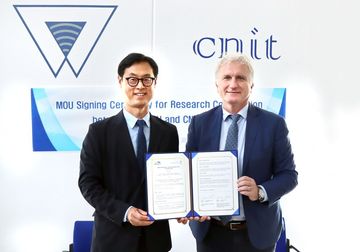
Korea Automotive Research Institute Signs MOU with Italy National Institute for Wireless Communications
The Korea Automotive Research Institute will sign an MOU with Italy's National Institute for Wireless Communications and launch joint research on next-generation mobility technologies based on 6G, V2X, and connected vehicles. The two organizations will conduct research to apply advanced wireless communication technologies to vehicles and discover international joint projects to advance next-generation connected vehicle technology development.
2026.10.12by 배종인 기자
Color Accuracy Issues in Vehicle Interior Ambient Lighting and Intelligent LED Drivers
Vehicle interior ambient lighting is spreading across all price segments, and the level of color accuracy required of lighting designers is rising accordingly. This white paper quantitatively addresses why temperature drift and individual variations of RGB LEDs cannot be corrected by standard constant-current drivers, and explains an intelligent LED driver approach that integrates an MCU, calibration data, and a LIN network interface into the driver. It covers implementation details of the LITIX Interior TLD4020-3ET currently in production, portfolio roadmap, and evaluation/development environments, and clarifies application boundaries including lack of 48V support, lack of RGBi/ISELED support, and absence of direct optical degradation diagnostics.
2026.10.08by 명세환 기자











