



The government will prepare a "Digital Bill of Rights" in September, kicking off a public debate on AI.
 Published2023.05.03 08:53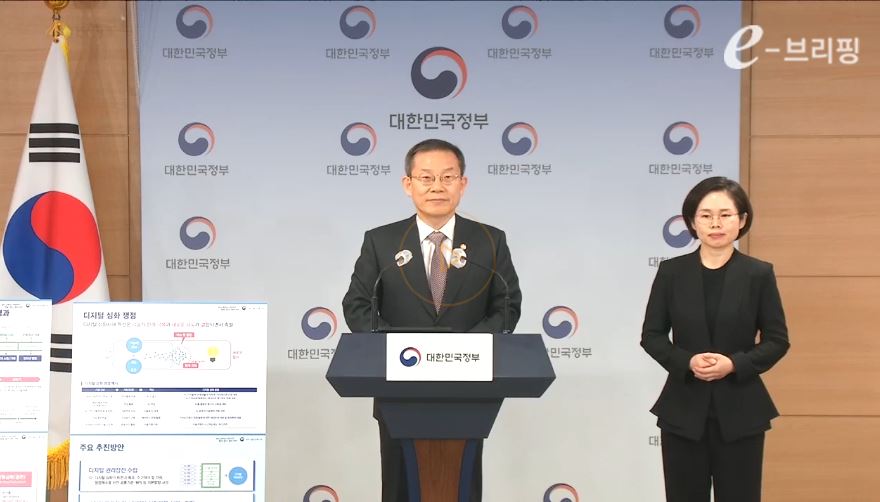
Establishing digital order… Full-scale social discussion and public debate on AI
Inter-ministerial regular assessment of the state of digital transformation response
310 training datasets to be released to AI Hub by the end of July.
To respond to the digital transformation comparable to the information revolution of the early 1990s and to increase social acceptance, the government will establish a "Digital Bill of Rights" in September of this year.
The Ministry of Science and ICT announced on Tuesday, May 2nd, that it would report on its "Plan to Establish a New Digital Order" at a Cabinet meeting chaired by President Yoon Seok-yeol and launch a full-scale government-wide response. This is part of follow-up measures to the President's New York initiative last year, his Davos Forum speech in January, and his Harvard University speech during his state visit to the United States this past April.
As the digital transformation unfolds across all industries, new digitally-driven issues are emerging across society. In particular, the incorporation of artificial intelligence (AI) into our daily lives presents countless pressing issues for stakeholders to address, yet a relevant regulatory framework remains in place.
For example, there are issues such as privacy and copyright infringement caused by generative AI such as ChatGPT. These include issues such as the reliability of image and voice recognition, and responsibility for accidents that occur in autonomous driving level 4 vehicles without driver intervention.
The Digital Bill of Rights stipulates the following: △the vision and goals of digital advancement; △universal values to be pursued; △the rights and responsibilities of each stakeholder (citizens, businesses, government, etc.); and △common standards and principles for resolving digital advancement issues. These will be reflected in policies implemented by each ministry to address digital advancement issues within their respective fields.
A public-private consultative body will be formed to actively promote social discussion and public opinion among academia, industry, and consumer groups to resolve digital deepening issues.
We aim to raise public awareness of the digital order and encourage civic participation. A "digital public forum" will be established in August, where anyone can freely discuss key digital issues.
To enhance policy effectiveness, we regularly assess the 'state of digital deepening response.' It is used to analyze the current state of government response, explore and derive policy directions, and discuss related global digital norms.
We also plan to establish a forum led by our country within this year to provide a voice in discussions on digital norms at international organizations such as the G20, the UN, and the OECD.
Minister of Science and ICT Lee Jong-ho said, “It is very meaningful that the President of our country has taken the lead in suggesting a future vision and direction for the digital norms discussion that is actively underway around the world,” and added, “Now that we have prepared a government-wide implementation plan, we will work closely with relevant ministries and establish a new order in the digital era as a model nation for digitalization through sufficient social discussion.”
■ AI Hub Learning Dataset Released
On April 30, the Ministry of Science and ICT and the Korea Institute for Advancement of Technology announced that they would sequentially open 310 types of AI learning datasets through the AI Hub (aihub.or.kr) starting today and continuing until the end of July, with approximately 80 datasets available each month.
This year, in particular, data that has undergone quality verification and other preliminary steps will be released first to ensure users can utilize it quickly. Consequently, the initial release date will be three months earlier than last year.
Through this, anyone interested in artificial intelligence development, including businesses, researchers, developers, and even citizens, can utilize learning data through the 'AI Hub.'
From 2020 to the present, the government has released approximately 1.1 billion data items in 381 categories across six major fields, including Korean, images/videos, and healthcare. In July of last year, the number of annual visitors to the AI Hub exceeded 1 million for the first time, with 190 types of data being released.
This year, the largest volume of data ever released, 310 different types, has been expanded to cover 14 sectors, including manufacturing, robotics, education, finance, and sports. This represents a significant expansion in the scale of the project. With the completion of this release of approximately 1.5 billion data items across 310 different types, AI Hub users will have access to a total of 691 different types and approximately 2.6 billion data items.
Eom Yeol, Director of Artificial Intelligence Policy, said, “To ensure that our companies and researchers do not face difficulties in securing new data, we will continue to secure various types of data, including large-scale unlabeled data required for ultra-large-scale AI learning and multi-task labeled data that can train multiple types at once.”
Comments
Related news
.jpg)
Super-large AI, high-quality data acquisition... domain-specific service is essential
The KIEI Industrial Education Research Institute held a 'Seminar on Business Models by Sector Utilizing Generative AI Technology' on the 14th. The seminar covered △introduction to generative AI technology paradigms and utilization research △legal and regulatory frameworks related to generative AI △AI technology development and business strategies by sector.
2023.04.18by 김예지 기자

2023 World IT Show, Next-Generation K-Digital Technology at a Glance
The 2023 World IT Show, hosted by the Ministry of Science and ICT and others, will be held for four days from the 19th (Wednesday) to the 21st (Friday) at Seoul COEX. This year's World IT Show, marking its 15th edition, centers on the theme "K-Digital Changing the World's Daily Life." The exhibition brings together over 1,300 booths from 465 companies both domestic and international, including major ICT enterprises such as Samsung Electronics, LG Electronics, SKT, and KT. Starting with the Republic of Korea Impact Tech Awards ceremony, lectures on topics including △aerospace △quantum △ChatGPT △AI/DX △platform △UAM △robotics △5G have followed.
2023.04.20by 김예지 기자
World IT Show - Promising Commercialization Technology, 'Artificial Intelligence' Boom
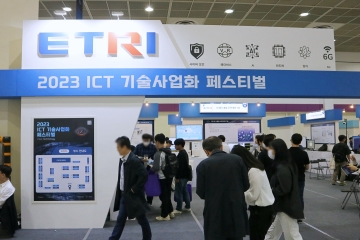
World IT Show has opened. Amid a showcase of the latest IT products and technologies, numerous technologies and products featured at the ICT Technology Commercialization Festival were notably based on or equipped with artificial intelligence (AI)-related technologies. In particular, many companies showed strong interest in applications that apply vision AI technology.
2023.04.21by 명세환 기자
KT Commercializes AI-Based "Eum 5G Intelligent Control Solution"
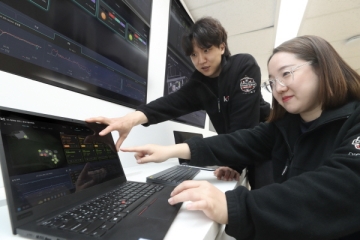
KT is developing a solution to comprehensively monitor the entire network infrastructure from the eumeum 5G terminal to the core network using artificial intelligence (AI) technology, and is moving forward to support efficient infrastructure management.
2023.04.26by 배종인 기자
MS, “Integration of mega-AI cloud services is key”
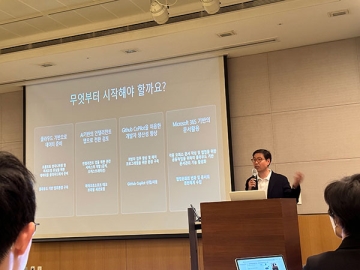
Experts have presented arguments that by securing high-performance computing infrastructure capable of improving scalability through the convergence of ultra-large-scale AI and cloud services, companies can enhance their competitiveness through the development of customized AI services.
2023.04.28by 김예지 기자











