



Ministry of Land, Infrastructure and Transport Launches Development of Vehicle Environmental Friendliness Assessment Technology
 Published2023.05.03 12:23
Developing Vehicle Environmental Friendliness Assessment Methods Including LCA…250 Billion Won by 2026
The Ministry announced on the 3rd that it will commence the "Korean-style Green NCAP Assessment Technology Development" project to evaluate vehicle environmental friendliness in order to implement carbon neutrality in the transportation sector and accelerate the transition to eco-friendly vehicles.
The total project cost begins at 2.5 billion won in 2023 and will total 25 billion won through December 2026, with the Korea Transportation Safety Authority serving as the lead research institution.
NCAP (New Car Assessment Program) is an evaluation program that conducts tests at higher levels than legal standards such as vehicle collision standards, discloses results, and encourages improvements in vehicle safety performance. This program is implemented by major countries including the United States and Europe.
'Green NCAP' is a system that evaluates vehicle environmental friendliness including greenhouse gas emissions and indoor air quality of automobiles and discloses the results.
This research and development is expected to serve as a foundation for expansion into a "comprehensive vehicle assessment system" that evaluates both environmental friendliness (Green) and safety (Safety) of vehicles alongside the currently implemented "Vehicle Safety Assessment (Safety NCAP)" which evaluates vehicle collision performance and safety.
.jpg)
The "Korean-style Green NCAP Assessment Technology Development" consists of △vehicle lifecycle greenhouse gas assessment (A-LCA) △vehicle performance evaluation including fuel consumption rate and driving range after single charge (electric vehicles) △development of vehicle indoor air quality assessment methods and rating system.
A-LCA (Automotive-Life Cycle Assessment) is an assessment of lifecycle greenhouse gas emissions from the fuel cycle (fuel production-transportation-charging-utilization) and vehicle cycle (raw material acquisition-assembly-use-disposal) throughout the vehicle lifecycle.
In particular, the vehicle lifecycle greenhouse gas assessment method is planned to be actively utilized as a research foundation for reflection in international standards being discussed at WP.29, an international organization under the UN.
WP.29 is an international conference body under the UN Economic Commission for Europe (UNECE) for the establishment and revision of international automotive standards, and our country has served as chair of the expert group discussing automotive lifecycle greenhouse gas assessment standards since October of last year.
Additionally, the ministry plans to develop equipment for assessing eco-friendly vehicle performance, volatile harmful substances generated from vehicle interior trim materials, and equipment for evaluating the impact of externally-introduced pollutants such as fine particulate matter.
The major content of the "Korean-style Green NCAP Assessment Technology Development" R&D project includes development of greenhouse gas emission assessment and rating methods in the A-LCA stage that cover the entire vehicle lifecycle from production through operation and disposal, including energy consumed during operation.
The research achievements will be actively utilized for reflecting A-LCA international standards following discussions by a consultative body composed of domestic stakeholders (automobile manufacturers, etc.) and experts.
In terms of performance evaluation, development of assessment methods and rating systems for vehicle performance including fuel consumption efficiency for internal combustion engine vehicles and energy consumption efficiency for eco-friendly vehicles, and driving range after single charge, as well as development of eco-friendly vehicle assessment equipment.
In the indoor air quality assessment sector, the ministry plans to develop evaluation and rating methods and assessment equipment for volatile harmful substances generated from vehicle interior trim materials and the impact of externally-introduced pollutants (fine particulate matter, nitrogen oxides, etc.).
Kim Eun-jeong, Director of the Automotive Policy Division at the Ministry of Land, Infrastructure and Transport stated, "Just as the Vehicle Safety Assessment (Safety NCAP) has contributed to creating a safe transportation environment by encouraging the development and production of safe vehicles, Green NCAP will also encourage the development and production of eco-friendly vehicles, provide consumers with information about eco-friendly vehicles, contribute to expanding the supply of eco-friendly vehicles, and lead carbon neutrality in the transportation sector." She further noted, "Due to strengthened greenhouse gas regulations in international society, managing greenhouse gas emissions from a vehicle lifecycle perspective is not optional but essential. To alleviate the burden on Korea's automotive industry, our country plans to take the initiative and actively respond to international standard-setting."
Comments
Related news
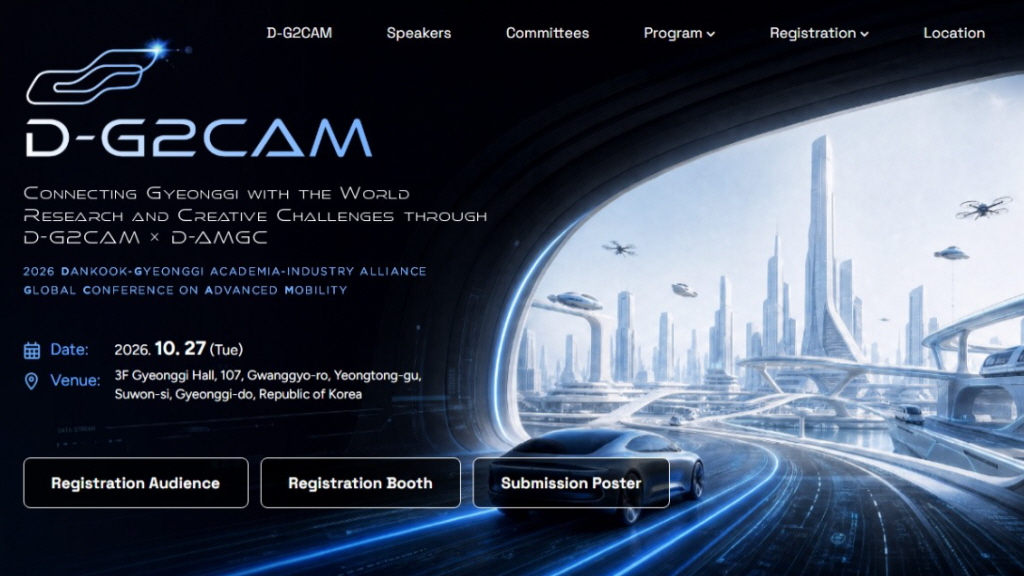
GAIA-Festa 2026, Autonomous Driving, AI, and Aerospace Experts Gather…Discussing Global Cooperation in the 'Silicon Intelligence Era'
GAIA-Festa 2026, which will be held in Suwon on October 27, is an industry-academia-research exchange event that explores the present and future of future mobility and AI technology through the global conference D-G2CAM 2026 and the international contest D-AMGC 2026. Domestic and international experts will share the latest research in autonomous driving, 5G/6G mobility, space technology, and data protection fields, while university students will showcase robots and physical AI prototypes that they have independently developed. Additionally, through poster presentations, corporate exhibitions, international cooperation meetings, and signing ceremonies, a platform will be established to connect the research capabilities and industrial needs of the Gyeonggi region with a global cooperation network.
2026.10.13by 배종인 기자

[e4ds Tech Day 2026 ⑨] Sim Sang-gyu, Autocrypt CTO: "In the Physical AI Era, Automotive Security Must Extend Beyond the Vehicle"
At e4ds Tech Day 2026, Sim Sang-gyu, CTO of Autocrypt, explained automotive cybersecurity strategies in the era of Physical AI and SDV (Software-Defined Vehicle). Automobiles are evolving as part of an ecosystem connected to AI, cloud, chargers, IoT, and robots, and he emphasized that the scope of security must expand beyond the vehicle interior to the entire connected environment. In particular, AI model tampering, adversarial attacks, OTA updates, and EV charger hacking were identified as major threats. He explained that response measures require zero trust, AI model integrity protection, intrusion detection, Security by Design and Default, and full lifecycle security management, and that proactive security system establishment beyond regulatory compliance is critical for securing future mobility competitiveness.
2026.10.12by 배종인 기자

Practical HIL Construction Strategy for Automotive and Off-Highway Controller Validation
As vehicle E/E architecture transitions to zonal structures and shifts to software-defined vehicles (SDV), the number of controllers (ECUs) requiring validation and software complexity are surging dramatically. Meanwhile, real vehicle testing cannot provide repeated verification under identical conditions and entails lead time and safety concerns. This white paper explains the principles of HIL (Hardware-in-the-Loop) validation and the structure of the NI platform composed of PXI, SLSC, and VeriStand, and through two actual implementation cases—Camera Record & Replay HIL for In-Cabin Monitoring Controller (ICMU) and Forklift Controller (VCU) HILS—describes how controller-level regression testing becomes possible. Additionally, it explicitly states application boundaries and limitations, such as lack of A2B support.
2026.10.12by 편집부
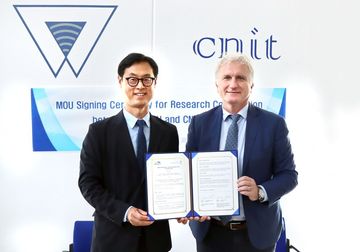
Korea Automotive Research Institute Signs MOU with Italy National Institute for Wireless Communications
The Korea Automotive Research Institute will sign an MOU with Italy's National Institute for Wireless Communications and launch joint research on next-generation mobility technologies based on 6G, V2X, and connected vehicles. The two organizations will conduct research to apply advanced wireless communication technologies to vehicles and discover international joint projects to advance next-generation connected vehicle technology development.
2026.10.12by 배종인 기자
Color Accuracy Issues in Vehicle Interior Ambient Lighting and Intelligent LED Drivers
Vehicle interior ambient lighting is spreading across all price segments, and the level of color accuracy required of lighting designers is rising accordingly. This white paper quantitatively addresses why temperature drift and individual variations of RGB LEDs cannot be corrected by standard constant-current drivers, and explains an intelligent LED driver approach that integrates an MCU, calibration data, and a LIN network interface into the driver. It covers implementation details of the LITIX Interior TLD4020-3ET currently in production, portfolio roadmap, and evaluation/development environments, and clarifies application boundaries including lack of 48V support, lack of RGBi/ISELED support, and absence of direct optical degradation diagnostics.
2026.10.08by 명세환 기자











