



KERI Opens Way for Mass Production of All-Solid State Batteries
 Published2023.05.15 11:55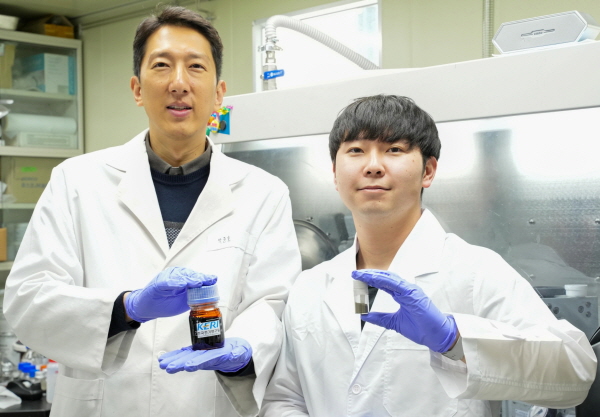
Dr. Park Jun-ho (left) and Researcher Heo Young-jun of KERI are showcasing a solid electrolyte raw material solution and a technology developed for low-cost mass production of solid electrolytes using a simple synthesis method.
While the Korea Electrotechnology Research Institute (KERI) has recently been showcasing numerous achievements related to all-solid-state batteries (sulfide-based) that pose no risk of fire or explosion, another technology capable of mass-producing solid electrolytes at a low cost has been developed and is attracting significant attention.
Dr. Park Jun-ho's team at the KERI Secondary Battery Research Group announced on the 15th that they have developed a 'one-pot synthesis method' capable of producing high-purity solid electrolytes without expensive lithium sulfide or additives.
There are two methods for manufacturing solid electrolytes: a 'dry synthesis method' using a high-energy ball milling process and a 'wet synthesis method' utilizing chemical reactions in a solution. The research team focused on the wet synthesis method, which is advantageous in terms of process scale-up and mass production, and succeeded in manufacturing a high-purity solid electrolyte through an optimal synthesis reaction in a solvent.
The biggest advantage is that it eliminates the need to use expensive lithium sulfide (Li2S). Lithium sulfide is so expensive that it accounts for 95% of the cost of starting materials used to manufacture solid electrolytes. Furthermore, lithium sulfide often remains as unreacted impurities during the wet synthesis process, frequently causing a degradation in cell performance. Although some synthesis methods that do not use lithium sulfide have been proposed, they require the additional use of expensive additives, and the results were unsatisfactory due to residual impurities.
On the other hand, KERI's simple synthesis method enables the production of high-quality solid electrolytes without the need for lithium sulfide, additives, or additional processes compared to the existing wet process. Costs can be reduced to as much as 1/25th of the material costs when using lithium sulfide, and the manufacturing process time can also be shortened, which can significantly contribute to the mass production of solid electrolytes.
Dr. Park Jun-ho stated, “Based on the solid electrolyte manufacturing know-how accumulated at the research institute over the years, we have found a method to easily and simply produce high-purity solid electrolytes through the optimal combination of chemical reactions of starting materials within organic solvents.” He added, “We expect this to resolve both price competitiveness and mass production issues, which are the biggest hurdles to the commercialization of all-solid-state batteries.”
KERI, having completed patent applications related to the source technology and the publication of research papers at home and abroad, anticipates that this achievement will attract significant interest from companies related to solid-state batteries and plans to identify potential customers and pursue technology transfer.
Meanwhile, KERI is a government-funded research institute under the National Science and Technology Research Council of the Ministry of Science and ICT. This research was conducted through KERI's basic project, 'Development of Core Manufacturing Process Technologies for the Commercialization of Non-Flammable Batteries.'

Comments
Related news
Schneider Aims for Building Energy Savings and Operational Stability with Next-Generation HVAC Drives
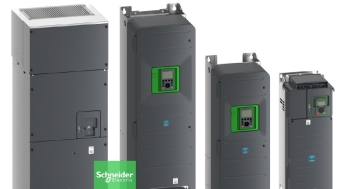
Schneider Electric has unveiled its next-generation HVAC drive product line 'Altivar HVAC'. The new product line's key features center on enhanced energy savings, system operational stability, and building management system integration. The products are divided into 'ATH200' for OEM and small equipment applications, and 'ATH600' for environments requiring continuous operation and advanced control. The company plans to expand the application scope from commercial buildings to facilities where HVAC system stability is critical, such as hospitals, airports, and data centers. The announcement includes over 30% energy savings, operation from -10°C to +60°C, Modbus and BACnet support, and compatibility with low global warming potential refrigerants.
2026.03.26by 명세환 기자
Ecolab Expands AI Data Center Cooling Business Through Acquisition of CoolIT
Ecolab has agreed to acquire CoolIT Systems, a liquid cooling company for AI data centers, for approximately $4.75 billion. The transaction is expected to close by Q3 2026, subject to regulatory approvals. CoolIT has been supplying direct-to-chip cooling-based coolant distribution units, cold plates, and manifolds, serving hyperscale data centers and colocation operators as customers. This acquisition is a measure to address the high-heat and high-density server environments created by AI proliferation. Ecolab plans to combine its water management and digital monitoring capabilities with CoolIT's hardware technology to expand its data center cooling business.
2026.03.26by 명세환 기자
AI Semiconductor Era, Key is 'Materials Technology'… KIEC Holds Seminar on High-Performance Semiconductor Materials
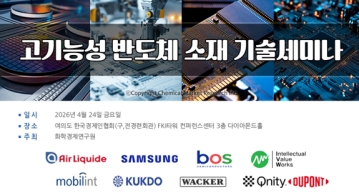
With rapid growth in the global semiconductor market driven by expanded AI data center investments and increased demand for high-bandwidth memory (HBM), a specialized seminar examining next-generation semiconductor materials and packaging technologies will be held. The Korea Chemical Industry Institute will host a "High-Performance Semiconductor Materials Technology Seminar" on April 24 at the FKI Tower of the Korea Economic Association in Yeouido, Seoul. Applications to participate in the seminar are being accepted on a first-come, first-served basis through the Korea Chemical Industry Institute's official website, with early bird discounts available until March 27 and advance registration open until April 22.
2026.03.25by 배종인 기자
.jpg)
KIMS Shares Techniques for Industrial Application of Casting Technology
The Korea Institute of Materials Science held a casting technology seminar at its headquarters in Changwon, South Gyeongsang Province, and introduced core process technologies utilized in industrial applications. The seminar covered fundamental principles of casting processes and defect control methods, lightweight-oriented die-casting technology, and trends in aluminum casting alloys for mobility applications. At the conclusion of the event, consultations on industrial technical challenges were also conducted, providing an opportunity to expand the interface between research institutions and industry.
2026.03.25by 명세환 기자
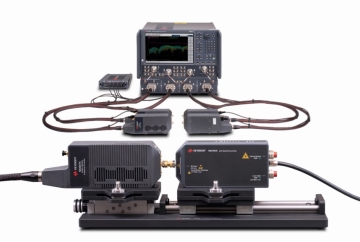
Keysight Launches 220GHz Optical Component Analyzer… Aims at Verifying Next-Generation Optical Transceivers
Keysight Technologies has introduced the N4378A optical wave component analyzer, which can measure the characteristics of opto-electronic conversion components up to 220GHz. This equipment is targeted at the rapidly advancing data center optical interconnection market driven by AI and cloud expansion, and supports single-sweep broadband measurements at 1310nm and 1550nm wavelengths. The device focuses on enhancing measurement accuracy and design verification efficiency in the development process of next-generation 1.6T and 3.2T class optical transceivers through optical modulator and photodetector verification, differential measurements for dual-drive optical modulators, and 0.5mm coaxial connector protection structures. Keysight demonstrated this equipment for the first time at OFC 2026.
2026.03.25by 명세환 기자











