


KETI Develops Low-Loss Materials Technology for 5G High-Speed Communications
 Published2023.05.31 14:52
.jpg)
▲Insulating film for FCCL manufactured for 5G high-speed communication
Technology exhibition scheduled for the Japan Electronics Industry Expo
The Korea Electronics Technology Institute (KETI, President Shin Hee-dong) is developing low-loss material technology for 5G high-speed communications, and it is expected that it will be used in the production of 5G high-frequency band flexible antennas or antennas with low-dielectric properties in the future.
KETI announced on the 31st that it has developed a material technology that minimizes signal loss during 5G communication and implemented a two-layer FCCL (flexible copper clad laminate) based on this technology.
FCCL (Flexible Copper Clad Laminate) is a flexible copper-clad circuit board and is a key material for FPCB (Flexible Printed Circuit Board) used in electronic products. The quality of 5G communication is affected by the loss rate of wireless communication signals depending on the material applied to the insulating film of FCCL.
In general, the 5G communication method in the high-frequency band (such as 28 GHz) has a short range between the base station and the mobile phone and has strong straightness, so there is a problem that the transmission signal is lost when an obstacle is encountered. Therefore, the need for an insulating film with low dielectric properties has been continuously raised.
KETI's Convergence Electronic Materials Research Center developed a thin insulating film with a thickness of less than 50㎛ (micrometers) through a polymerization process utilizing polymer materials with a low-loss structure, thereby achieving characteristics of a dielectric loss of less than 0.005 and a permittivity of less than 2.3 for 5G 28GHz band communications.
According to the center, in the case of existing FCCL, insulating films using polyimide materials are mainstream, but there have been continuous criticisms that the signal loss is too high for application to 5G communication, and while the liquid crystal polymer (LCP)-based insulating films led by Japan have low signal loss, their high permittivity and high production cost were recognized as problems.
According to Dr. Yoo Myung-jae (Senior Researcher) of KETI, who led the technology development, the research team modified polyphenylene oxide polymer material with excellent low-k properties and performed various polymerization processes, and as a result, secured material technology with low-k and low-loss properties that can be applied to insulating films in FCCLs.
This newly developed material is expected to be used in the production of 5G high-frequency band flexible antennas or antennas with low dielectric properties in film form, and the research team plans to contribute to the stabilization of the domestic FCCL supply chain by promoting technology transfer to related companies in the future.
KETI completed domestic and international patent applications for this technology last December, and will exhibit the technology at the JPCA (Japan Electronics and Circuits Industry Exhibition) held in Tokyo, Japan for three days starting on the 31st.
Meanwhile, The technology was developed with support from the National Research Foundation of Korea's Nano and Materials Technology Development Project funded by the Ministry of Science and ICT.
“KETI is conducting a wide range of research encompassing core electronic materials for next-generation communications and FCCL manufacturing technology,” said Chan-Se Yoo, Director of the KETI Convergence Electronic Materials Research Center. “We will continue to secure core electrical and electronic information technologies in the future to contribute to the self-reliance of not only 5G communications but also the domestic electronics industry.”

Comments
Related news
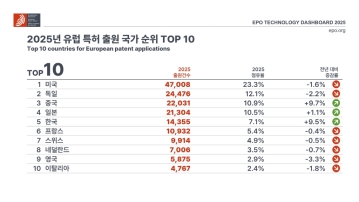
European Patent Applications Surpass 200,000 for the First Time… South Korea Maintains 5th Place, Led by Batteries and Telecommunications
According to the European Patent Office (EPO)'s 'Technology Dashboard 2025', European patent applications last year reached 201,974, surpassing 200,000 for the first time. Korean companies and inventors filed 14,355 applications, representing a 9.5% increase from the previous year and maintaining 5th place by country. Battery, digital communication, and semiconductor technologies led the growth, with Samsung ranking as the top EPO applicant for the second consecutive year and LG reaching 3rd place. The presence of major domestic cities such as Seoul, Suwon, and Yongin was also confirmed. It was also revealed that Korea's European patent strategy is expanding beyond individual technologies to span the entire industry.
2026.03.24by 명세환 기자

SK Telecom First Applies AI-Based Network Operations at Gwanghwamun K-Pop Concert
SK Telecom announced that it applied an AI-based network operation system for the first time at a large-scale K-pop concert held in the Gwanghwamun area of Seoul on March 21st, managing communication quality throughout the event. Mobile data usage during the three hours before and after the concert reached 12.15TB, approximately doubling compared to the same time slot the previous weekend. SK Telecom monitored traffic using the AI system 'A-One' in five-minute and 50-meter units to respond to potential overload situations, while also operating temporary communication facilities and on-site personnel in parallel. This case is interpreted as confirmation of the practical applicability of AI-based autonomous network operation in an environment where demand from dense events and foreign users increases simultaneously.
2026.03.23by 명세환 기자
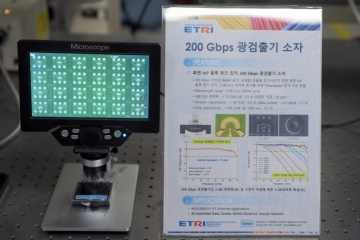
ETRI Develops 200Gbps Photodetector… Initiates Localization of Optical Receivers for AI Data Centers
The Electronics and Telecommunications Research Institute (ETRI) has developed a photodetector device that processes optical signals of approximately 200Gbps per channel for the first time in Korea. This device is a component that converts optical signals into electrical signals and determines the reception performance of AI data centers and 5G/6G communication networks. ETRI achieved bandwidth of 70GHz or higher and optical responsivity of 0.75A/W or higher, and integrated an indium phosphide lens on the rear of the chip to enhance optical reception efficiency and alignment convenience. The technology was presented at OECC 2025 and was recently published in the international academic journal 'Optics Express'.
2026.03.19by 명세환 기자
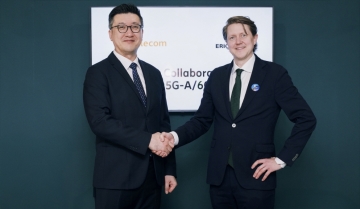
SKT and Ericsson Expand Joint Research on AI Networks… Preparing for 6G Beyond 5G Advancement
SK Telecom and Ericsson are expanding AI-based mobile network collaboration. On the 19th, the two companies signed a memorandum of understanding covering 5G advancement through 6G standardization, and agreed to undertake joint research and verification in the areas of AI-RAN, open and autonomous networks, security, and future communication technologies. This collaboration is interpreted as a move to enhance current 5G operational efficiency while preparing for a 6G environment where AI becomes embedded throughout the network. The scope also includes network operations automation, multi-vendor environment response, energy efficiency improvements, and review of communication-sensing fusion technology.
2026.03.19by 배종인 기자
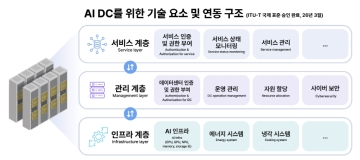
SKT Receives International Standard for AI Data Center Interconnection Structure… Establishes Operating System Standards
SK Telecom's proposed AI data center interworking architecture has received final approval as an international standard at the International Telecommunication Union Telecommunication Standardization Sector (ITU-T) conference. The core of this standard is the classification of AI data centers into three layers—service, management, and infrastructure—and the organization of signaling requirements between layers. As AI service proliferation increases the importance of interworking among various systems within data centers such as computation, power, cooling, storage, and security, this standard is significant in that it presents a common architecture for operations and service delivery. SK Telecom stated that it initiated the relevant standardization project in 2024 and achieved this approval following approximately two years of discussion.
2026.03.18by 명세환 기자











