


ETRI Concludes AI Research Paper Competition on Human-Understanding AI
 Published2023.06.21 09:36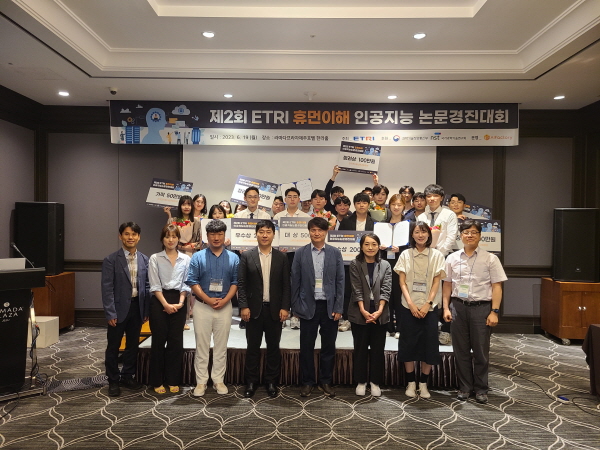
▲Award recipients and officials of the "2nd ETRI Human-Understanding Artificial Intelligence Paper Competition" pose for a commemorative photo.
Domestic research teams successfully concluded a paper competition using accumulated data for developing artificial intelligence (AI) that understands human behavior, emotions, and experiences.
The Korea Institute of Electronics and Telecommunications (ETRI) announced it held the "2nd ETRI Human-Understanding Artificial Intelligence Paper Competition" following last year's inaugural event.
The competition, which ran for approximately four months starting in February this year, selected creative AI papers through presentation evaluation on the 19th, awarding one grand prize team, two teams with excellence awards, four teams with encouragement awards, and two honorable mention teams.
Notably, this year expanded participation to "any general adult," which is evaluated as contributing to the spread of AI technology research for understanding humans beyond a simple paper competition.
ETRI research teams have accumulated lifelog and multimodal emotion data over several years for developing AI technology that understands humans.
The accumulated data was disclosed on the 'ETRI AI Sharing' platform in early 2022 to allow researchers studying AI to freely utilize it, with continuous updates being made.
This competition was conducted to discover creative and challenging AI research utilizing the data disclosed by ETRI.
The competition, open to the general public, attracted a total of 144 teams comprising 318 participants, with approximately 60 papers submitted.
Participants selected one of two data fields—lifelog or multimodal emotion data—accumulated by ETRI to write their papers.
In the field utilizing the lifelog dataset, participants were required to propose daily information extraction and artificial intelligence service application technologies utilizing various multimodal sensor data extracted from ETRI's lifelog data.
In the field utilizing the multimodal emotion dataset, participants were asked to propose research papers that recognize or predict emotions of participants during conversations involving two or more participants.
The grand prize of this competition was awarded to Korea University's Mixergi team (Jo Dae-hyun, Ryu Hoe-sung).
The Mixergi team proposed a method using modality interactions to effectively combine emotion analysis models through speech and text, earning the distinction of winning the grand prize.
Additionally, Kyung Hee University's HappyEnJoy team (Cho Hyun-gi, Seo Yu-ri, Noh Seol) proposed a methodology for transferring knowledge from a teacher model to a student model using text and speech data from a Korean-based multimodal emotion dataset, and Kyung Hee University's Han Hye-sung team (Han Joo-hyuk, Cho Hye-jung, Kim Tae-sung) presented a multimodal fusion learning method model for emotion recognition, each receiving excellence awards.
Additionally, four teams—Bigbase, ROND4, CutMix-SupCon, and AIFFEL—received encouragement awards, while the SKEZ@901 team and Milab team were selected as honorable mentions through poster presentation evaluation.
The one grand prize-winning team and two excellence award-winning teams received awards from the Minister of Science and ICT along with prize money, while the four encouragement award-winning teams and two honorable mention teams received awards from the ETRI President along with prize money.
ETRI President Bang Seung-chan stated that this competition is expected to "increase social interest in warm AI technology that understands humans and serve as a foundation for more researchers to actively exchange opinions and achieve advances in AI technology."
ETRI was able to hold this competition while conducting years of research on 'human-understanding artificial intelligence' technology that recognizes emotions and behaviors of people to understand their experiences.
The competition was conducted as a cooperative workshop during the 2023 Korea Computer Conference (KCC2023) in cooperation with the Korean Information Scientists Society to encourage participation of domestic research teams and secure academic completeness.

Comments
Related news
Camera for Both Humans and Machines: ST BrightSense 5MP Dual Shutter Image Sensor
Video consumed by humans and imagery analyzed by machines impose different requirements on the sensor in terms of shutter method and wavelength band. Until now, sensors had to be separated or supplemented with companion chips and high-performance processors, and this cost and complexity became a bottleneck in vision system design. The ST BrightSense next-generation 5MP image sensor (VD5943, VD1943, VB5943, VB1943) with 2.25 µm pixels supports both global and rolling shutters, and through on-chip staggered HDR (up to 100 dB), on-chip RGB-IR separation and 5MP NIR smart upscaling, and frame-by-frame context switching, absorbs both requirements internally at the sensor level. This white paper describes the rationale, choices, trade-offs, and results of each design decision based on presentation slides and technical Q&A, and specifies application boundaries. The product is scheduled for mass production in February 2026, and evaluation and sampling are currently available.
2026.10.13by 편집부

AI-based Universal Robots Automation Solution
In manufacturing environments where declining labor populations overlap with frequent production item changes, existing programming-based robot automation requires reconfiguration from weeks to several months each time product models change. This white paper takes this flexibility gap as its starting point and synthesizes, based on webinar presentation materials and technical Q&A, what collaborative robots gain and forfeit compared to industrial robots, why process automation is transitioning from rule-based to learning-based (4th generation) approaches, and how Universal Robots' hardware, software, and partner ecosystem implement this. Additionally, it clarifies the application boundaries and limitations, including that AI Accelerator is still at the development kit stage.
2026.10.13by 편집부
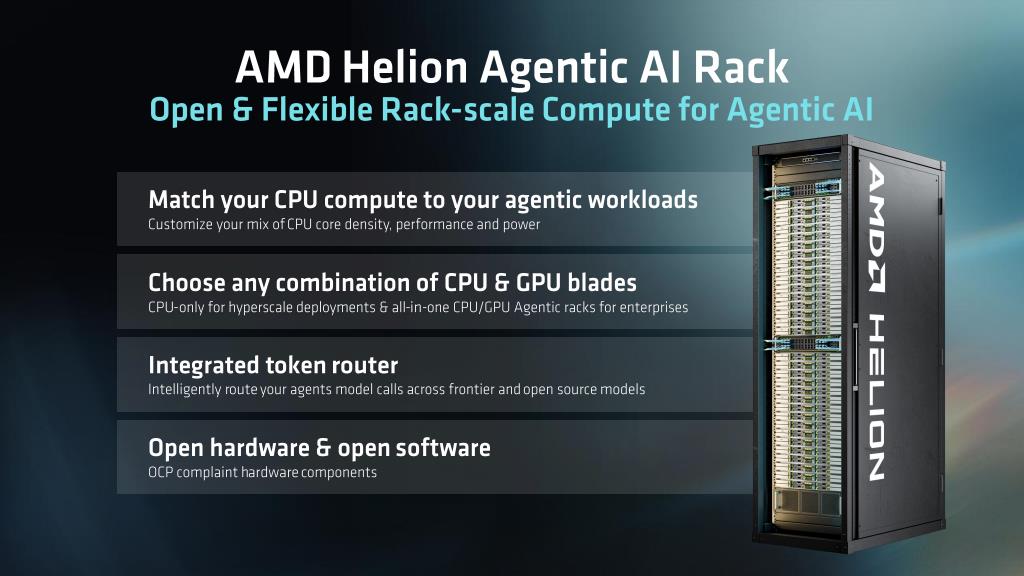
AMD Unveils "Helion," Open Rack Infrastructure for Agentic AI Era
AMD unveiled "Helion," an open-rack scale infrastructure platform designed to address the agentic AI era, at the OCP Summit. Helion adopts an OCP-based open design that allows flexible combination of CPUs and GPUs tailored to workloads, providing flexibility without vendor lock-in. Targeting both hyperscale data centers and enterprise environments, it enhances performance and cost efficiency by distributing AI model calls effectively through an integrated token router. AMD is advancing this as an open ecosystem strategy and plans to collaborate with major infrastructure companies.
2026.10.13by 배종인 기자
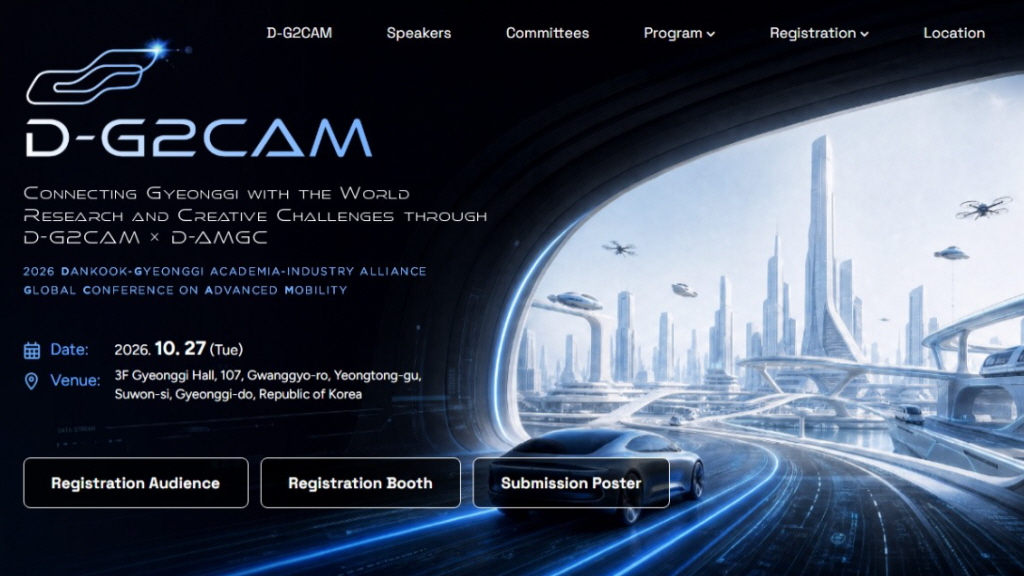
GAIA-Festa 2026, Autonomous Driving, AI, and Aerospace Experts Gather…Discussing Global Cooperation in the 'Silicon Intelligence Era'
GAIA-Festa 2026, which will be held in Suwon on October 27, is an industry-academia-research exchange event that explores the present and future of future mobility and AI technology through the global conference D-G2CAM 2026 and the international contest D-AMGC 2026. Domestic and international experts will share the latest research in autonomous driving, 5G/6G mobility, space technology, and data protection fields, while university students will showcase robots and physical AI prototypes that they have independently developed. Additionally, through poster presentations, corporate exhibitions, international cooperation meetings, and signing ceremonies, a platform will be established to connect the research capabilities and industrial needs of the Gyeonggi region with a global cooperation network.
2026.10.13by 배종인 기자
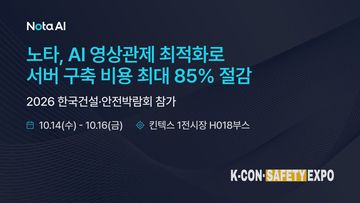
Nota Reduces Server Construction Costs by Up to 85% with AI Video Surveillance Solution
Nota, an AI model optimization technology company, is introducing technology that reduces server construction costs by up to 85% through its VLM-based video surveillance solution. By applying its own optimization technology, the number of video channels can be doubled with identical server resources, and over 20 companies including Koolon Industries have already applied it in industrial safety sites. Starting from the 14th, the company plans to unveil features including heavy equipment safety management, hazard situation detection, and protective gear compliance verification at the Korea Construction and Safety Expo.
2026.10.13by 배종인 기자











