



Hyundai Motor to Invest KRW 35.8 Trillion in Electrification
 Published2023.06.21 17:15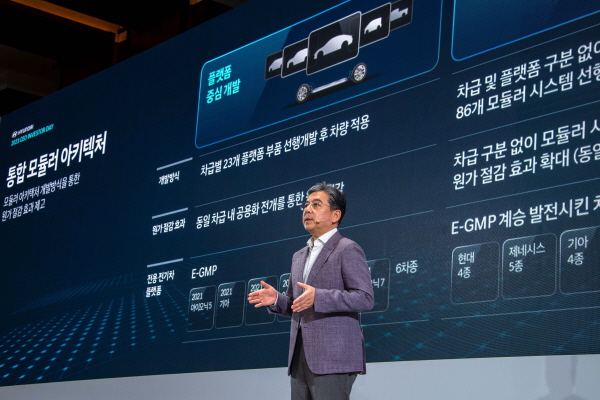
▲Hyundai Motor Company CEO Jaehoon Jang is giving an announcement. (Photo source: Hyundai Motor Group)
2023 CEO Investor Day Held… Announcement of Mid- to Long-Term Electrification and Future Strategies
Accelerating the development of an integrated modular architecture, a second-generation EV platform, and battery materials.
Hyundai Motor Company held the '2023 CEO Investor Day' at the Conrad Hotel in Yeouido, Seoul on the 20th and announced its new mid- to long-term business strategy and financial plan.
Hyundai Motor Company announced that it will actively support the implementation of the Hyundai Motor Way by earmarking 35.8 trillion won, or 33% of its mid- to long-term financial plan to invest a total of 109.4 trillion won over the next 10 years from 2023 to 2032, for investments related to electrification.
The average annual investment for the next 10 years is set at 3.6 trillion won, and more than 12 trillion won is planned to be invested in 2024 and 2025, when investment in the electrification sector will be concentrated.
This is an increase of 1.4 trillion won per year compared to the annual average of 2.2 trillion won announced at last year's CEO Investor Day.
The 9.5 trillion won invested in the battery business was also included in the investment related to electrification.
The 'Hyundai Motor Way' strategy aims to sell 2 million electric vehicles by 2030, and includes the Integrated Modular Architecture (IMA)The detailed strategy is based on the introduction of a modular architecture (ED Modular Architecture), advancement of battery capabilities, and promotion of the establishment of a value chain across all areas.
■ Introduction of an integrated modular architecture
Hyundai Motor Company plans to once again lead the global automobile market by completing the development of its "Integrated Modular Architecture" and introducing its "Second-Generation Dedicated Electric Vehicle Platform" by 2025.
The integrated modular architecture is characterized by maximizing cost savings through economies of scale.
In the current platform-centered development system, parts can only be shared between vehicle models that use the same platform, and there are only 23 common platform parts being developed in advance. However, in the integrated modular architecture development system, vehicle models are developed through a combination of 86 common module systems that can be applied regardless of vehicle class.
With the introduction of the integrated modular architecture in the future, 13 core strategic modules, including motors, batteries, inverters, electric and electronic components, and autonomous driving, will be able to be shared, expanding the range of vehicle classes eligible for common development to almost all classes, from compact to ultra-large SUVs, pickup trucks, and even top-of-the-line Genesis models.
The second-generation dedicated EV platform is being developed with the goal of mounting a PE (Power Electric) system, including a fifth-generation NCM (nickel, cobalt, manganese) battery and a high-efficiency, high-output motor system. In the future, the application of LFP (lithium iron phosphate) batteries, which are considered to have advantages such as form factor diversification, economy, and safety, including square NCM batteries, will be promoted.
In addition, we are preparing to secure basic technologies such as applying the world's first auxiliary battery charging and discharging technology while driving to further extend the driving range.The company plans to add remote diagnostic capabilities to its AI-based BMS and apply fire safety technologies such as rapid heat diffusion blocking.
■ Securing battery development capabilities and stabilizing material supply and demand
Hyundai Motor Company is continuously working to improve the performance and strengthen price competitiveness of batteries, a key component of electric vehicles.
Currently, we are establishing a specialized battery development organization at Namyang Research Institute, establishing dedicated organizations for each function including advanced battery development, and securing and training specialized personnel. We also plan to invest 9.5 trillion won over the next 10 years to actively pursue improvements in battery performance, development of next-generation battery advanced technologies, and infrastructure construction.
To ensure a stable supply of batteries, Hyundai Motor Company is establishing joint ventures with major battery companies such as SK On and LG Energy Solution and pursuing joint development to secure the highest performance. At the same time, the company is conducting joint research and equity investments with startups to develop next-generation batteries.
We are collaborating with companies such as Solid Power of the United States to secure all-solid-state battery components and process technology, and we are collaborating with Solid Energy Systems (SES) of the United States to develop lithium metal batteries.
In addition, Hyundai Motor Company is pursuing a contract to supply lithium, which will be a key material for cathode materials to be supplied to its Indonesian battery joint venture, to ensure a stable supply of battery materials. The company is also forming partnerships with material suppliers to secure a stable supply of key materials, including raw materials such as lithium and nickel. Furthermore, the company is strengthening its battery materials division through ongoing consultations with domestic organizations and foreign governments.
In the mid- to long-term, we will also establish a system to collect used batteries and recycle raw materials to protect the environment and secure sustainable raw materials.
Hyundai Motor Company is working with its affiliates to safely supply batteries. The plan is to complete a sustainable 'battery life cycle' by reusing recovered and extracted raw materials in battery manufacturing.
■ Strengthening battery design and management capabilities and developing next-generation batteries
Hyundai Motor Company plans to establish a value chain encompassing the entire battery sector, starting with a stable supply of materials, strengthening battery design and management capabilities, and establishing a plan for next-generation battery development.
Hyundai Motor Company plans to launch a new hybrid vehicle this year, equipped with a battery of its own design.
Hyundai Motor Company, which announced the signing of an MOU with SK On in 2021 for the joint development of battery cells for hybrid vehicles, took charge of key processes in this collaboration, from material verification to specification confirmation and design, including application ratios, product evaluation, and performance improvement, to achieve optimal battery performance.
In addition, Hyundai Motor Company is pursuing the development of various battery cells to secure price competitiveness and meet demand.
For LFP batteries, we are conducting joint development with battery companies, including battery cells and specialized battery systems.
The plan is to first apply the jointly developed LFP battery to electric vehicles around 2025 and to expand the number of models equipped with it, focusing on emerging markets.
Additionally, Hyundai Motor Company will build a next-generation battery research building at its Uiwang Research Institute by next year to accelerate the development of next-generation batteries, including lithium metal batteries and all-solid-state batteries, and to verify the mass production potential of next-generation batteries.
Hyundai Motor Company is also considering production verification through a small pilot line to enhance the completion of next-generation battery development. In the future, next-generation batteries are expected to play a crucial role in enhancing synergy between future mobility businesses, such as robotics and AAM, beyond electric vehicles.
Comments
Related news

[e4ds Tech Day 2026 ⑨] Sim Sang-gyu, Autocrypt CTO: "In the Physical AI Era, Automotive Security Must Extend Beyond the Vehicle"
At e4ds Tech Day 2026, Sim Sang-gyu, CTO of Autocrypt, explained automotive cybersecurity strategies in the era of Physical AI and SDV (Software-Defined Vehicle). Automobiles are evolving as part of an ecosystem connected to AI, cloud, chargers, IoT, and robots, and he emphasized that the scope of security must expand beyond the vehicle interior to the entire connected environment. In particular, AI model tampering, adversarial attacks, OTA updates, and EV charger hacking were identified as major threats. He explained that response measures require zero trust, AI model integrity protection, intrusion detection, Security by Design and Default, and full lifecycle security management, and that proactive security system establishment beyond regulatory compliance is critical for securing future mobility competitiveness.
2026.10.12by 배종인 기자
Practical HIL Construction Strategy for Automotive and Off-Highway Controller Validation
As vehicle E/E architecture transitions to zonal structures and shifts to software-defined vehicles (SDV), the number of controllers (ECUs) requiring validation and software complexity are surging dramatically. Meanwhile, real vehicle testing cannot provide repeated verification under identical conditions and entails lead time and safety concerns. This white paper explains the principles of HIL (Hardware-in-the-Loop) validation and the structure of the NI platform composed of PXI, SLSC, and VeriStand, and through two actual implementation cases—Camera Record & Replay HIL for In-Cabin Monitoring Controller (ICMU) and Forklift Controller (VCU) HILS—describes how controller-level regression testing becomes possible. Additionally, it explicitly states application boundaries and limitations, such as lack of A2B support.
2026.10.12by 편집부
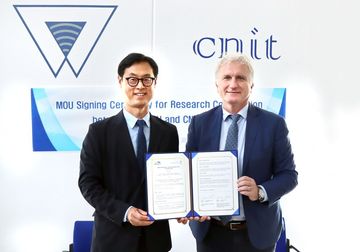
Korea Automotive Research Institute Signs MOU with Italy National Institute for Wireless Communications
The Korea Automotive Research Institute will sign an MOU with Italy's National Institute for Wireless Communications and launch joint research on next-generation mobility technologies based on 6G, V2X, and connected vehicles. The two organizations will conduct research to apply advanced wireless communication technologies to vehicles and discover international joint projects to advance next-generation connected vehicle technology development.
2026.10.12by 배종인 기자
Color Accuracy Issues in Vehicle Interior Ambient Lighting and Intelligent LED Drivers
Vehicle interior ambient lighting is spreading across all price segments, and the level of color accuracy required of lighting designers is rising accordingly. This white paper quantitatively addresses why temperature drift and individual variations of RGB LEDs cannot be corrected by standard constant-current drivers, and explains an intelligent LED driver approach that integrates an MCU, calibration data, and a LIN network interface into the driver. It covers implementation details of the LITIX Interior TLD4020-3ET currently in production, portfolio roadmap, and evaluation/development environments, and clarifies application boundaries including lack of 48V support, lack of RGBi/ISELED support, and absence of direct optical degradation diagnostics.
2026.10.08by 명세환 기자
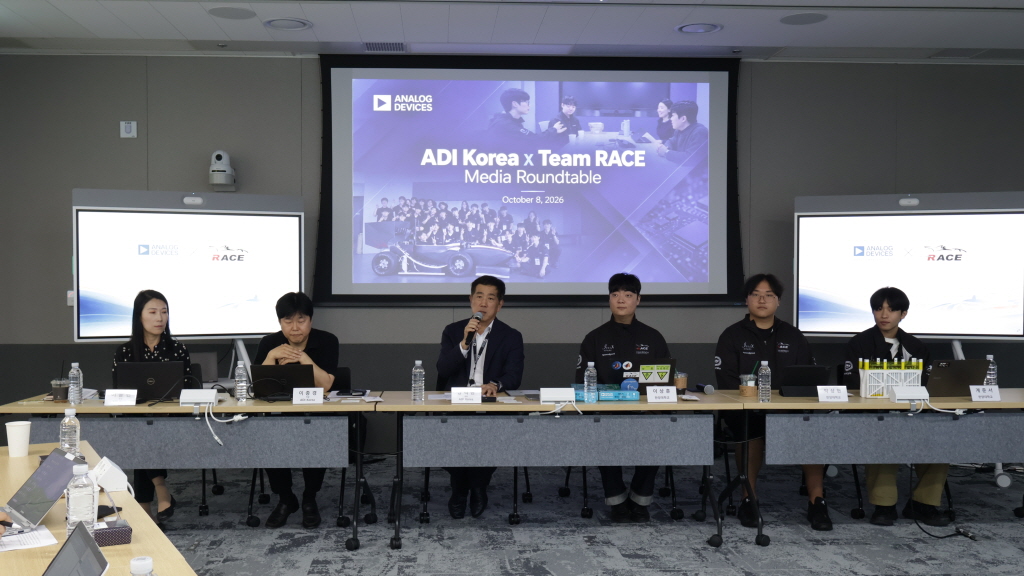
ADI, "Fostering Future Engineers Beyond Component Support"
Global semiconductor company Analog Devices (ADI) is drawing attention for moving beyond simply sponsoring university student car projects to serve as a partner in nurturing future engineers. Over the past three years, ADI has collaborated with Hanyang University's automotive research club Team RACE to support electric formula vehicle development, and recently has been providing technical consultation and semiconductor solutions to enable students to directly develop battery management systems (BMS), creating a model case of industry-academic cooperation.
2026.10.08by 배종인 기자











