



UNIST Develops "Soft Valve" That Will Enable Universal Grabbers and Wearable Assistive Robots
 Published2023.07.20 11:48
.jpg)
▲Soft valve structure (a) Photograph of the developed soft valve. (b) Schematic diagram of the soft valve when there is no tension (top) and when there is maximum tension (bottom) and the results of the simulation cross-sectional analysis of each (right).
Robot component technology has been developed that can create a universal gripper that can even pick up potato chips without breaking them, and a wearable elbow suit that reduces muscle strain.
A research team led by Professor Jiyoon Kim of the Department of Materials Science and Engineering and Professor Junbeom Bae of the Department of Mechanical Engineering at UNIST (President Yonghoon Lee) have developed a ‘soft valve’ technology, a component that can maximize the advantages of soft and flexible soft robots.
This tube-shaped component is a dual-function component that detects external stimuli and precisely controls the movement of the actuator without electricity.
It can operate without electricity, making it safe for use underwater or in spark-prone environments. Dual-function components allow for lightweight robots. The price is also affordable, at around 800 won per part.
Professor Kim Ji-yoon explained, “Unlike the soft and flexible body of the soft robot, the stimulus detection sensors and drive control components are often still made of hard electronic components. However, through this research, we were able to make the sensors and drive control components out of soft and flexible materials.”
The research team used this soft valve to create a universal gripper that can easily pick up a variety of objects. These grippers were able to pick up everything from potato chips, which would easily crumble with a sturdy robotic hand, to heavy, bulky pieces of wood. They even performed well in sparking environments and underwater.
Additionally, a wearable elbow-assist robot was created using this component, effectively reducing arm muscle strain. This device automatically increases elbow assistance based on the angle of the user's arm bend. When worn, the robot was found to reduce elbow force by an average of 63%.
This soft valve operates by moving the actuator through air flowing through the tube. Pulling the end of the tube presses a spiral thread inside the tube, controlling the inflow and outflow of air. Pulling the end of the tube causes the actuator to expand and contract like an accordion windpipe.
The research team also confirmed that by precisely programming the structure and number of threads wound around the tube, air inflow and outflow can be varied. Even with the same force applied to the tube's end, the actuator can be adjusted appropriately depending on the shape and number of threads wound.
Professor Bae Jun-beom of the Department of Mechanical Engineering explained, “The developed component can be easily used through material programming without electronic components, so it will greatly contribute to the development of various wearable systems.”
This study was published online on July 4, 2023, in Nature Communications, a globally renowned academic journal. The research was supported by the National Research Foundation of Korea (NRF) under the Ministry of Science and ICT, the Korea Institute of Materials Science (KIMS), and the Korea Evaluation Institute of Industrial Technology (KEIT).

Comments
Related news
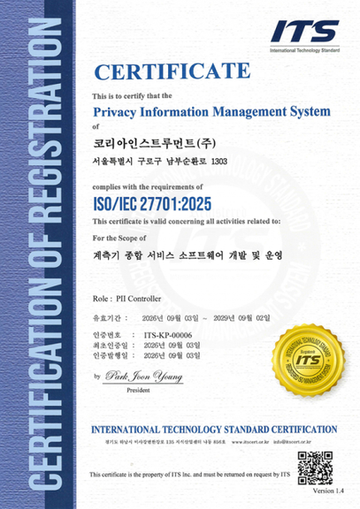
Korea Instrument, KOLAS Accredited Calibration Agency First to Simultaneously Acquire ISO/IEC 27,001·27,701
Korea Instrument has become the first among KOLAS accredited calibration agencies to simultaneously acquire ISO/IEC 27,001 and ISO/IEC 27,701 certifications. Through its proprietary platforms CWIZ Enterprise and CWIZ Partners, the company has embedded information security and personal data protection requirements across all business processes including customer information, equipment data, and calibration reports, with plans to continuously advance its management system through regular audits and security inspections.
2026.10.12by 배종인 기자

TeamViewer One, IT Incident Automation Workflow and Resolution Center Enhanced
TeamViewer has added IT incident automation capabilities and an advanced Resolution Center to its integrated digital workplace management platform 'TeamViewer ONE'. Recurrent service disruptions, configuration errors, and capacity shortages are automatically handled according to preset policies, and device status verification through script deployment can be managed in a unified interface, significantly reducing repetitive tasks for IT teams.
2026.10.12by 배종인 기자
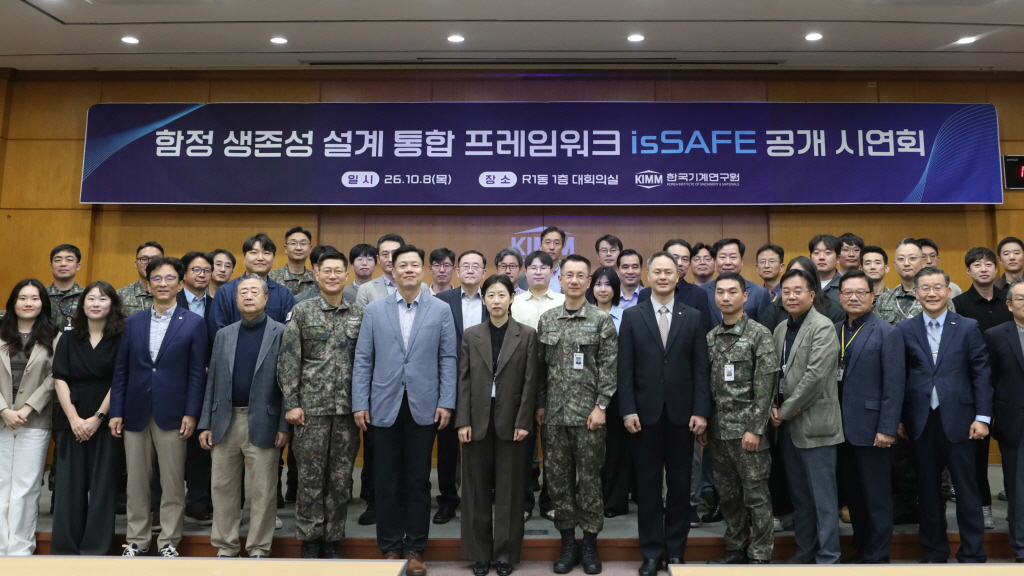
KAERI Develops Domestically-Produced SW 'isSAFE' for Integrated Warship Survivability Analysis
The Korea Institute of Machinery and Materials has developed domestically-produced software 'isSAFE' that comprehensively analyzes warship survivability. This design framework integrates the entire process—from warship modeling to hit scenario generation, vulnerability analysis, and results analysis—into a single platform, establishing an independent technology foundation in the defense technology sector that had previously relied on foreign software.
2026.10.08by 배종인 기자
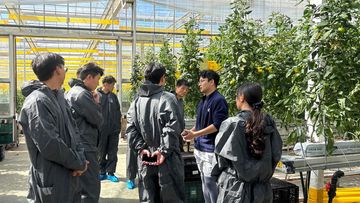
ioCrops Shares AI Smart Farm Operations Case Study
About 20 cultivators from the Agricultural Cooperative's Smart Agriculture Support Centers visited ioCrops' smart farm in Jincheon, North Chungcheong Province. They directly confirmed how data collected through substrate weight sensors, drainage weight sensors, and soil moisture sensors is applied to tomato cultivation, as well as the greenhouse pest control process using the AI-based autonomous spraying robot 'HERMAI'. By sharing on-site operational case studies combining data and automation technology, the adoption of smart farms in agricultural fields is being promoted.
2026.10.07by 배종인 기자
Rockwell, "90% Digital Transformation Essential in Life Sciences Manufacturing"
According to the digital transformation report for the life sciences manufacturing sector released by Rockwell Automation, 90% of responding companies recognized digital transformation as a business-critical element. Primary investment technologies include AI and machine learning (46%), process automation (44%), and cybersecurity (39%), with 64% of companies planning to expand AI utilization within the next year. However, only 32% of companies actually utilize more than half of the collected data, indicating an urgent need to strengthen data utilization capabilities.
2026.10.07by 배종인 기자











