



Cyber security incidents in the first half of 2023 up 40% year-on-year
 Published2023.08.01 14:37
Emphasis on ASM and Zero Trust for Ransomware, Software Infections, and Phishing Response
Cyber security attacks increased by approximately 40% compared to the first half of last year, indicating an urgent need for active security reinforcement.
On the 1st, the Ministry of Science and ICT, together with the Korea Internet & Security Agency, announced major cyber threat trends for the first half of 2023. According to hacking report statistics over the past three years, the number of incidents nearly doubled from 640 in 2021 to 1,142 in 2022. The number of reported security breaches in the first half of 2023 was 664, an increase of approximately 40% compared to the same period last year.
In particular, the Ministry of Science and ICT noted that the proportion of manufacturing companies among reported cases increased to 62.5%, warning that hackers are focusing their attacks on small businesses with low security levels.
The Ministry of Science and ICT stated, “Recently, attacks have become more sophisticated as hackers actively seek out targets and closely analyze the systems and mobile devices of individuals and companies to exploit vulnerabilities,” adding that special caution is required.
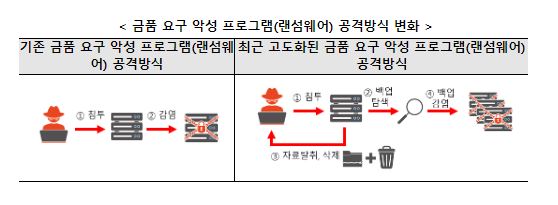
Among the types of domestic cyber security threats, malicious programs (ransomware) that locate backup servers and demand money (backup file infection rate of over 40%) occurred as the top priority. They demand money by infecting a network that is connected to the internet and easily exposed and accessible to the outside with ransomware.
To this end, companies must focus on Attack Surface Management (ASM) to block abnormal access to externally exposed servers and eliminate security vulnerabilities. Additionally, network segmentation and separate deployment of backup servers are essential.
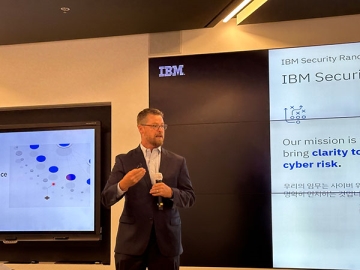
For example, on the 18th, IBM provided an enterprise ASM experience through the Laundry platform. The purpose is to continuously monitor an organization's cybersecurity vulnerabilities and potential attacks, and to train organizations to implement effective attack surface management strategies by presenting an attacker's perspective.
Next, there is a method that exploits vulnerabilities in internal security software to infect employee PCs and take control of the internal network by remotely controlling malware. This poses a significant threat because malware emails are difficult to detect, and the infection status is often unknown.
Domestic and international security firms are wary of the growing threat of 'supply chain' attacks. There is a need for measures to periodically pre-inspect business software and network equipment for vulnerabilities. The ISA found that security programs accounted for approximately 54% of the 92 vulnerability reports received through its vulnerability reporting reward system.
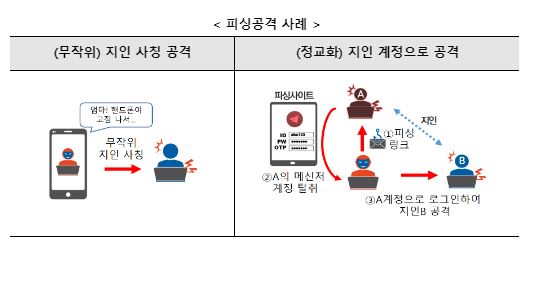
Finally, this method exploits vulnerabilities where system developers or maintenance personnel within a company share administrator accounts on websites or cloud services, or allow access to key internal systems through a Virtual Private Network (VPN). It has been reported that the number of brokers selling corporate system administrator accounts on the dark web has increased by approximately 380.
The Ministry of Science and ICT stated that information security entities, including the public and businesses, need to make active efforts to strengthen security by raising cybersecurity awareness and expanding investment in information security. In particular, it said, “We should consider adopting a Zero Trust security model based on the premise of ‘trusting nothing.’”
The Ministry of Science and ICT stated, “We announced the ‘Zero Trust Guidelines 1.0’ on July 10 and plan to continue evolving and developing them through demonstration models,” adding, “We will also prepare and provide ‘Software (SW) Supply Chain Security Guidelines’ within the year to support the establishment of a new security system.”
Meanwhile, preparations are underway to announce measures to enhance the information security capabilities of small and medium-sized enterprises and individuals, as well as measures to foster the information security industry, in August.
Comments
Related news
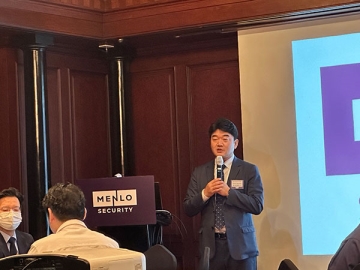
Menlo Security: "Web Isolation 'RBI' Technology Provides Perfect Browser Security"
Cloud security company Menlo Security held a press briefing on the 30th at COEX in Samseong-dong to introduce its security strategy. Amir Ben Ephraim, CEO, made his first visit to Korea on this occasion and introduced the company's domestic browser security strategy, while Kim Sung-rae, Branch Manager, addressed network segmentation strategy through zero trust internet implementation. Menlo Security Korea Branch Manager Kim Sung-rae stated, "Unlike existing security approaches, Menlo Security supports complete user protection by handling security threats in an isolated environment through a network segmentation method based on zero trust principles."
2023.05.30by 김예지 기자
.jpg)
NXP Launches New High-Efficiency Secure i.MX 91 Family
NXP Semiconductors has announced the i.MX 91 application processor family, streamlining the development of cost-effective edge devices that require security, performance, and Linux support on a reliable and scalable platform.
2023.06.08by 배종인 기자

IAR, IAR Embedded Workbench 9.40 Code Security Performance Improvements
IAR Embedded Workbench 9.40 fully complies with the PACBTI extension specification, providing complete protection for embedded applications against security attacks.
2023.06.21by 배종인 기자
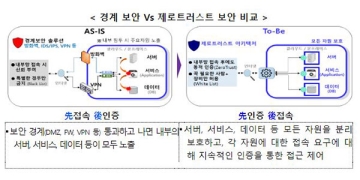
Ministry of Science and ICT introduces zero trust, boosting security levels.
The Ministry of Science and Technology Information and Communications established a 'Zero Trust Forum' composed of domestic experts from academia, industry, and research institutions in October last year, and through global trend analysis, data review, and discussion sessions, compiled opinions to develop a 'Zero Trust Guideline 1.0' tailored to the domestic environment. The zero trust security model treats servers, computing services, and data as resources that must be protected and separately protects each of them.
2023.07.10by 김예지 기자
IBM “Landori ASM Platform, Preemptive Response to Hacking Threats”
IBM held a press briefing on the 18th at the Korea IBM office in IFC Yeouido, introducing the cybersecurity platform of Randori, an ASM enterprise acquired in 2022. Brian Hazard, co-founder and CEO of Randori, stated, "As cybersecurity threats are increasing rapidly, existing security systems and approaches must change." He argued, "By understanding vulnerabilities from an attacker's perspective to escape security blind spots and training to establish attack priorities for proactive defense, organizations can respond to security threats more actively and efficiently."
2023.07.18by 김예지 기자











