



ETRI develops a core material for all-solid-state batteries with six times higher energy density.
 Published2023.08.18 10:46
.jpg)
▲Solid electrolyte membrane of a thin and flexible all-solid-state battery developed by ETRI researchers.
Wet process technology for large-scale production, ensuring excellent performance
A domestic research team has succeeded in developing a solid electrolyte membrane for all-solid-state batteries, known as next-generation secondary batteries. This is expected to be of great help in the early commercialization of safe and high-performance all-solid-state batteries.
The Electronics and Telecommunications Research Institute (ETRI) announced that it has successfully developed a solid electrolyte membrane that is 10 times thinner and has 6 times the energy density compared to existing pellet-type membranes by utilizing a sulfide-based solid electrolyte and a polymer fabric support.
This achievement was published in the world-renowned academic journal “ACS Applied Materials & Interfaces,” proving its excellence.
An all-solid-state battery is a battery in which the electrolyte, a key component of the battery, is replaced from the existing liquid form to a solid form.
By replacing flammable liquid electrolytes with solid ones, the risk of leakage or fire can be prevented at the source.
In existing solid-state battery research, it was common to apply pressure to solid electrolyte particles or use a sintering process to manufacture them into pellets hundreds of micrometers (μm) thick.
On the other hand, solid electrolyte pellets are brittle, making it difficult to provide flexibility to battery cells using them, and their thickness increases, which lowers the energy density of the cells contrary to expectations, which has been an obstacle to commercialization.
To overcome these limitations, the ETRI research team succeeded in developing a thin solid electrolyte membrane using a sulfide-based solid electrolyte with excellent ionic conductivity and a polymer fabric support with excellent mechanical strength.
In addition, we developed a wet process technology that is easy to scale up to large areas, and secured excellent performance as well as mechanical strength and flexibility.
The solid electrolyte developed by the research team has a thickness that is more than 10 times thinner than existing pellet-type solid electrolytes, and its ionic conductivity has doubled.
Accordingly, ETRThe output characteristics of the monocell with I's solid electrolyte applied were not only improved by 20%, but the energy density per volume also increased by six times compared to the existing one.
In addition, the excellent stability of ETRI's all-solid-state battery was experimentally proven through high-temperature exposure tests and high-voltage tests.
ETRI expects that this will lead to the commercialization of next-generation solid-state batteries that have high capacity and can be flexibly diversified into various forms.
ETRI Senior Researcher Seok-Hoon Kang, who led this research, said, “There have been process limitations in applying solid electrolytes to final cells, but the solid electrolyte membrane developed in this study is expected to dramatically increase the energy density of the applied battery cell, greatly increasing the possibility of commercializing all-solid-state batteries.”
ETRI Smart Materials Research Lab Director Lee Young-ki, who is in charge of this study, said, “We tried to overcome the technological limitations of existing pellet-type solid-state batteries by implementing the existing hard, thick, small-area pellet-type or thick sheet-type solid electrolyte in the form of a thin, flexible membrane.”
Based on the results of this research and development, the ETRI research team plans to expand the application of support structures to various substrates, while continuing to conduct research on solid electrolyte membranes that are compatible with existing battery cell manufacturing methods by further improving the ion conductivity characteristics of solid electrolyte membranes and reducing the thickness to the level of separators.
This study was conducted as part of the research project titled ‘Development of Performance Enhancement and Manufacturing Technology for Lithium-Based Next-Generation Secondary Batteries’ with support from the Ministry of Trade, Industry and Energy and the Korea Institute of Industrial Technology Evaluation and Planning.

Comments 1
1 Comments:
Related news
KERI Overcomes All-Solid State Battery Challenges
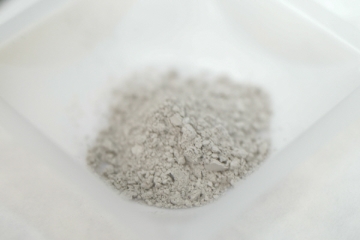
The challenge of rising sulfur vapor pressure at high reaction temperatures has been overcome, and it is expected that the development of all-solid-state batteries will gain momentum going forward.
2023.03.20by 배종인 기자
KERI Opens Way for Mass Production of All-Solid State Batteries
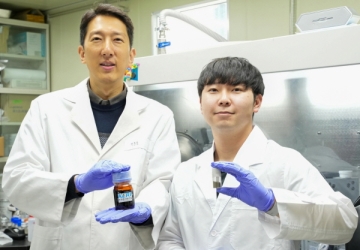
The research team led by Dr. Park Jun-ho at KERI's Secondary Battery Research Group has developed a "one-pot" simple synthesis method that can manufacture high-purity solid electrolyte without additives, as well as eliminating the need for expensive lithium sulfide.
2023.05.15by 배종인 기자
.jpg)
KETI Develops Single-Particle All-Solid-State Battery Cathode Material Technology
KETI recently developed cathode material manufacturing technology that provides high charging characteristics and superior cycle life for all-solid-state batteries.
2023.07.26by 배종인 기자
Schneider Aims for Building Energy Savings and Operational Stability with Next-Generation HVAC Drives
Schneider Electric has unveiled its next-generation HVAC drive product line 'Altivar HVAC'. The new product line's key features center on enhanced energy savings, system operational stability, and building management system integration. The products are divided into 'ATH200' for OEM and small equipment applications, and 'ATH600' for environments requiring continuous operation and advanced control. The company plans to expand the application scope from commercial buildings to facilities where HVAC system stability is critical, such as hospitals, airports, and data centers. The announcement includes over 30% energy savings, operation from -10°C to +60°C, Modbus and BACnet support, and compatibility with low global warming potential refrigerants.
2026.03.26by 명세환 기자
Ecolab Expands AI Data Center Cooling Business Through Acquisition of CoolIT
Ecolab has agreed to acquire CoolIT Systems, a liquid cooling company for AI data centers, for approximately $4.75 billion. The transaction is expected to close by Q3 2026, subject to regulatory approvals. CoolIT has been supplying direct-to-chip cooling-based coolant distribution units, cold plates, and manifolds, serving hyperscale data centers and colocation operators as customers. This acquisition is a measure to address the high-heat and high-density server environments created by AI proliferation. Ecolab plans to combine its water management and digital monitoring capabilities with CoolIT's hardware technology to expand its data center cooling business.
2026.03.26by 명세환 기자












개발은 한국전자통신연구원(ETRI)에서 했는데 동영상에는 한국전기연구원(KERI)이 나옵니다.